FOREARM TATTOO IDEAS
Forearm tattoo ideas built around movement
The forearm is visible, directional, and constantly rotating. A successful design considers which side faces the viewer, how the image reads with the arm relaxed, and whether it should travel, wrap, or hold one clear focal point.

FOREARM TATTOOS LIBRARY
Browse 6 curated forearm tattoos directions
Use the shared facets to combine style, subject, and placement. Clean links represent published SEO collections; unpublished combinations only refine this gallery and remain noindex.
51 design directions
Page 1 of 3
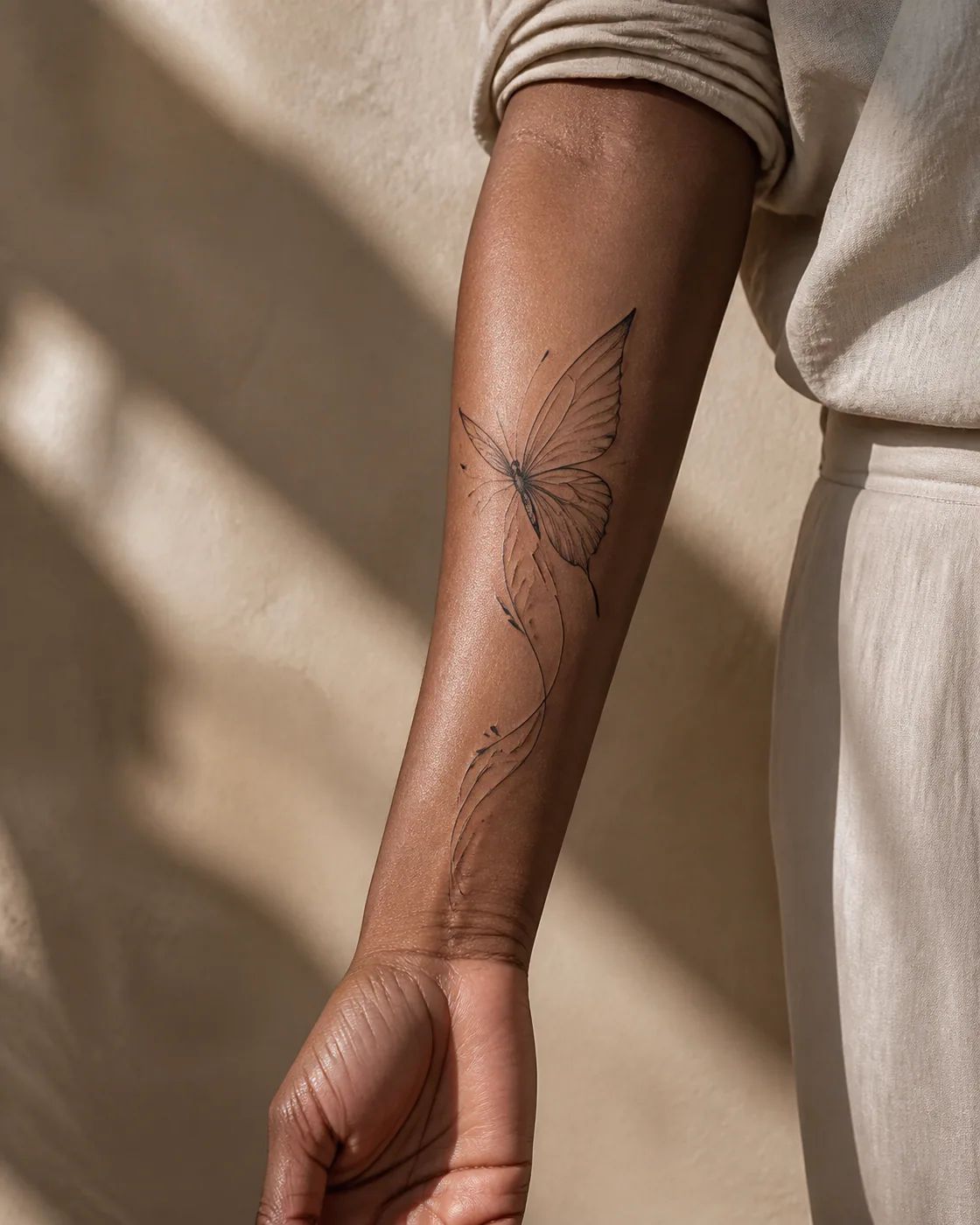
Fine Line Animal Tattoo for the Forearm
An original animal concept shaped as a healed fine line tattoo for the forearm.
- Fine Line
- Animals
- Forearm
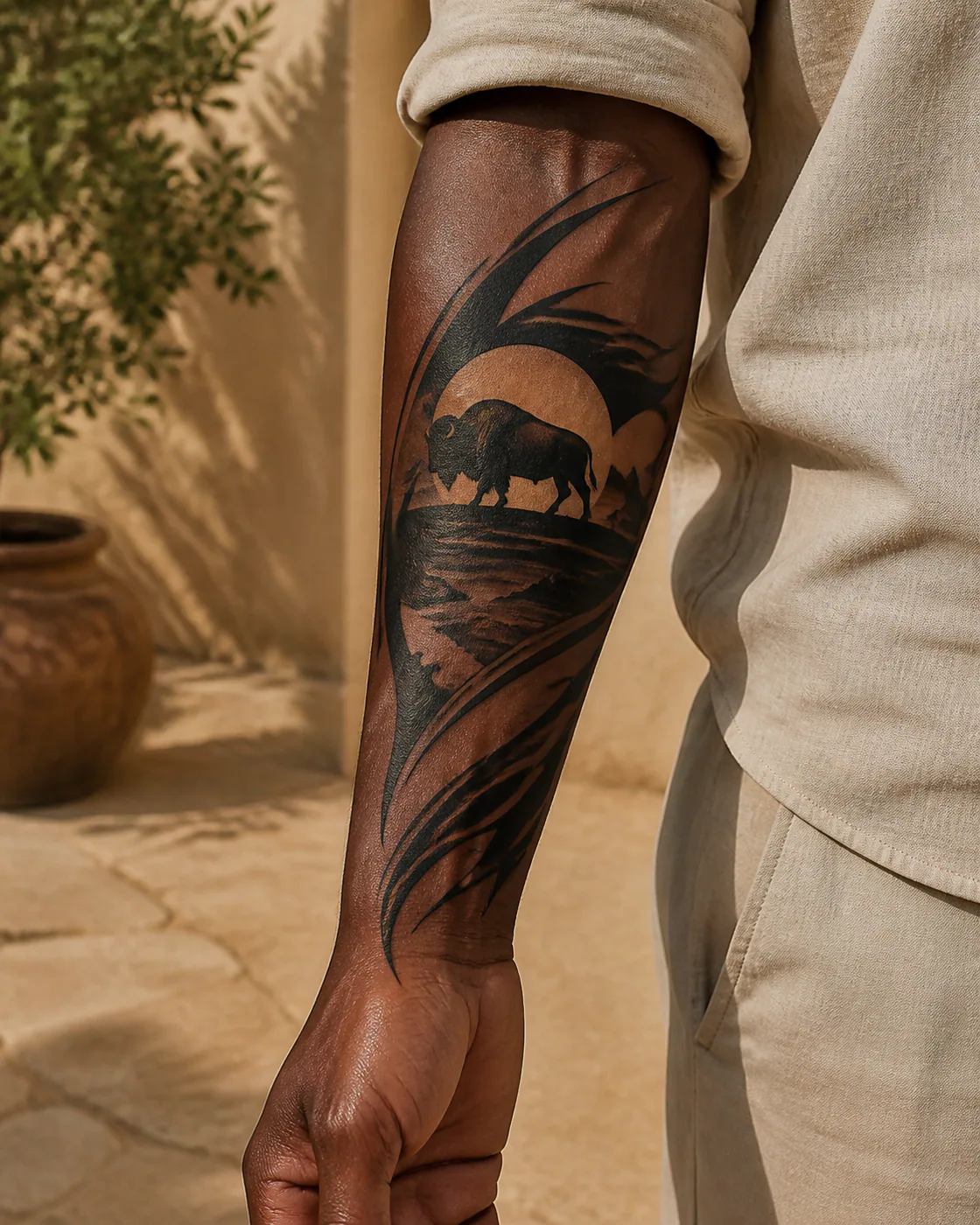
Tribal Western Tattoo for the Forearm
An original western concept shaped as a healed tribal tattoo for the forearm.
- Tribal
- Western
- Forearm
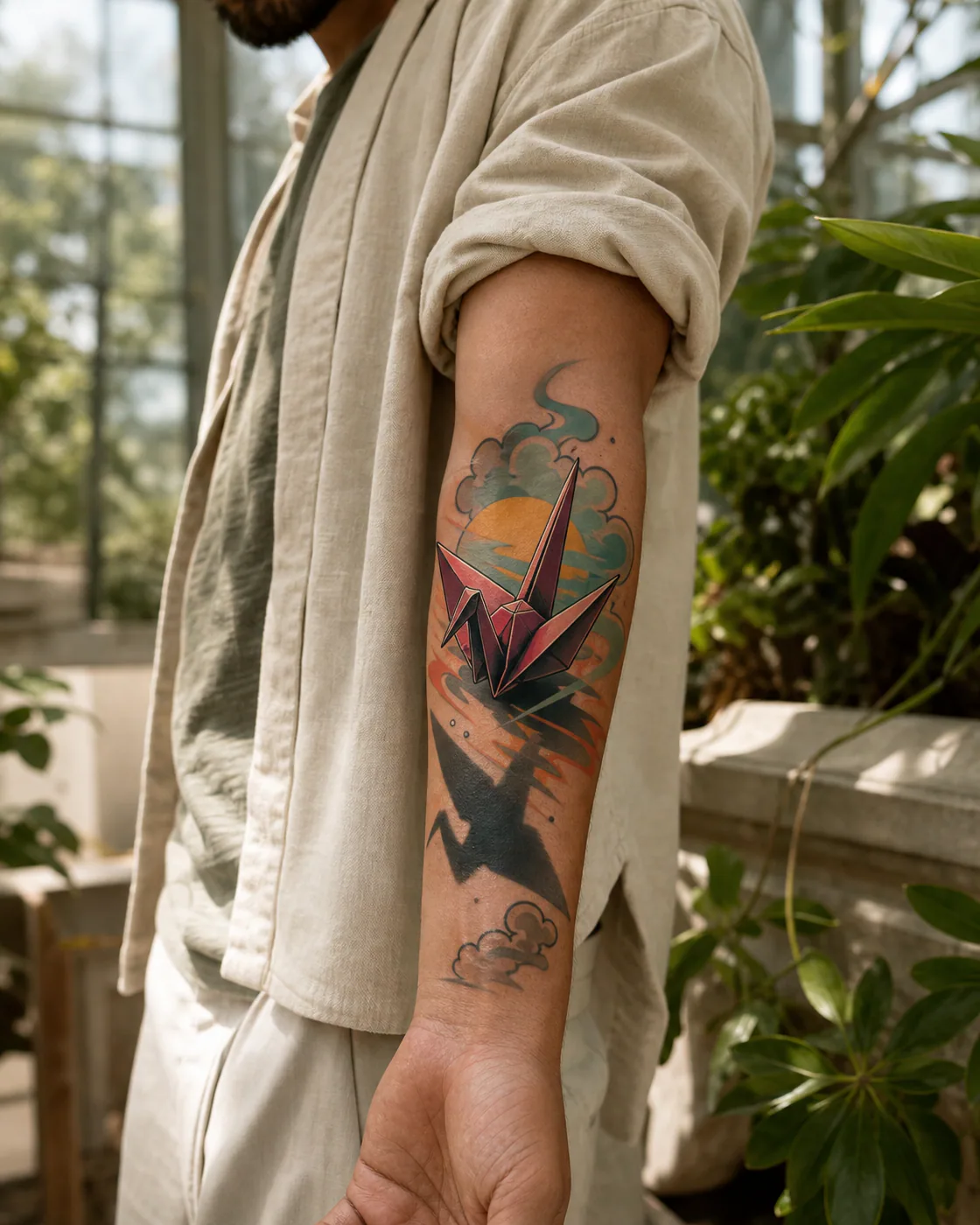
New School Memory Tattoo for the Forearm
An original memory concept shaped as a healed new school tattoo for the forearm.
- New School
- Memory
- Forearm
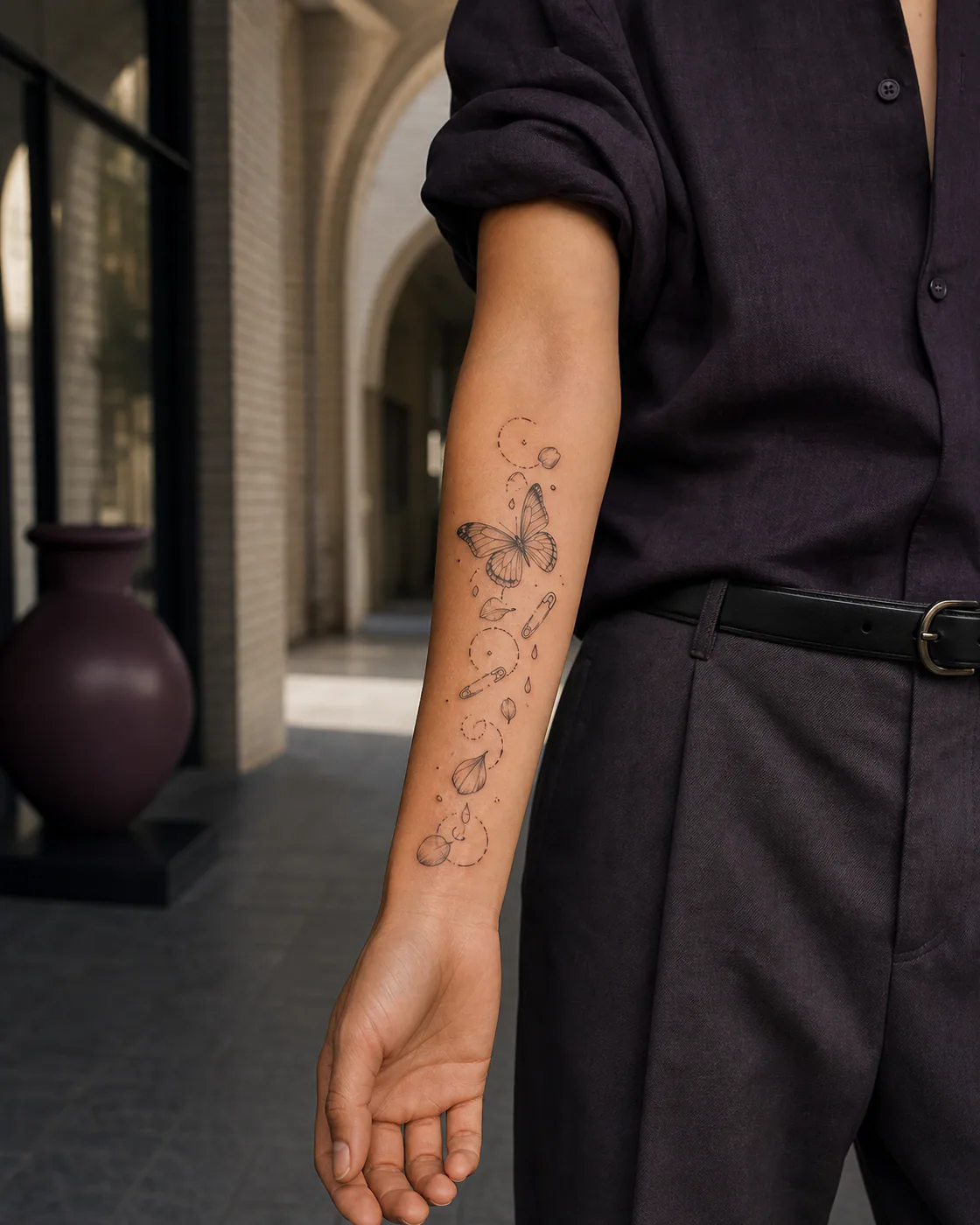
Fine Line Filler Tattoo for the Forearm
An original filler concept shaped as a healed fine line tattoo for the forearm.
- Fine Line
- Fillers
- Forearm
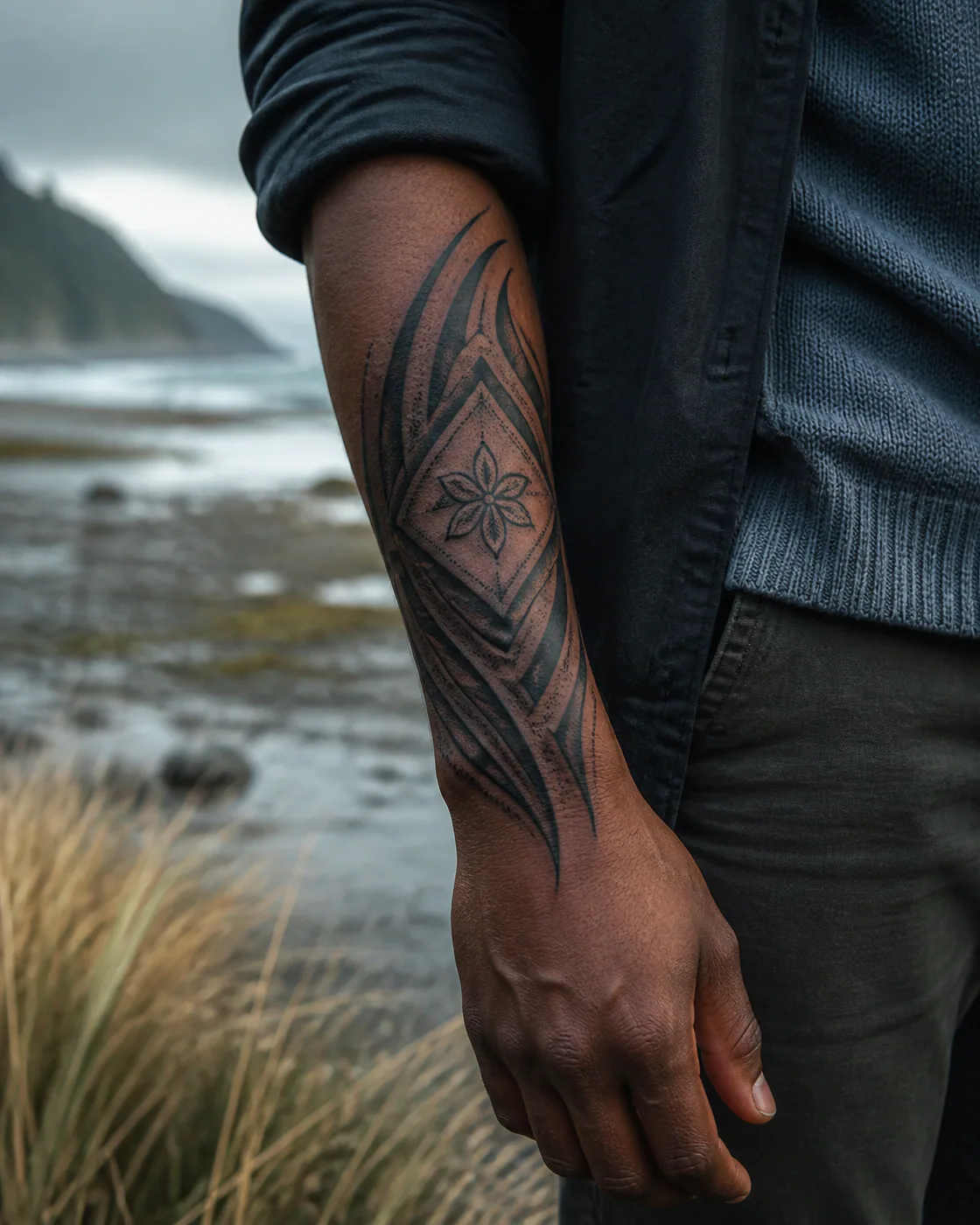
Tribal Memory Tattoo for the Forearm
An original memory concept shaped as a healed tribal tattoo for the forearm.
- Tribal
- Memory
- Forearm
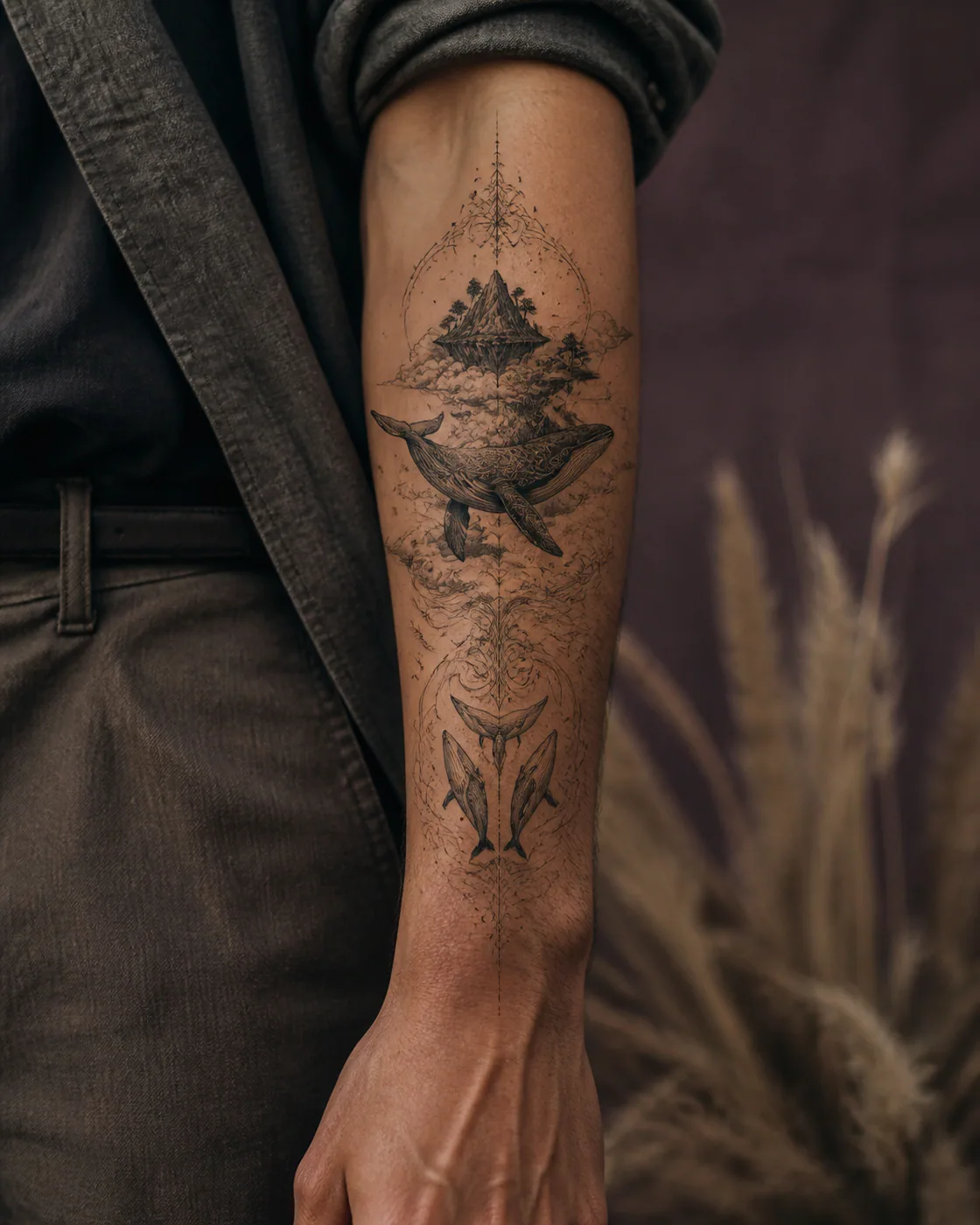
Ornamental Family Mythic Tattoo for the Forearm
An original mythic concept shaped as a healed ornamental tattoo for the forearm.
- Ornamental
- Mythic
- Forearm
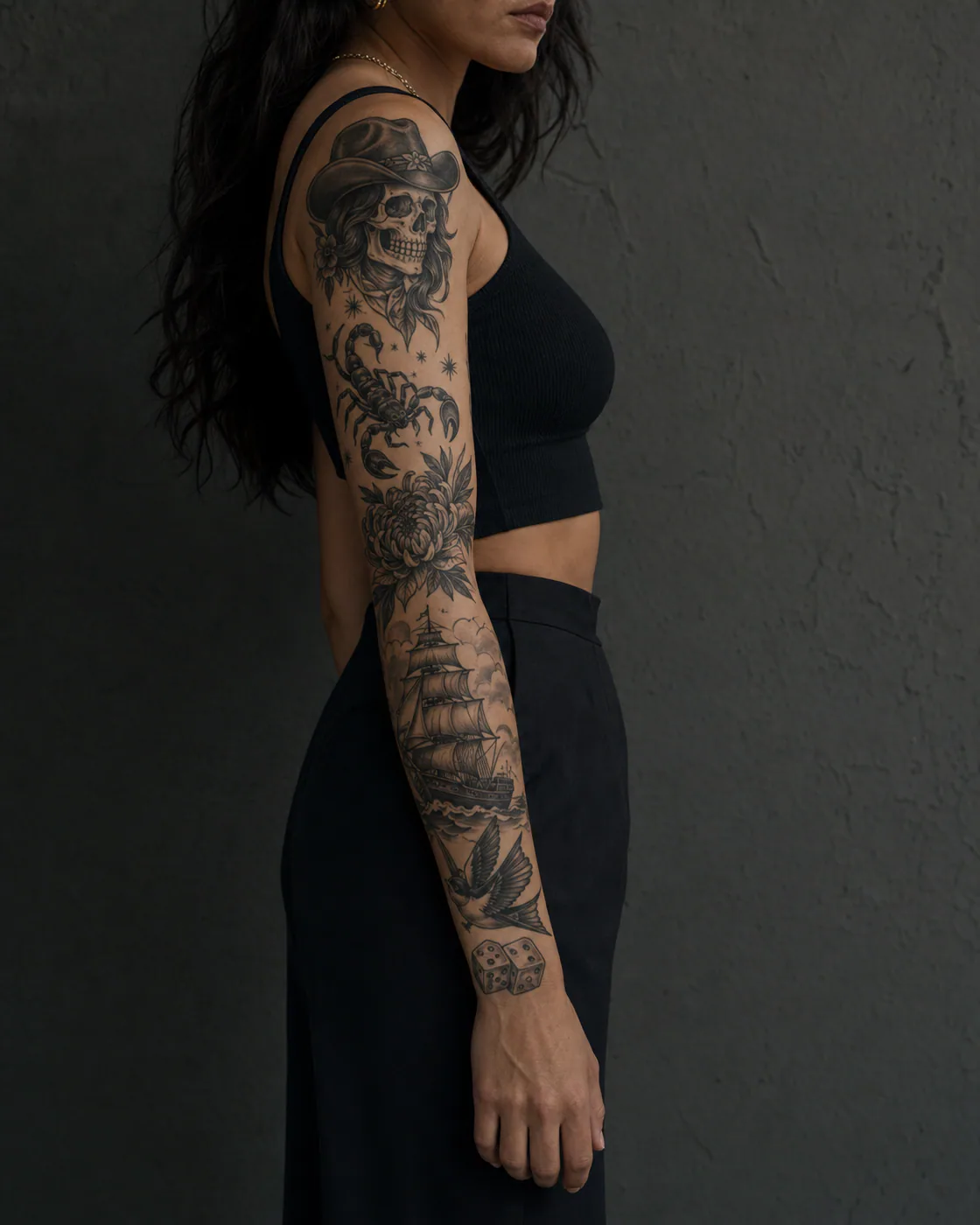
Cowgirl and scorpion story sleeve
Western attitude meets maritime flash in a darker collection balanced by one large floral anchor.
- American Traditional
- Western
- Full Sleeve
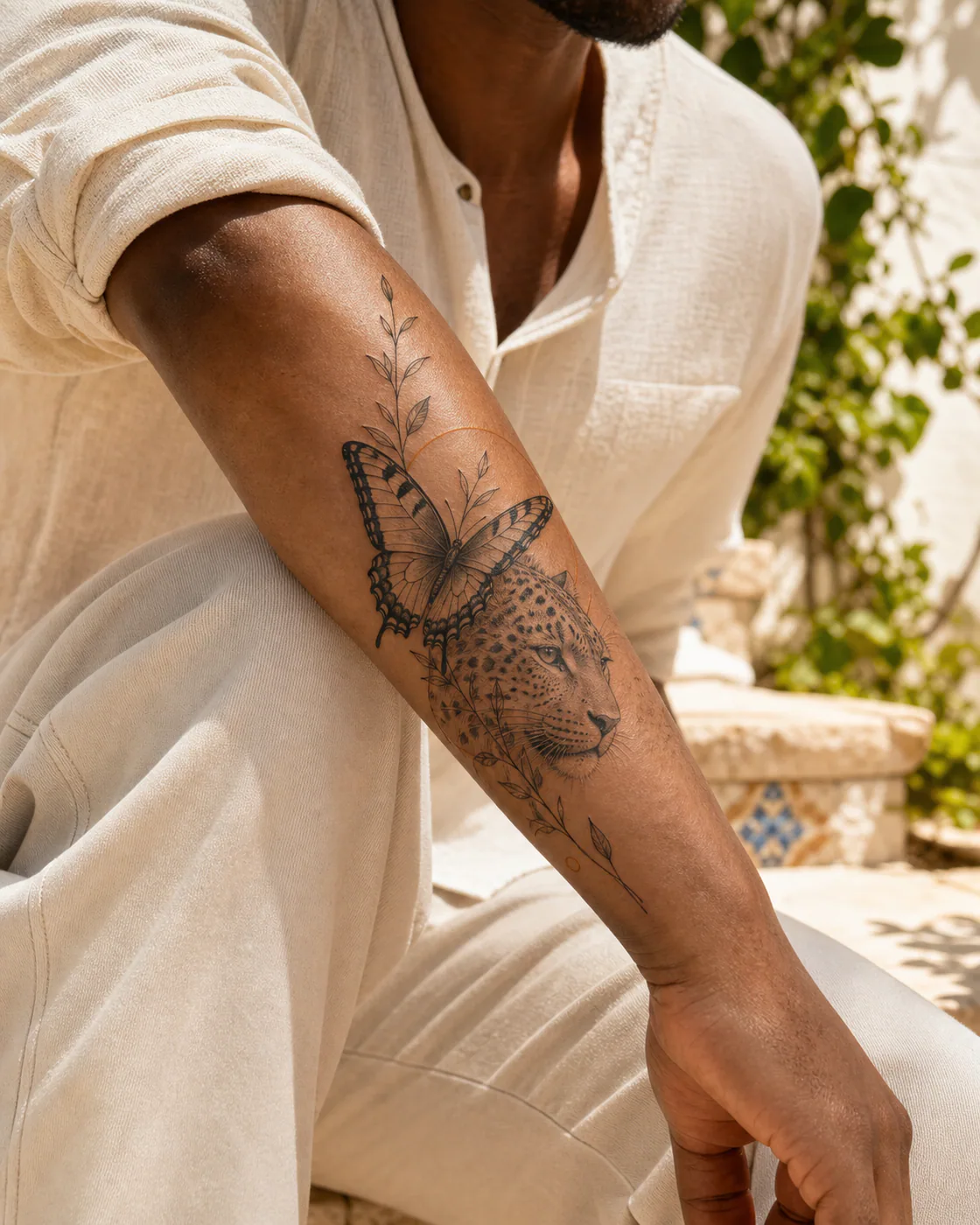
Fine Line Animal Tattoo for the Forearm
An original animal concept shaped as a healed fine line tattoo for the forearm.
- Fine Line
- Animals
- Forearm
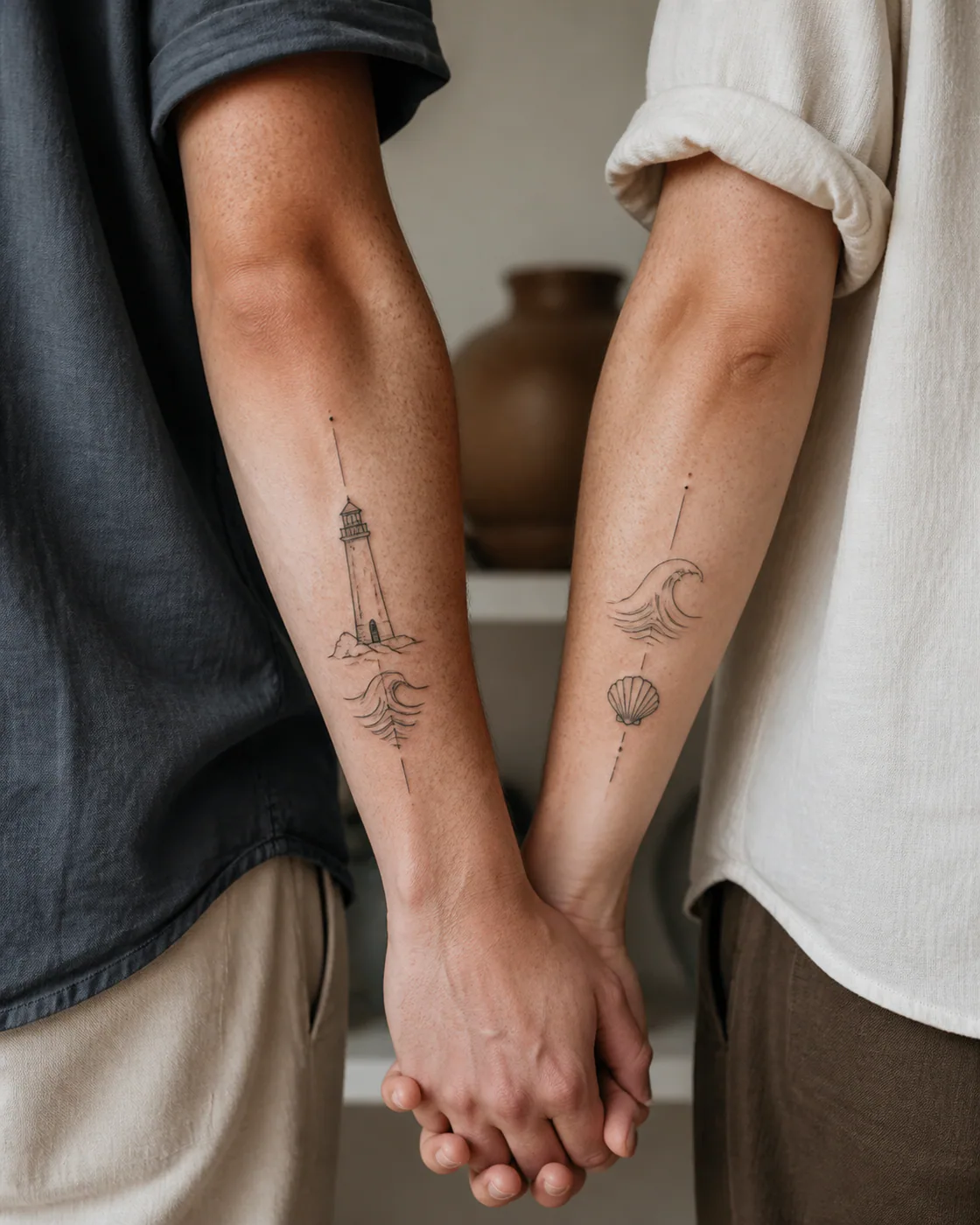
Minimalist Couple Nautical Tattoo for the Forearm
An original nautical concept shaped as a healed minimalist tattoo for the forearm.
- Minimalist
- Nautical
- Forearm
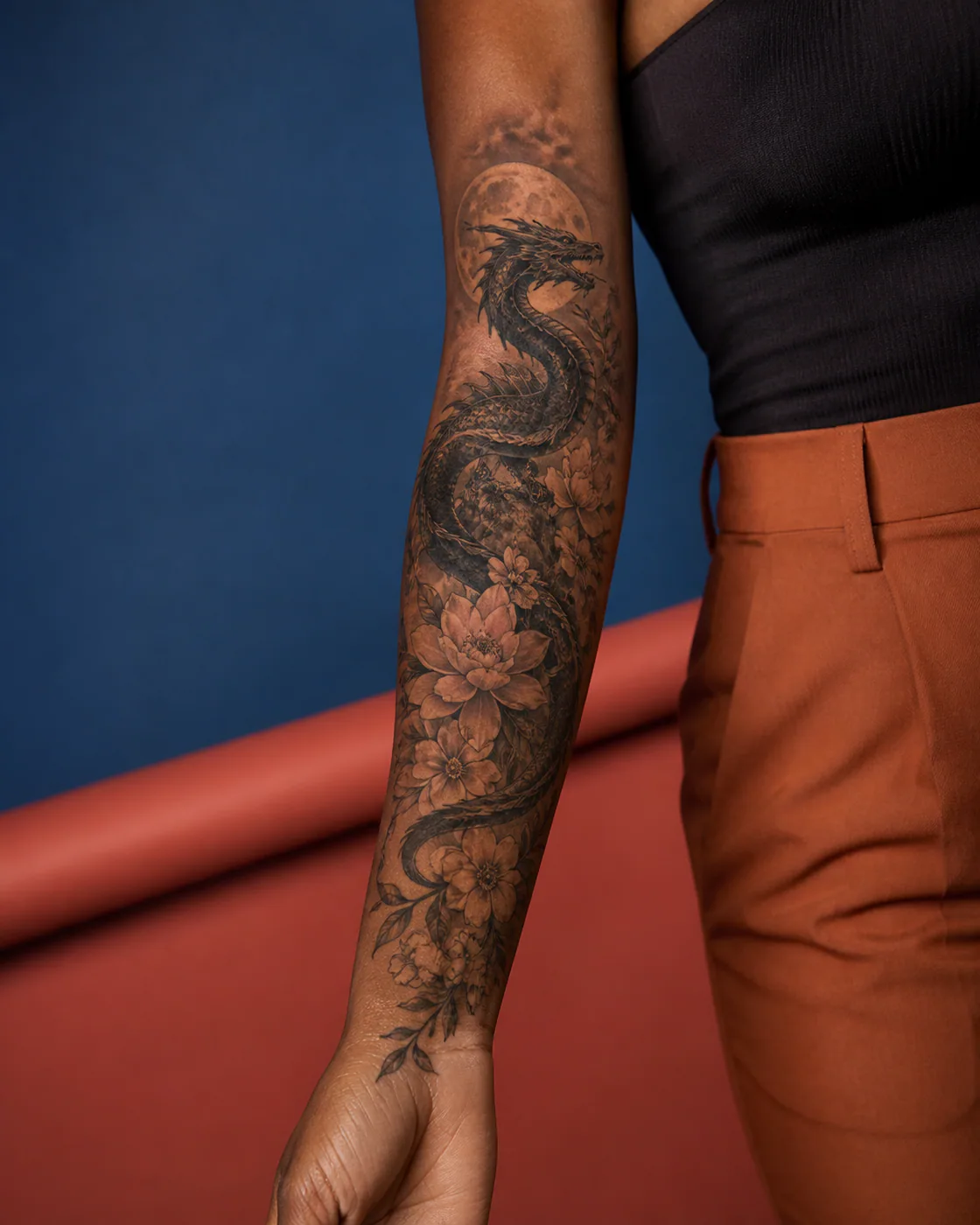
Floral Mythic Tattoo for the Forearm
An original mythic concept shaped as a healed floral tattoo for the forearm.
- Floral
- Mythic
- Forearm
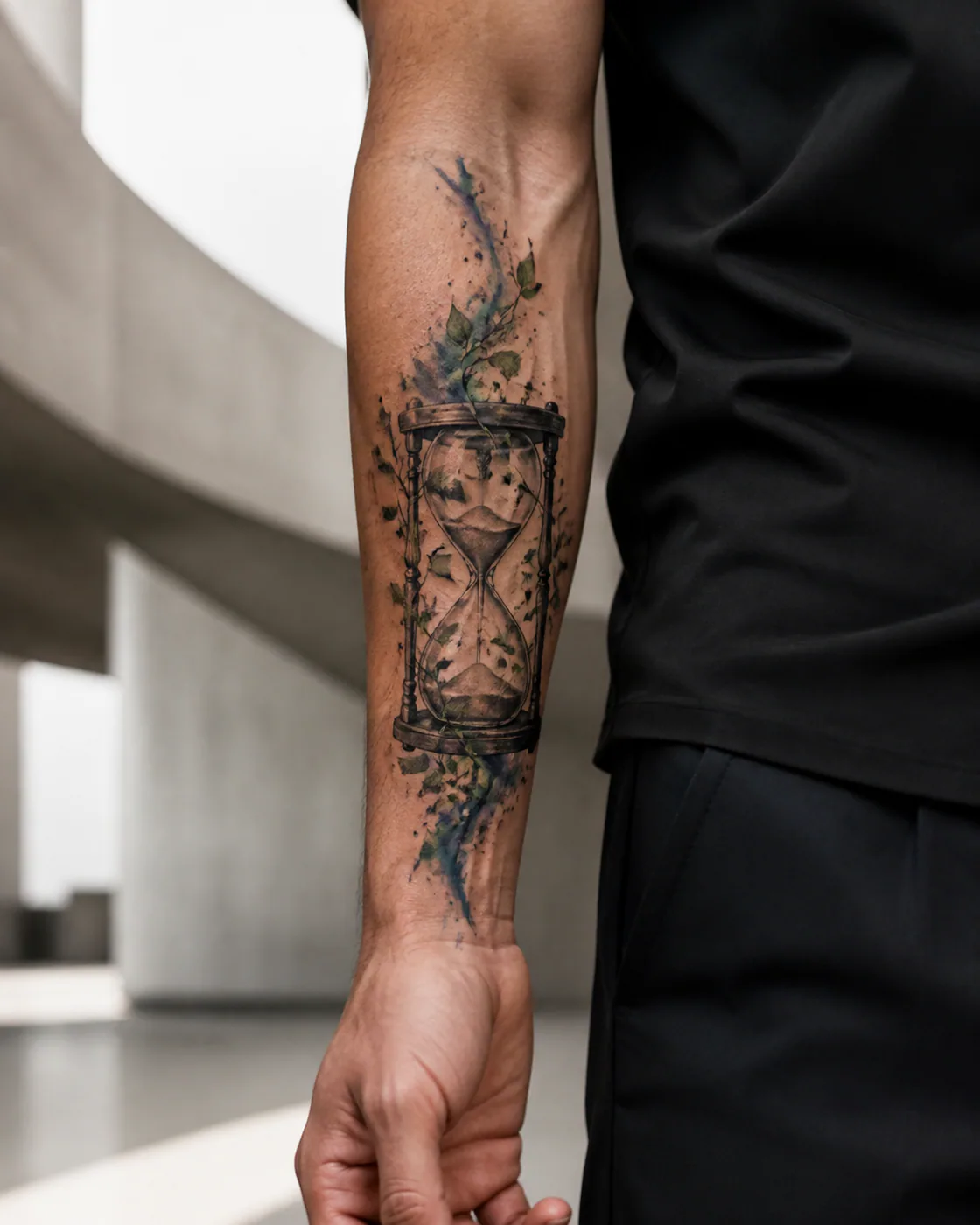
Watercolor Symbolic Tattoo for the Forearm
An original symbolic concept shaped as a healed watercolor tattoo for the forearm.
- Watercolor
- Symbols & meaning
- Forearm
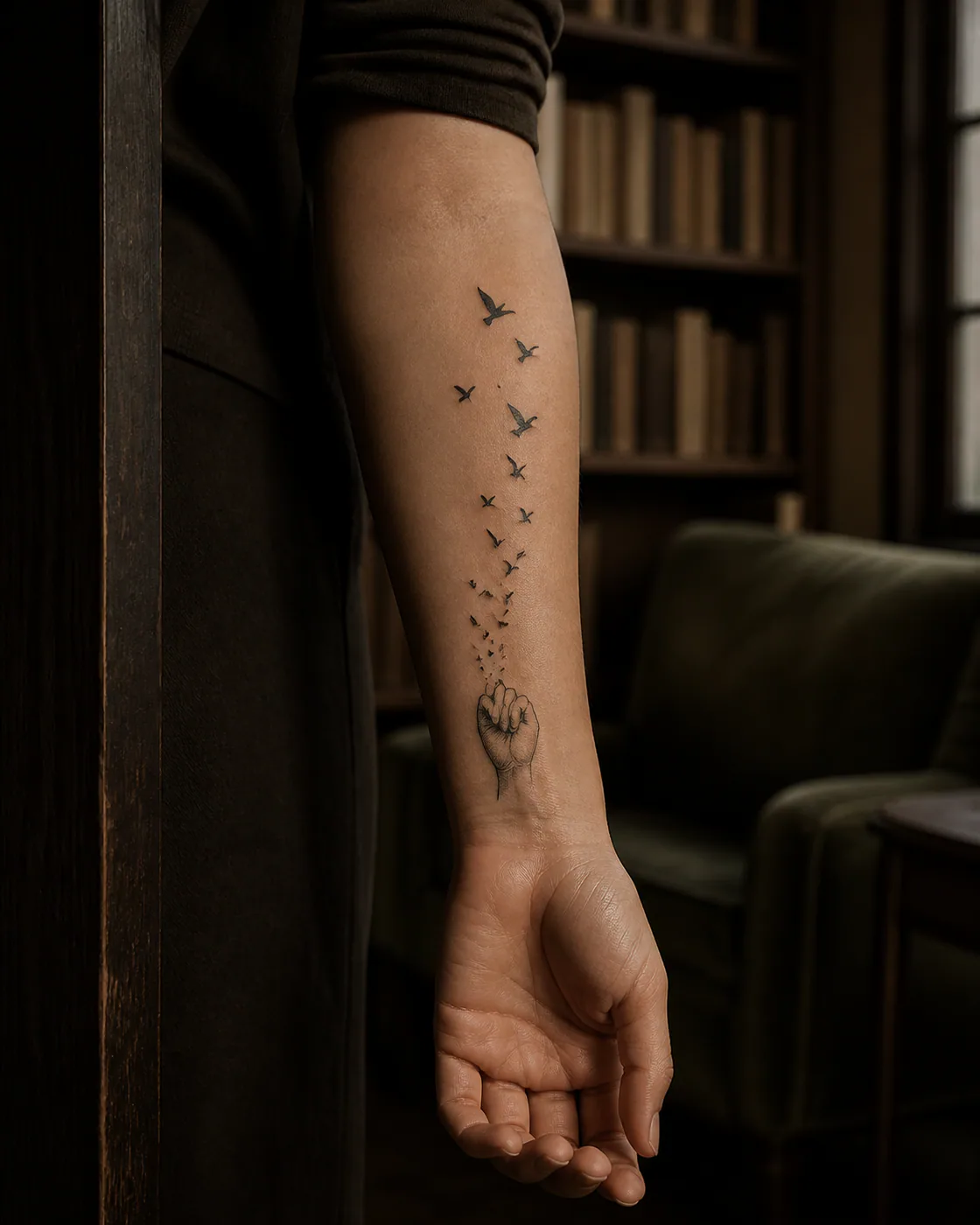
Minimalist Symbolic Tattoo for the Forearm
An original symbolic concept shaped as a healed minimalist tattoo for the forearm.
- Minimalist
- Symbols & meaning
- Forearm
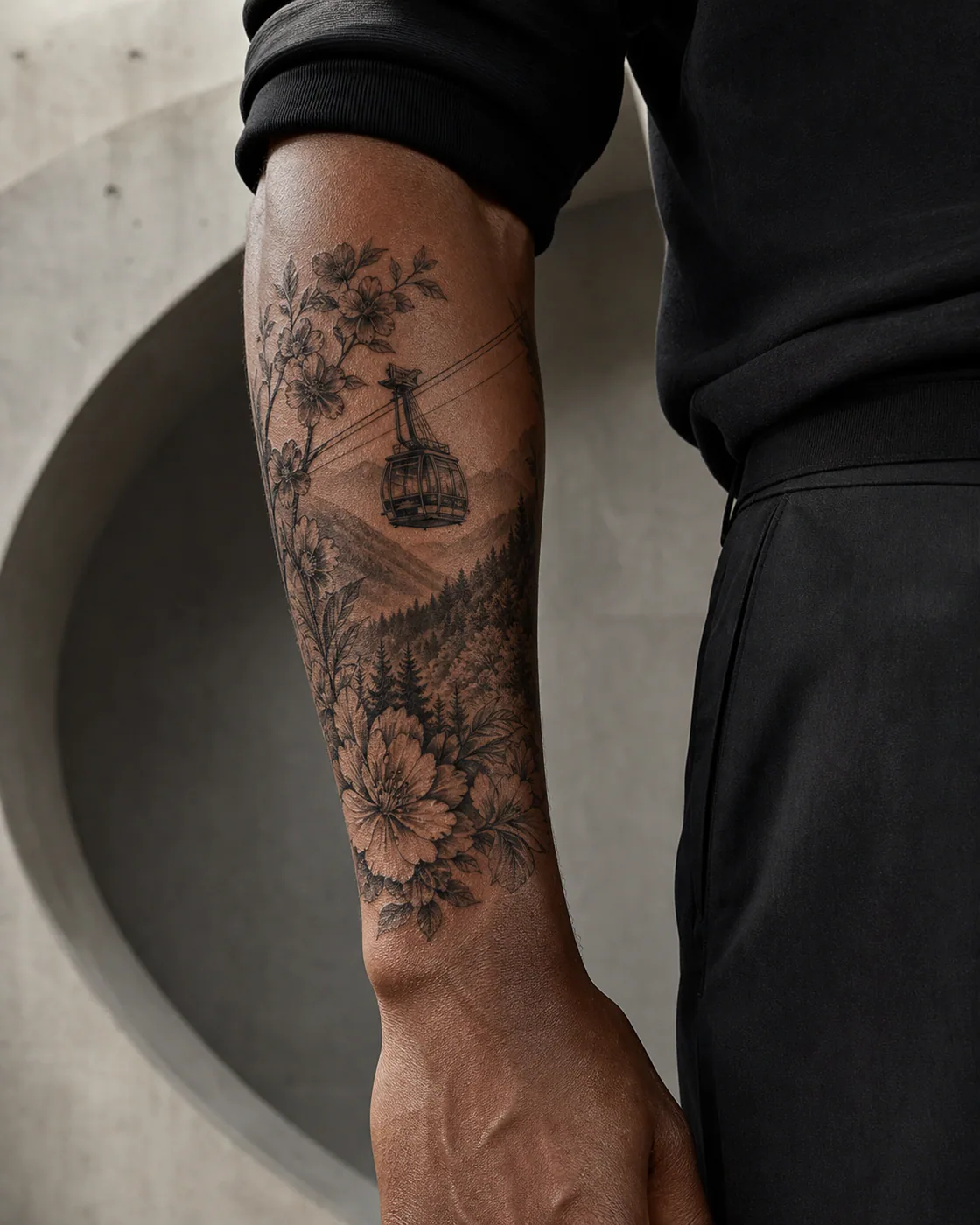
Floral Couple Travel Tattoo for the Forearm
An original travel concept shaped as a healed floral tattoo for the forearm.
- Floral
- Travel
- Forearm
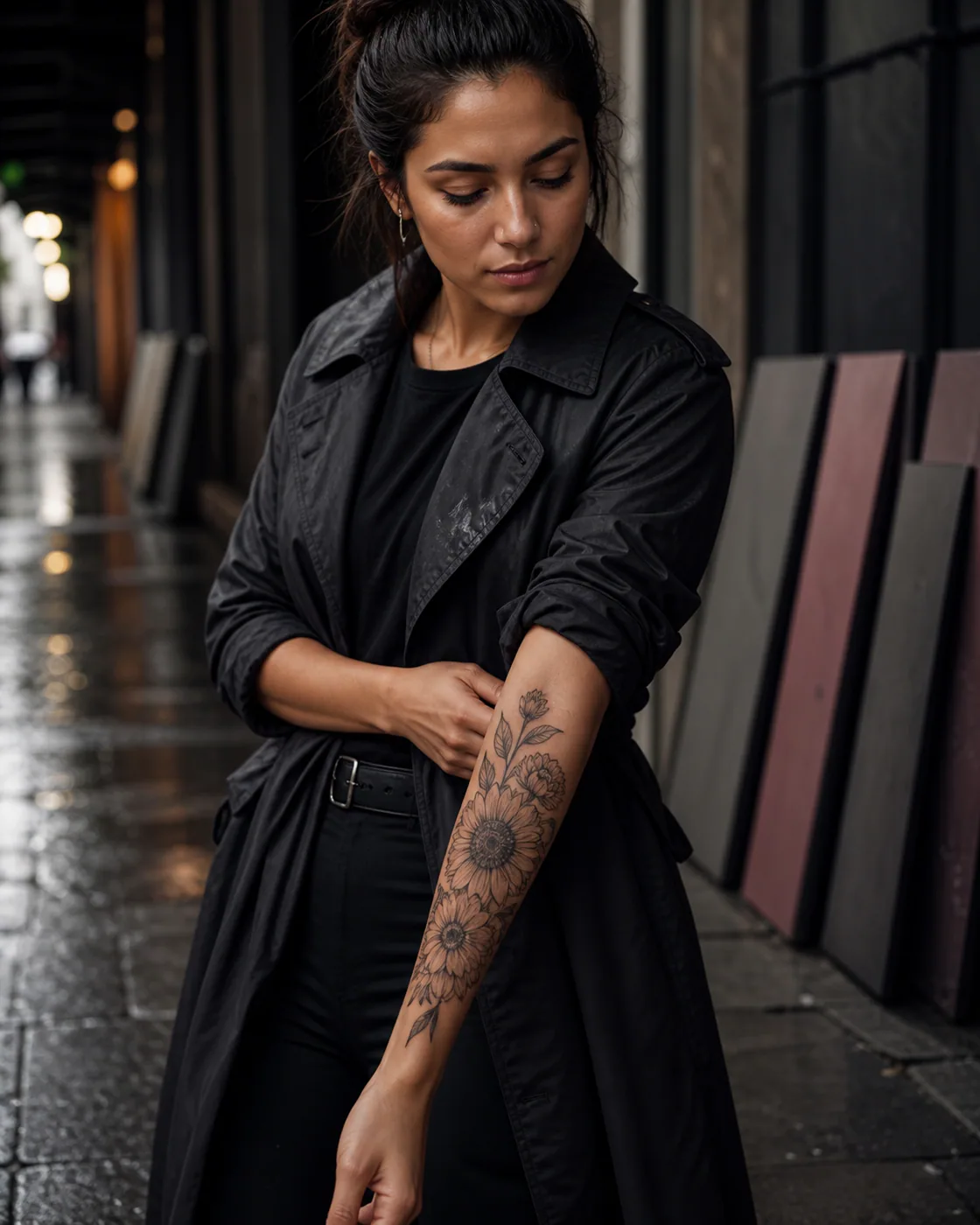
Illustrative Flower Tattoo for the Forearm
An original flower concept shaped as a healed illustrative tattoo for the forearm.
- Illustrative
- Flowers & Botanicals
- Forearm
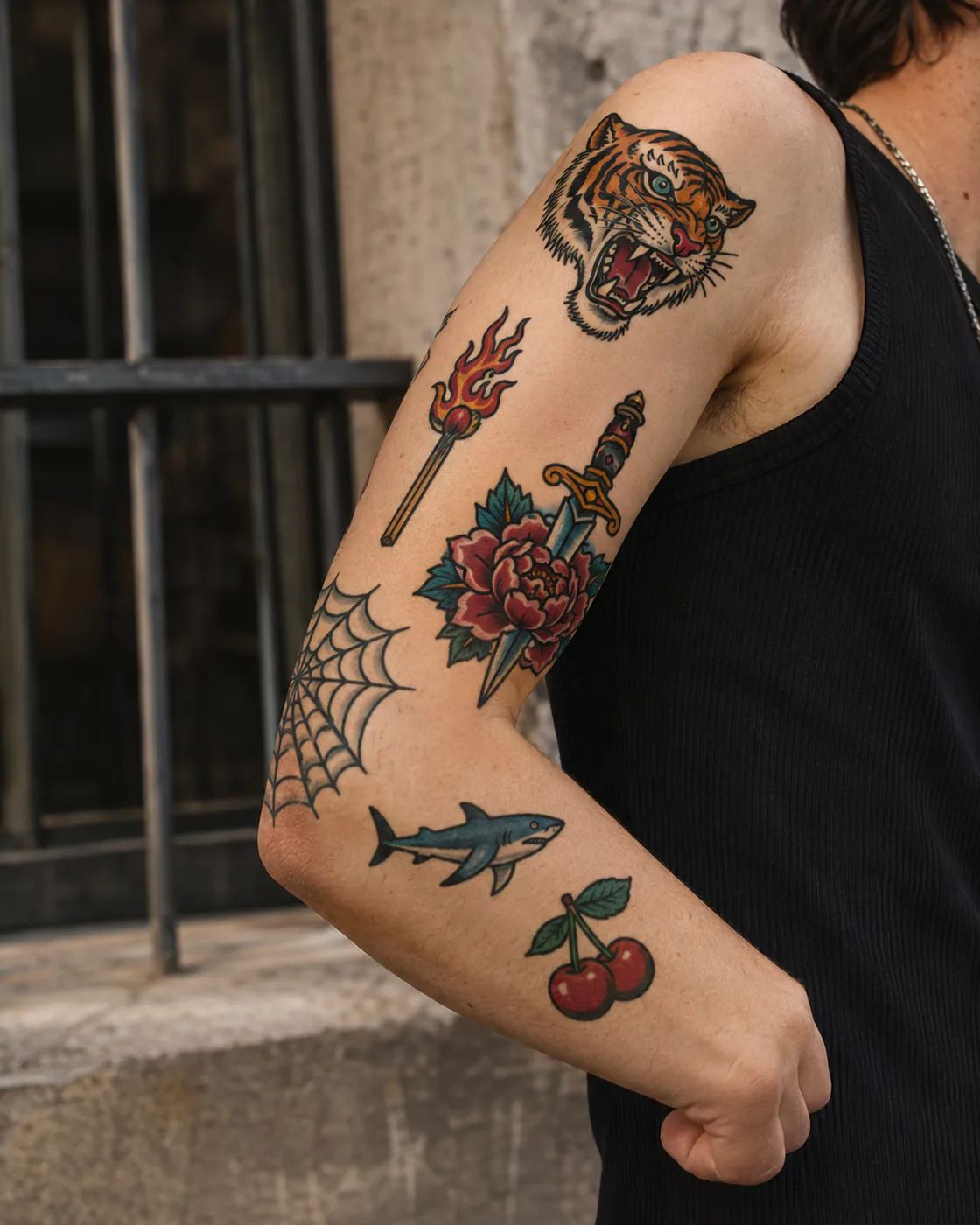
Tiger and peony elbow composition
The bent-arm view shows how round flowers and a web can negotiate the elbow between stronger vertical anchors.
- American Traditional
- Animals
- Full Sleeve
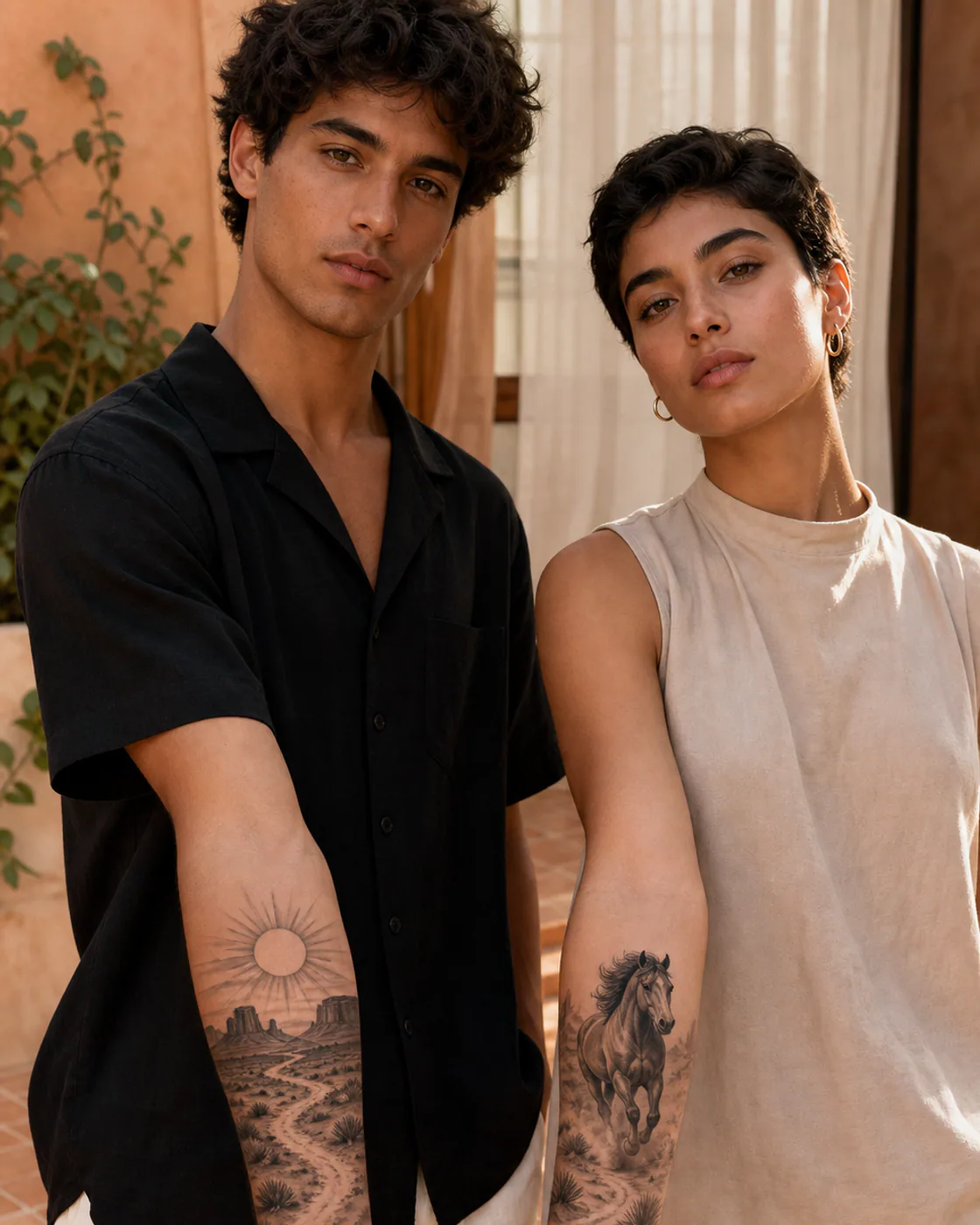
Black And Grey Couple Western Tattoo for the Forearm
An original western concept shaped as a healed black and grey tattoo for the forearm.
- Black & Gray
- Western
- Forearm
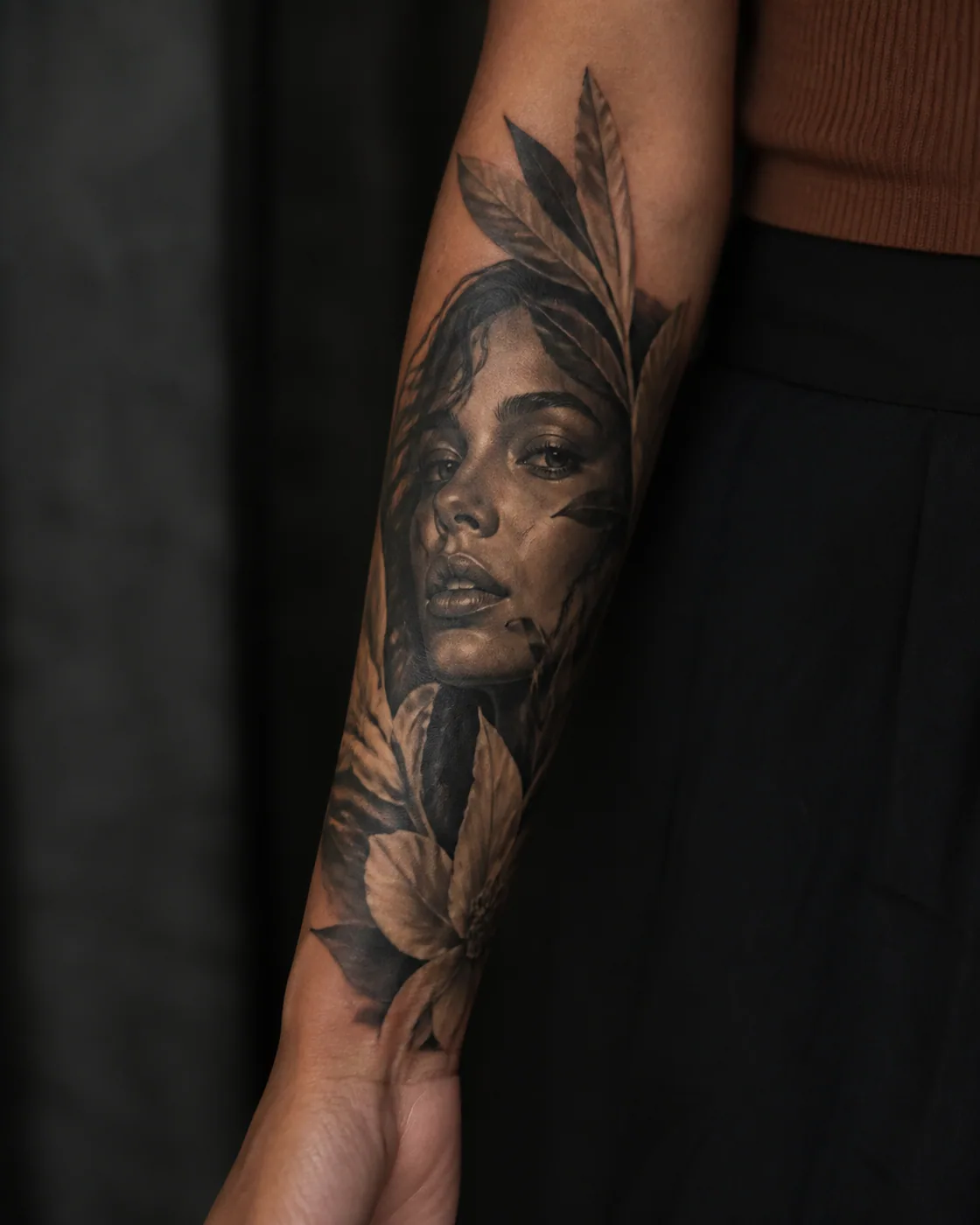
Black And Grey Portrait Tattoo for the Forearm
An original portrait concept shaped as a healed black and grey tattoo for the forearm.
- Black & Gray
- Portrait
- Forearm
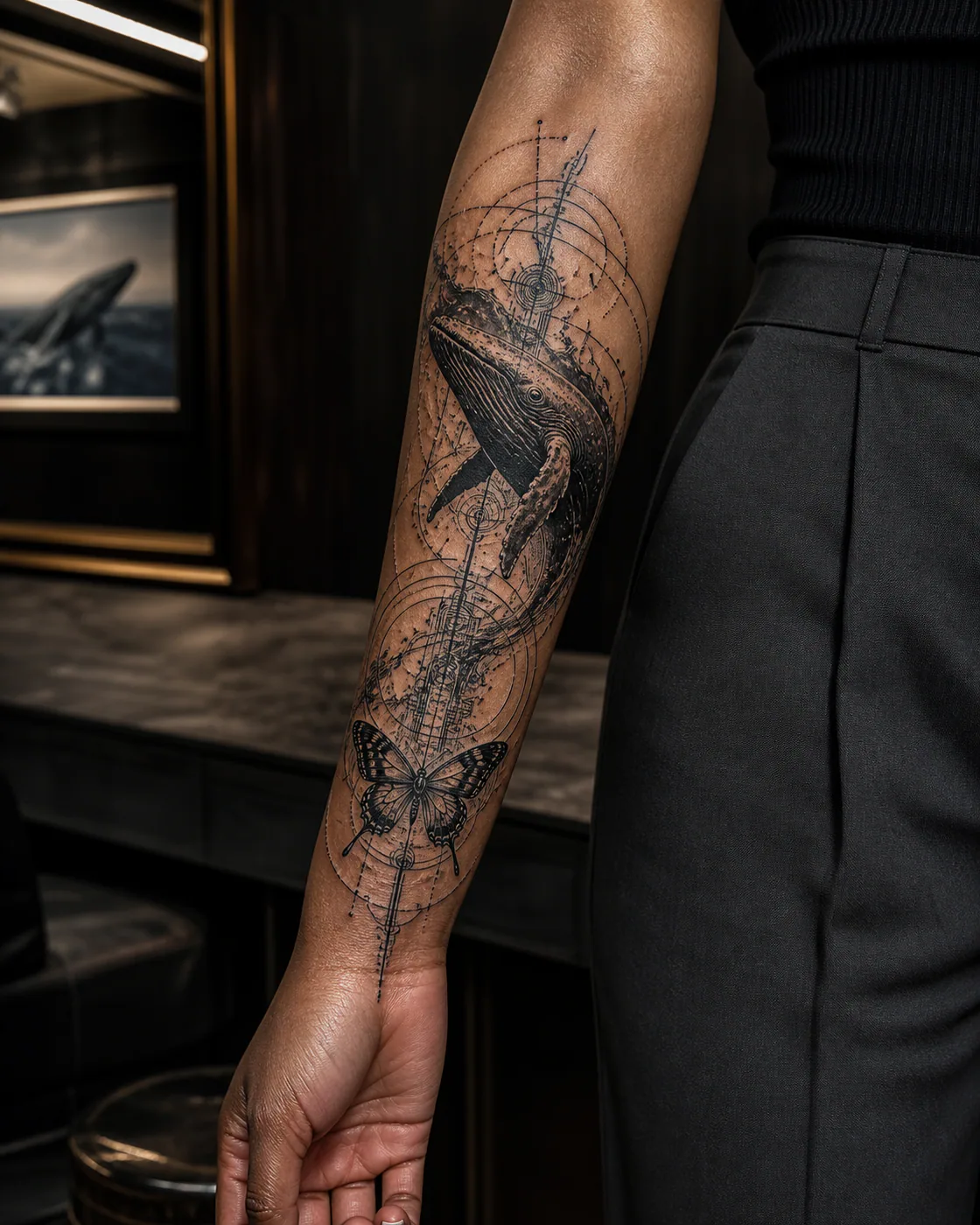
Cyber Sigilism Nautical Tattoo for the Forearm
An original nautical concept shaped as a healed cyber sigilism tattoo for the forearm.
- Cybersigilism
- Nautical
- Forearm
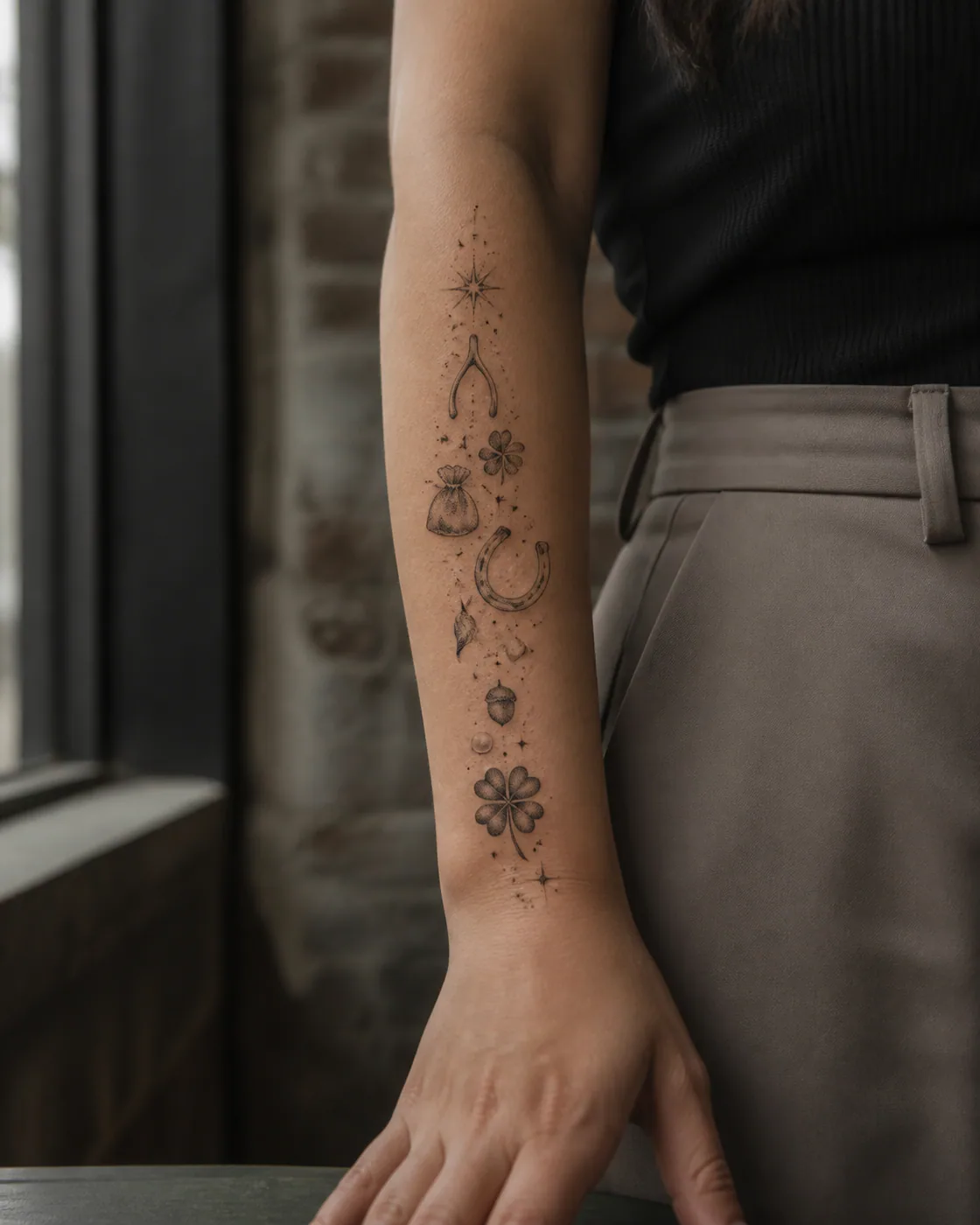
Dotwork Filler Tattoo for the Forearm
An original filler concept shaped as a healed dotwork tattoo for the forearm.
- Dotwork
- Fillers
- Forearm
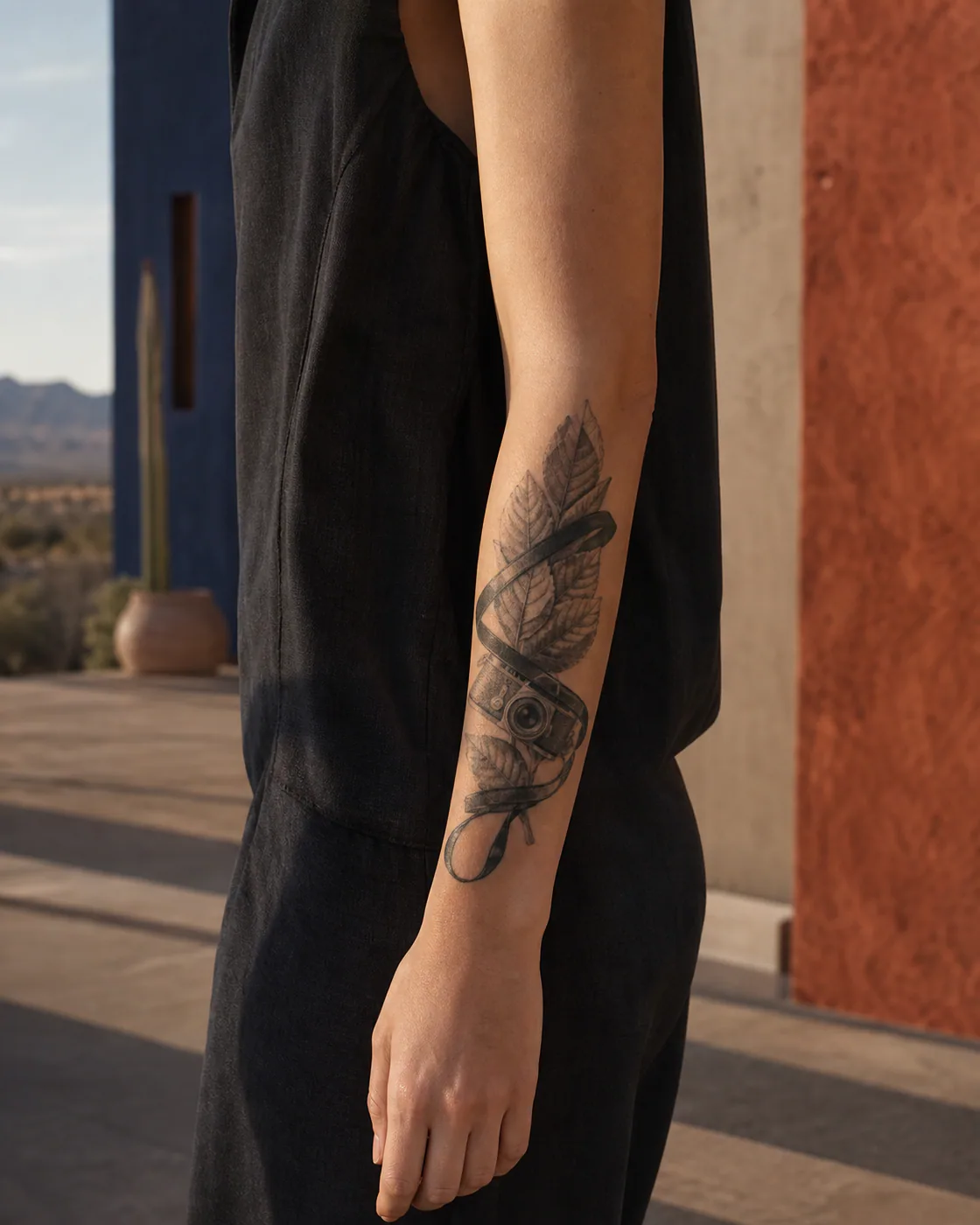
Black And Grey Memory Tattoo for the Forearm
An original memory concept shaped as a healed black and grey tattoo for the forearm.
- Black & Gray
- Memory
- Forearm
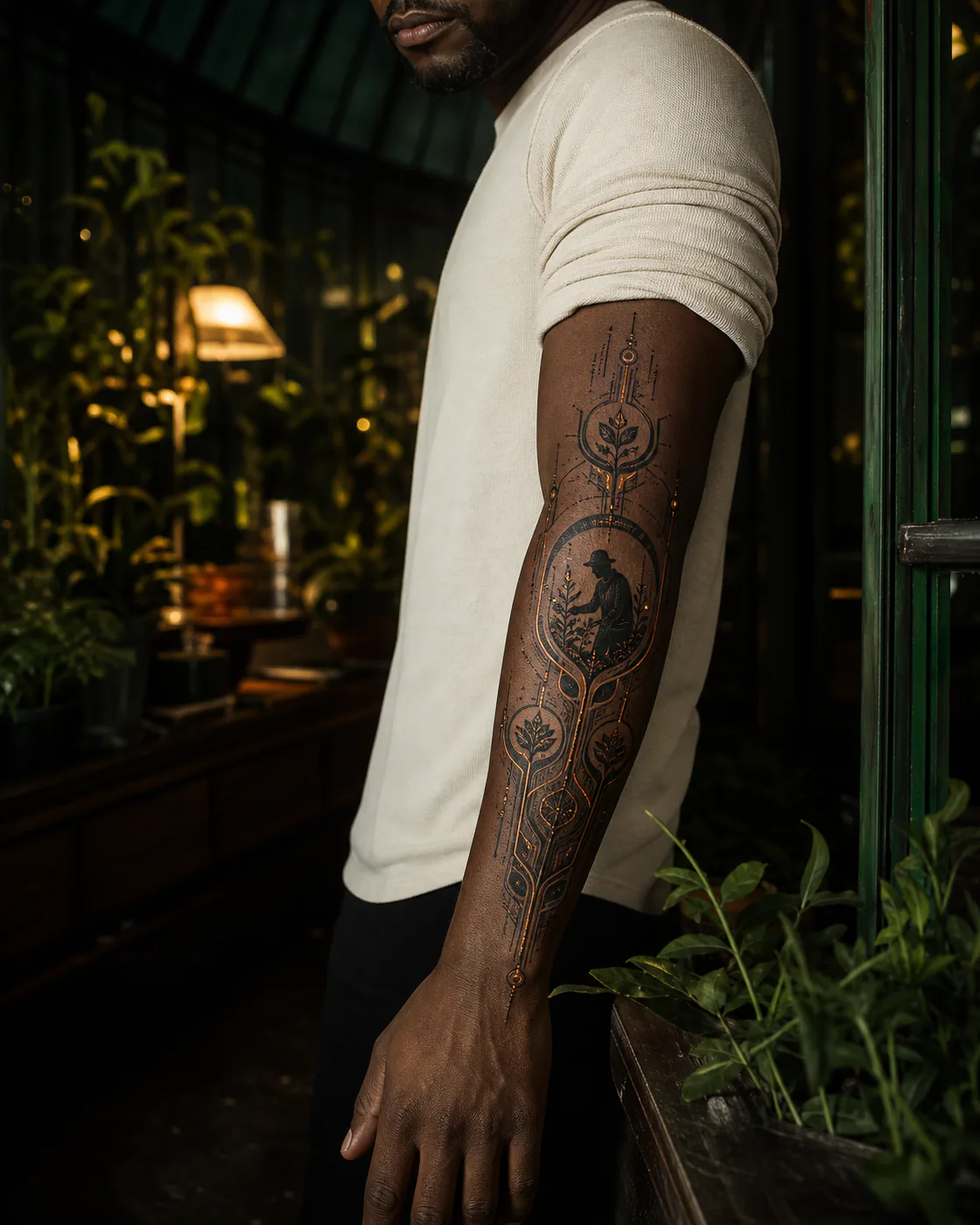
Cyber Sigilism Family Portrait Tattoo for the Forearm
An original portrait concept shaped as a healed cyber sigilism tattoo for the forearm.
- Cybersigilism
- Portrait
- Forearm
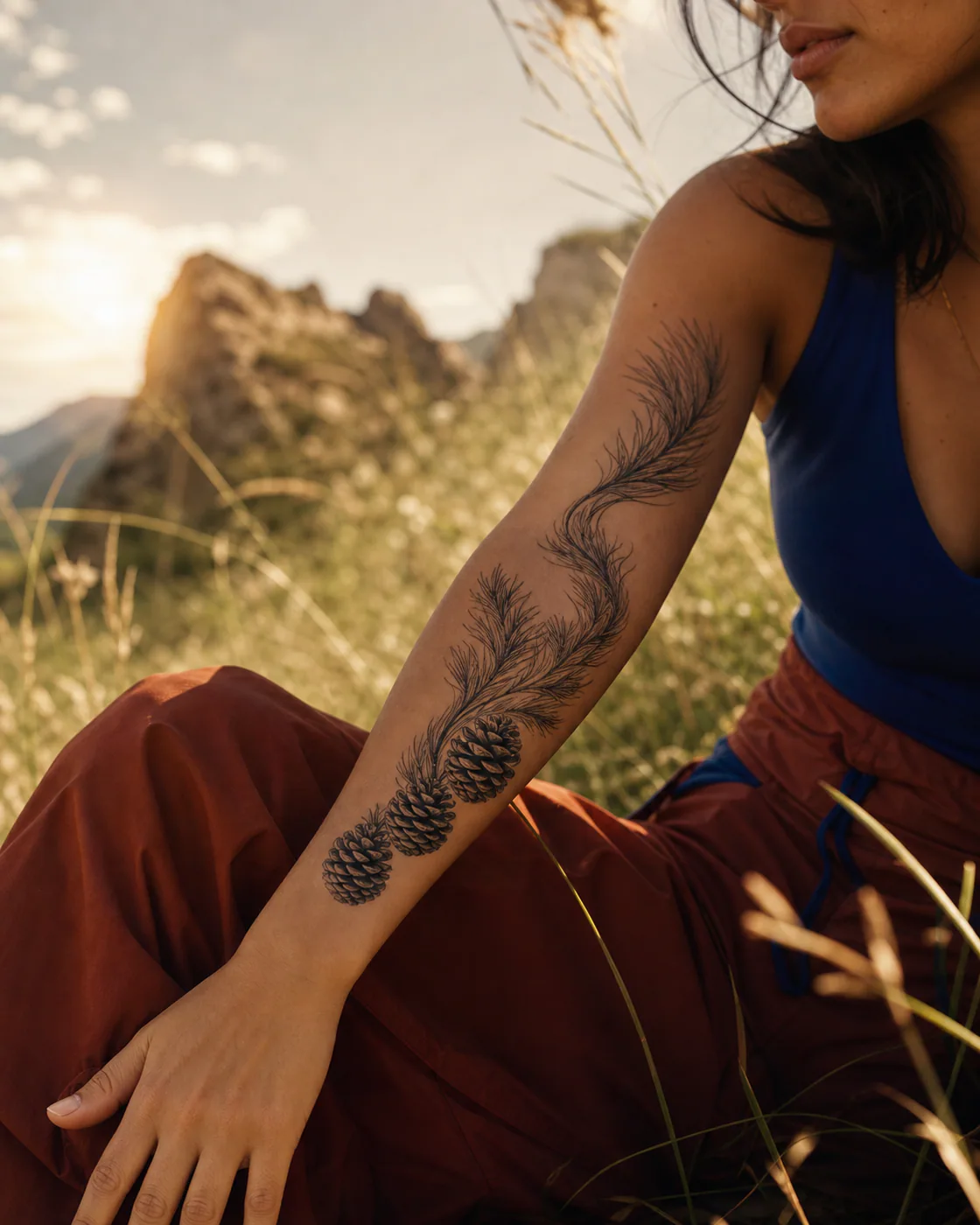
Surrealism Family Botanical Tattoo for the Forearm
An original botanical concept shaped as a healed surrealism tattoo for the forearm.
- Surrealism
- Flowers & Botanicals
- Forearm

Rooster and mirror vintage sleeve
Distinct domestic and fighting symbols share one vintage palette, creating variety without losing visual kinship.
- American Traditional
- Animals
- Full Sleeve
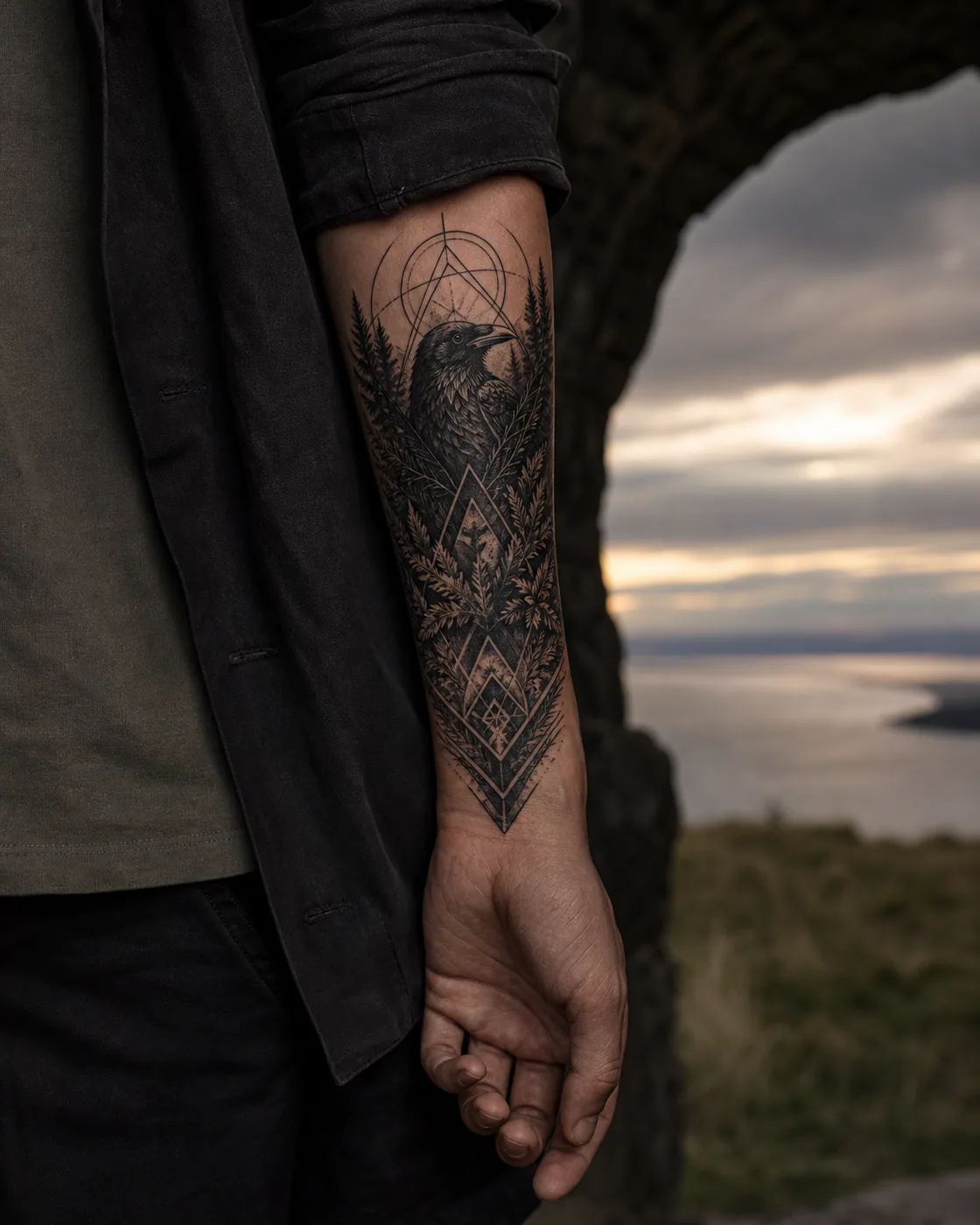
Geometric Animal Tattoo for the Forearm
An original animal concept shaped as a healed geometric tattoo for the forearm.
- Geometric
- Animals
- Forearm
PLACEMENT-LED DIRECTIONS
Forearm compositions for different ways of seeing
Choose a compositional family before choosing decoration. Inner, outer, vertical, and wraparound designs behave differently as the arm moves.
Vertical botanical stems
A branch, wildflower, thorn, or climbing leaf can follow the long axis while varying naturally around tendons and muscle.
Inner forearm personal symbols
Use the flatter, more private-facing surface for lettering, memorial details, compact scenes, or images you want to see directly.
Outer forearm graphic subjects
Bolder animals, emblems, masks, and high-contrast illustrations read well on the outward plane from conversational distance.
Wraparound movement
Snakes, waves, smoke, vines, and abstract bands can connect multiple views, but the design still needs a clear primary angle.
Stacked story panels
Link two or three simple moments vertically with consistent spacing and line language rather than forcing one crowded scene.
Future sleeve anchors
Plan a focal subject, edge behavior, and open connection points so the tattoo can later grow toward the wrist or upper arm.
CHOOSE THE SURFACE BEFORE THE SUBJECT
Compare inner, outer, wraparound, and expandable forearm layouts
The forearm is not one flat canvas. Its inner and outer planes differ in visibility, while a wraparound design must remain coherent as the radius and ulna rotate. Placement should shape the composition from the start.
Forearm direction: Inner forearm focus
- Often works well for
- Personal symbols, script, fine-line studies, and vertical designs the wearer sees directly.
- Shape and scale cue
- Narrow small-to-medium compositions that respect the wrist and elbow creases.
- What to check
- Test the reading direction with the arm relaxed and rotated instead of judging one flat pose.
Forearm direction: Outer forearm statement
- Often works well for
- Traditional, blackwork, illustrative, and other designs intended to face outward clearly.
- Shape and scale cue
- Medium vertical anchors or broader pieces that use the firmer outer plane.
- What to check
- Account for everyday visibility, sun exposure after healing, and any future upper-arm work.
Forearm direction: Continuous forearm wrap
- Often works well for
- Vines, snakes, bands, waves, geometric systems, and illustrations with circular movement.
- Shape and scale cue
- A circumferential composition planned around the full arm rather than a stretched flat image.
- What to check
- Inspect the design from several angles so the focal point and gaps do not disappear on rotation.
Forearm direction: Future-sleeve forearm anchor
- Often works well for
- A strong first section intended to connect with later work above the elbow or toward the wrist.
- Shape and scale cue
- Medium to large, leaving intentional transition space at both ends of the section.
- What to check
- Share the long-term sleeve plan before tattooing so the anchor does not block later flow.
PLAN THE PLACEMENT
Inner, outer, or wraparound forearm?
Each surface changes visibility, available width, orientation, and how the tattoo interacts with a future sleeve.
Inner forearm
Often flatter and easier for the wearer to view, it suits personal details and vertical compositions but can be sensitive near the wrist and elbow ditch.
Outer forearm
This outward-facing plane supports stronger silhouettes and frequent public visibility, especially when the arm hangs naturally.
Orientation
Decide whether the subject should appear upright to other people with your arm relaxed or upright to you when you raise it. Discuss this before the stencil.
Edges and expansion
Avoid accidental hard borders unless they are part of the concept. Soft exits make future additions and sleeve transitions easier.
ARTIST HANDOFF
Show the arm, not just the reference image
Photographs of your relaxed arm and a rough size overlay help the artist understand rotation, width, existing marks, and viewing angle.
Include in your brief
- Inner, outer, side, or wraparound placement preference.
- Wrist-to-elbow measurements and a relaxed-arm photograph.
- The primary viewing angle and preferred orientation.
- Whether the design may become part of a future sleeve.
- Watch, jewelry, workwear, sun, and visibility considerations.
KEEP EXPLORING
Related tattoo idea collections
Use another placement, size, audience, or subject to make your direction more specific.

Tattoo Sleeve Ideas
Plan a cohesive full, half, or patchwork sleeve through hierarchy, body flow, transitions, and a realistic session roadmap.
Explore the collection
Tattoo Ideas for Men
Explore bold, restrained, symbolic, and placement-aware directions without treating masculinity as a single visual style.
Explore the collection
Flower Tattoo Ideas
Explore specific blooms, botanical structures, symbolic pairings, and compositions from tiny stems to large body-led florals.
Explore the collectionCOMMON QUESTIONS
What to know before choosing this direction
Is the inner or outer forearm better for a tattoo?
Neither is universally better. The inner forearm can feel more personal and often offers a flatter view; the outer forearm is more outward-facing and can suit bold silhouettes. Your anatomy and concept decide.
Which direction should a forearm tattoo face?
Most figurative tattoos are oriented upright when the arm rests naturally, but there are exceptions. Confirm the viewing priority with your artist while testing the stencil in several arm positions.
How large should a forearm tattoo be?
It should be large enough for its detail and small enough to preserve intentional breathing room. Measure the usable area and let the artist fit the final design to the narrowest point.
Can a forearm tattoo later become a sleeve?
Yes, especially when the first piece has considered focal hierarchy, edge shapes, background options, and open connection points. Tell the artist about future sleeve plans before the first tattoo.
Can a forearm tattoo wrap around the arm?
Yes. Bands, serpents, branches, waves, and abstract forms can use the forearm circumference, but the composition should be checked from the inner, outer, and side views so no important feature disappears at a turn.
How visible is a forearm tattoo in daily life?
Forearm tattoos are usually easy to see in short sleeves and may still show when long sleeves move. Consider work policies, clothing, sun exposure, watches, and whether you want the design oriented primarily toward you or other viewers.
TURN INSPIRATION INTO AN ORIGINAL CONCEPT
Keep designing with your own story
Take the subject, placement, and style into the AI generator, then use virtual try-on to judge approximate scale. A tattoo artist should still redraw the final design for your body.