TATTOO IDEAS FOR WOMEN
Tattoo ideas for women beyond “delicate”
A women’s tattoo can be soft, architectural, playful, fierce, minimal, or richly detailed. This guide begins with personal meaning and body flow, not narrow assumptions about how femininity should look.

WOMEN'S TATTOOS LIBRARY
Browse curated women's tattoos directions
Browse one curated gallery across related themes, styles, and placements. The same concept may appear in more than one relevant collection.
378 design directions
Page 1 of 16
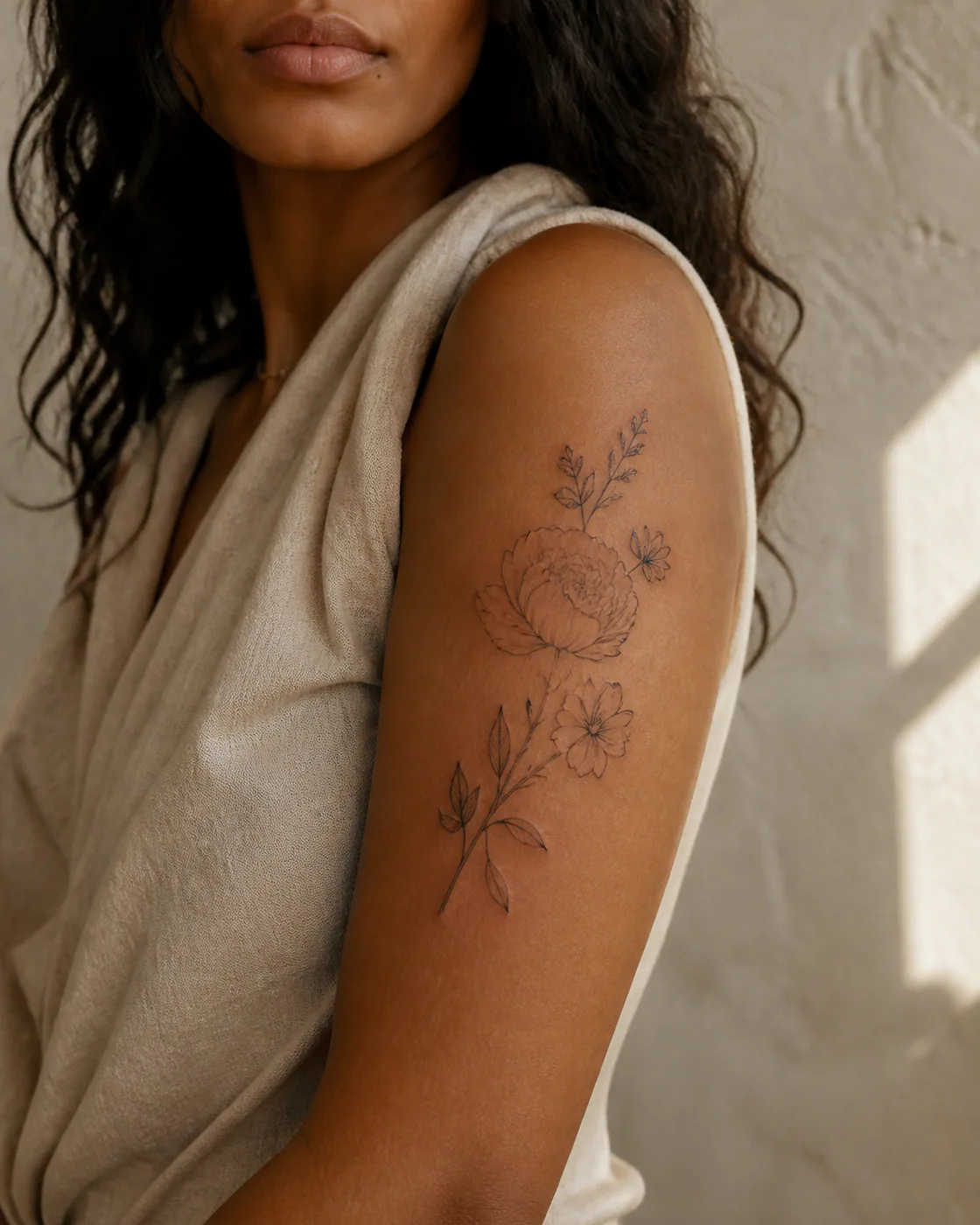
Minimalist Flower Tattoo for the Upper Arm
An original flower concept shaped as a healed minimalist tattoo for the upper arm.
- Minimalist
- Flowers & Botanicals
- Upper Arm
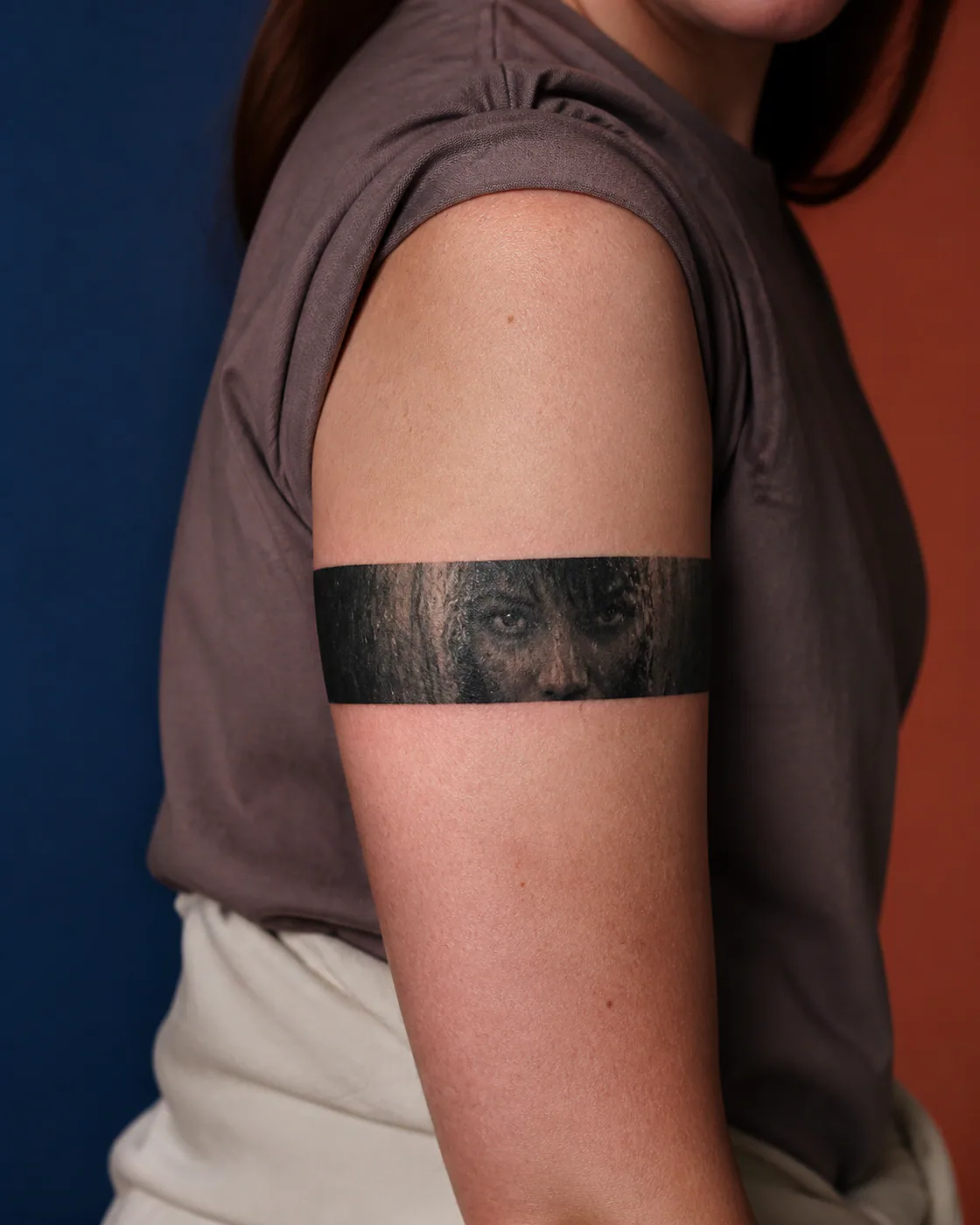
Minimalist Portrait Tattoo for the Armband
An original portrait concept shaped as a healed minimalist tattoo for the armband.
- Minimalist
- Portrait
- Armband
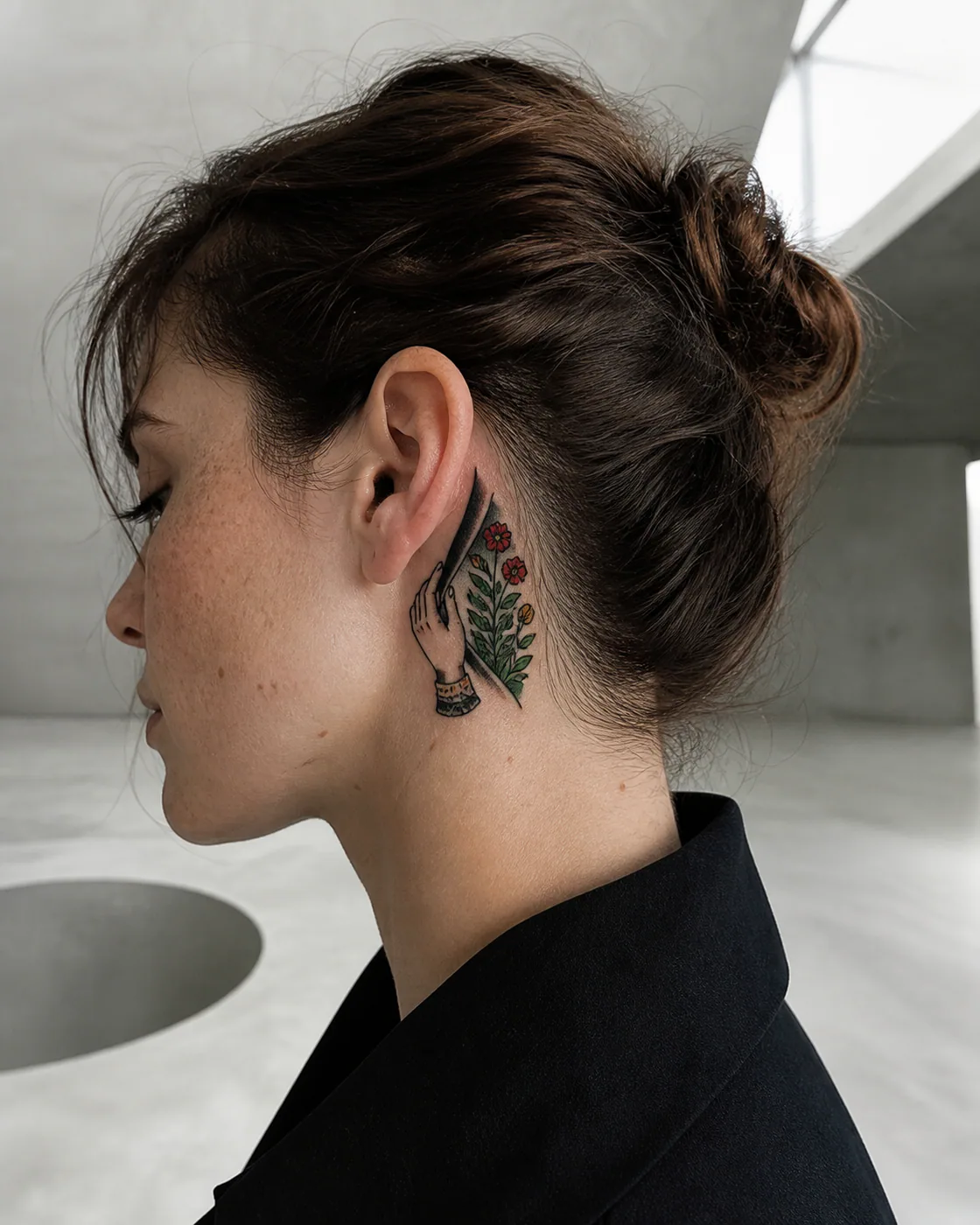
American Traditional Surreal Tattoo for the Behind Ear
An original surreal concept shaped as a healed american traditional tattoo for the behind ear.
- American Traditional
- Surreal
- Behind the Ear
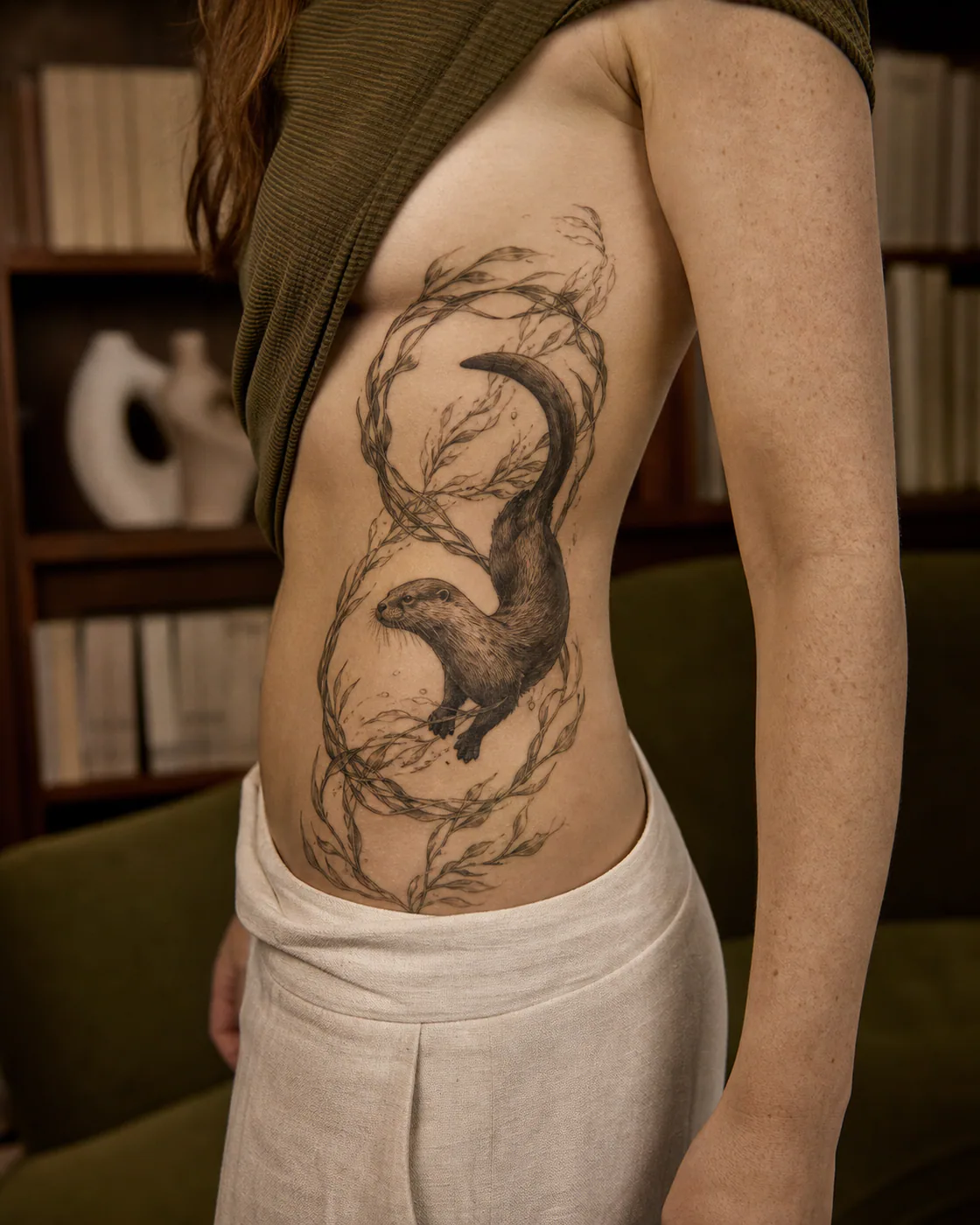
Surrealism Animal Tattoo for the Ribs
An original animal concept shaped as a healed surrealism tattoo for the ribs.
- Surrealism
- Animals
- Ribs / Side
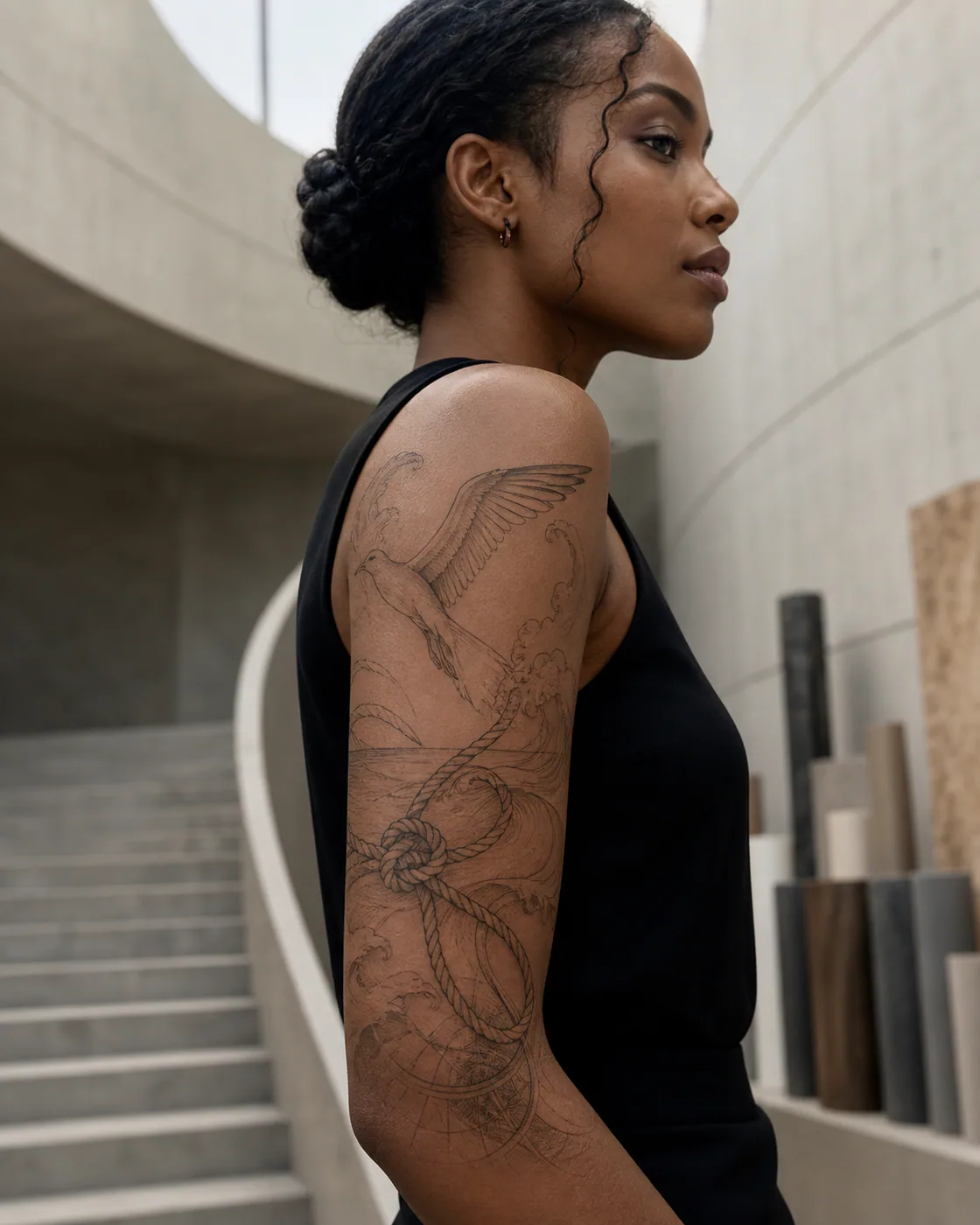
Fine Line Nautical Tattoo for the Half Sleeve
An original nautical concept shaped as a healed fine line tattoo for the half sleeve.
- Fine Line
- Nautical
- Half Sleeve
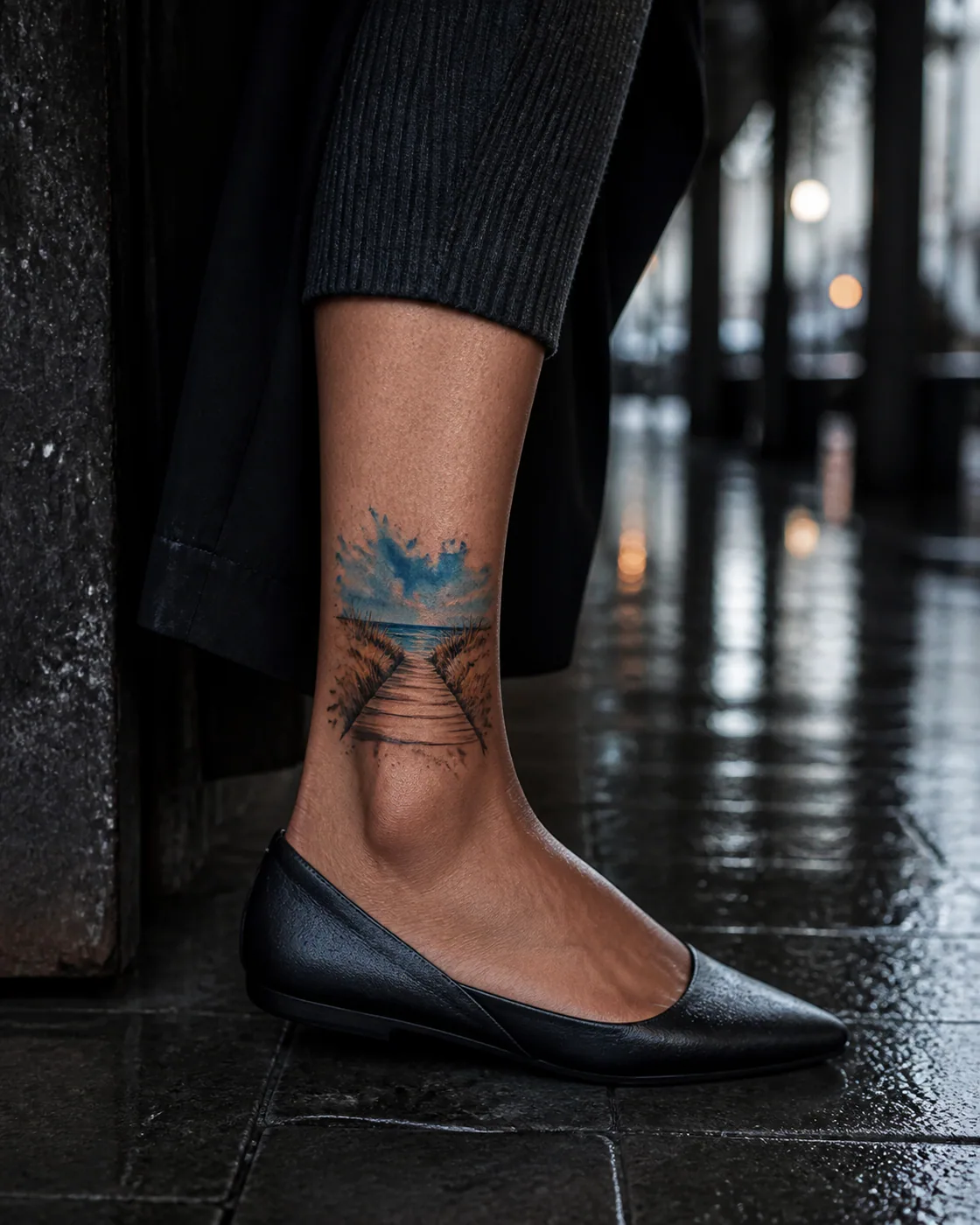
Watercolor Travel Tattoo for the Ankle
An original travel concept shaped as a healed watercolor tattoo for the ankle.
- Watercolor
- Travel
- Ankle
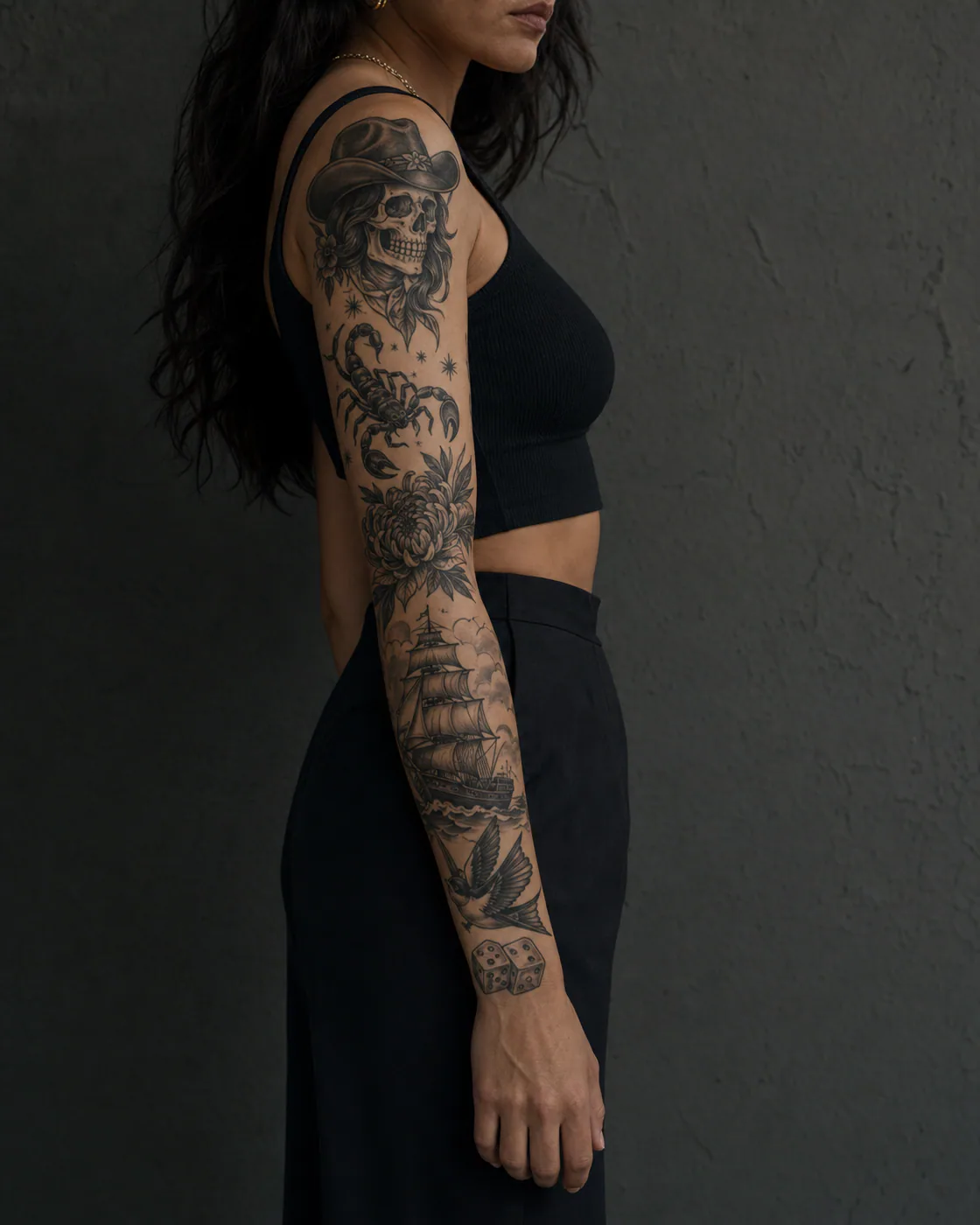
Cowgirl and scorpion story sleeve
Western attitude meets maritime flash in a darker collection balanced by one large floral anchor.
- American Traditional
- Western
- Full Sleeve
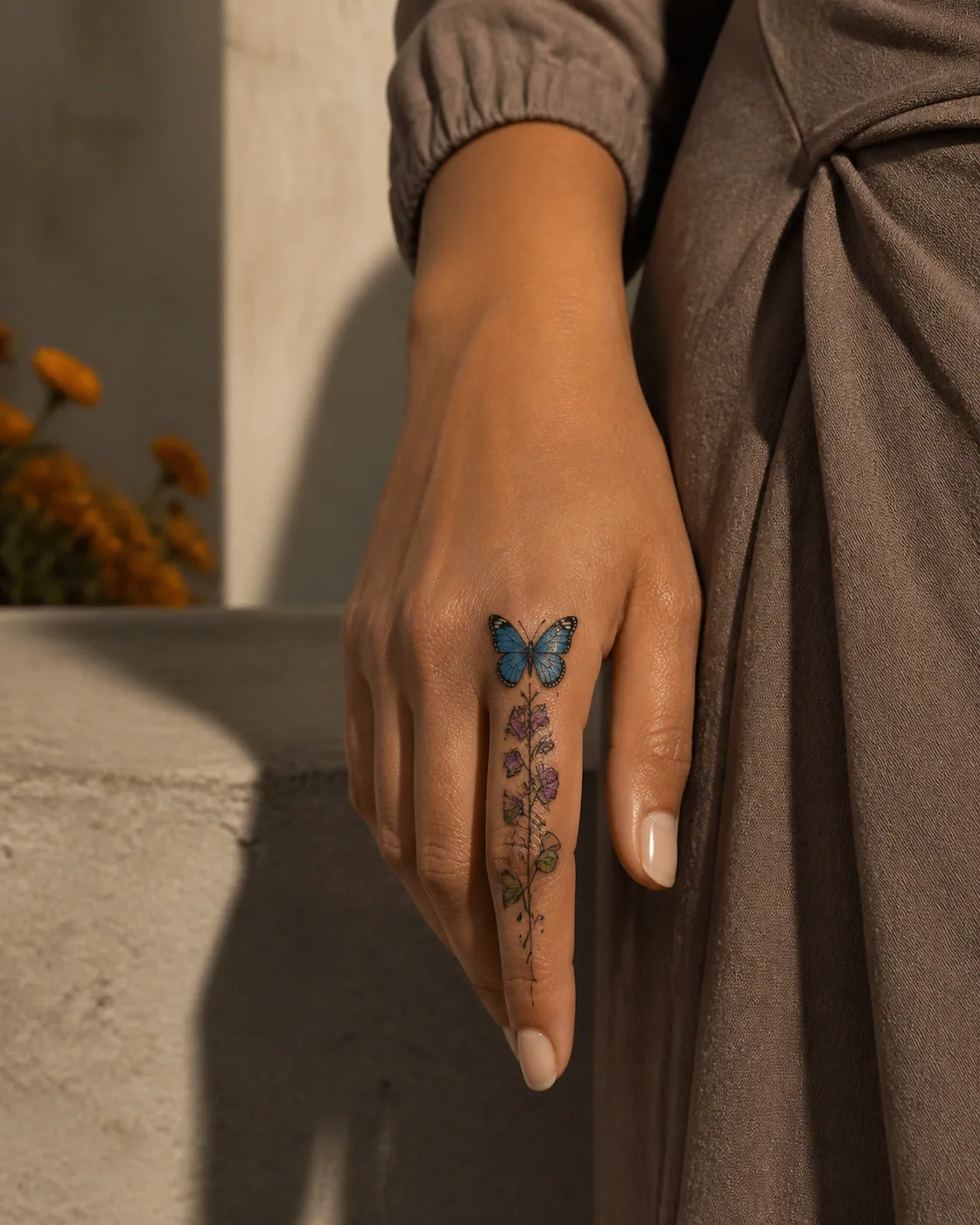
Neo Traditional Flower Tattoo for the Finger
An original flower concept shaped as a healed neo traditional tattoo for the finger.
- Neo-Traditional
- Flowers & Botanicals
- Finger
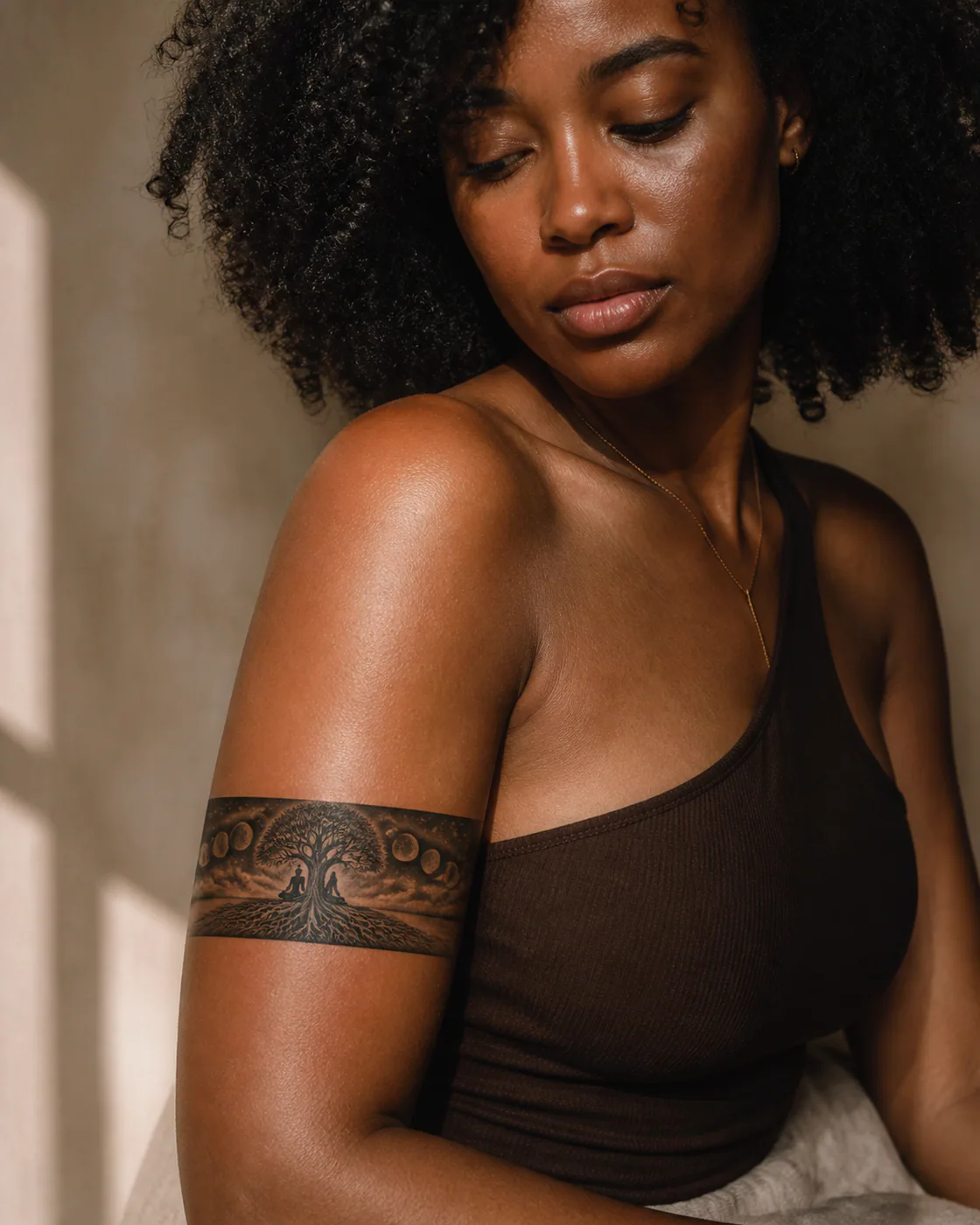
Realism Symbolic Tattoo for the Armband
An original symbolic concept shaped as a healed realism tattoo for the armband.
- Realism
- Symbols & meaning
- Armband
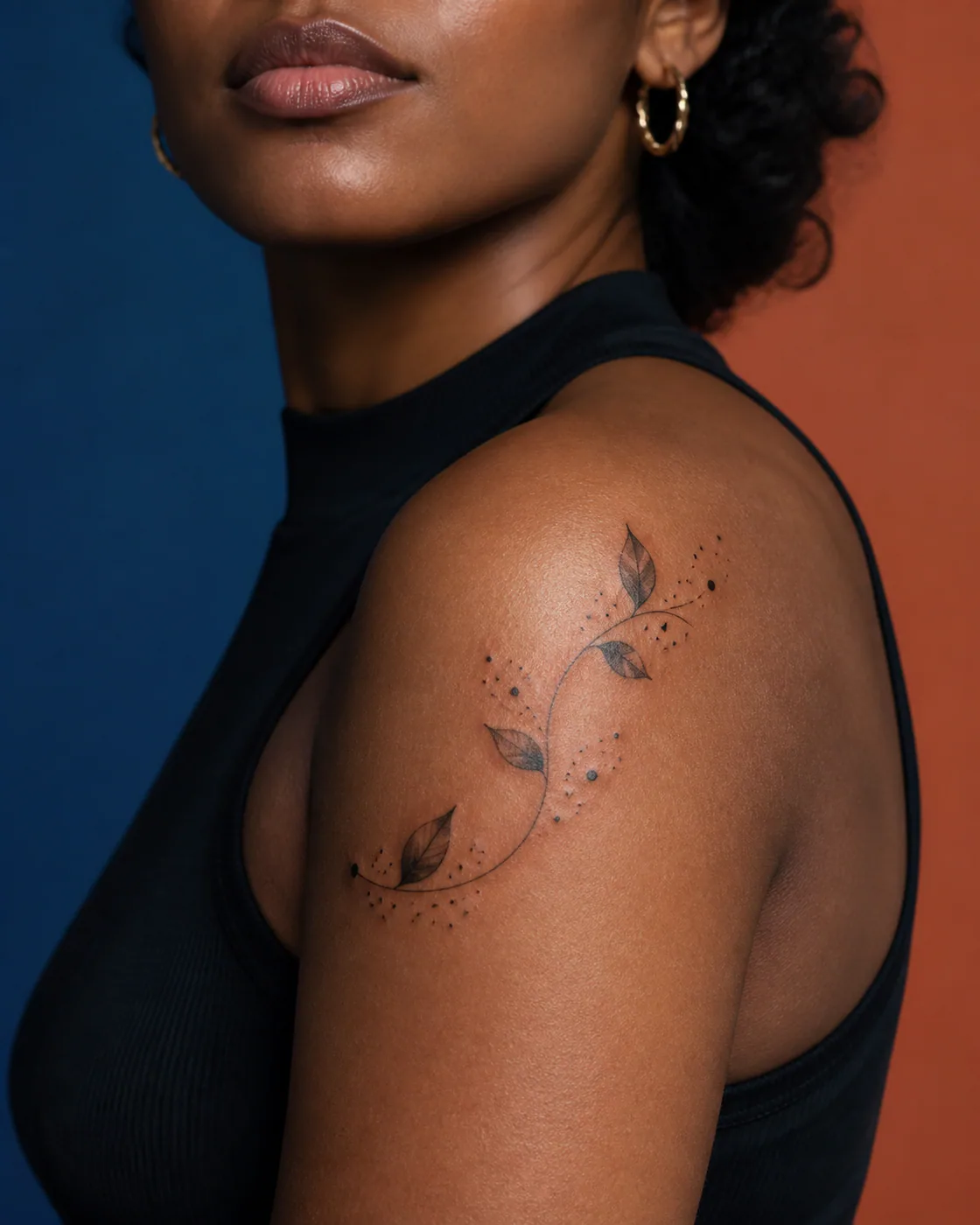
Black And Grey Filler Tattoo for the Shoulder
An original filler concept shaped as a healed black and grey tattoo for the shoulder.
- Black & Gray
- Fillers
- Shoulder
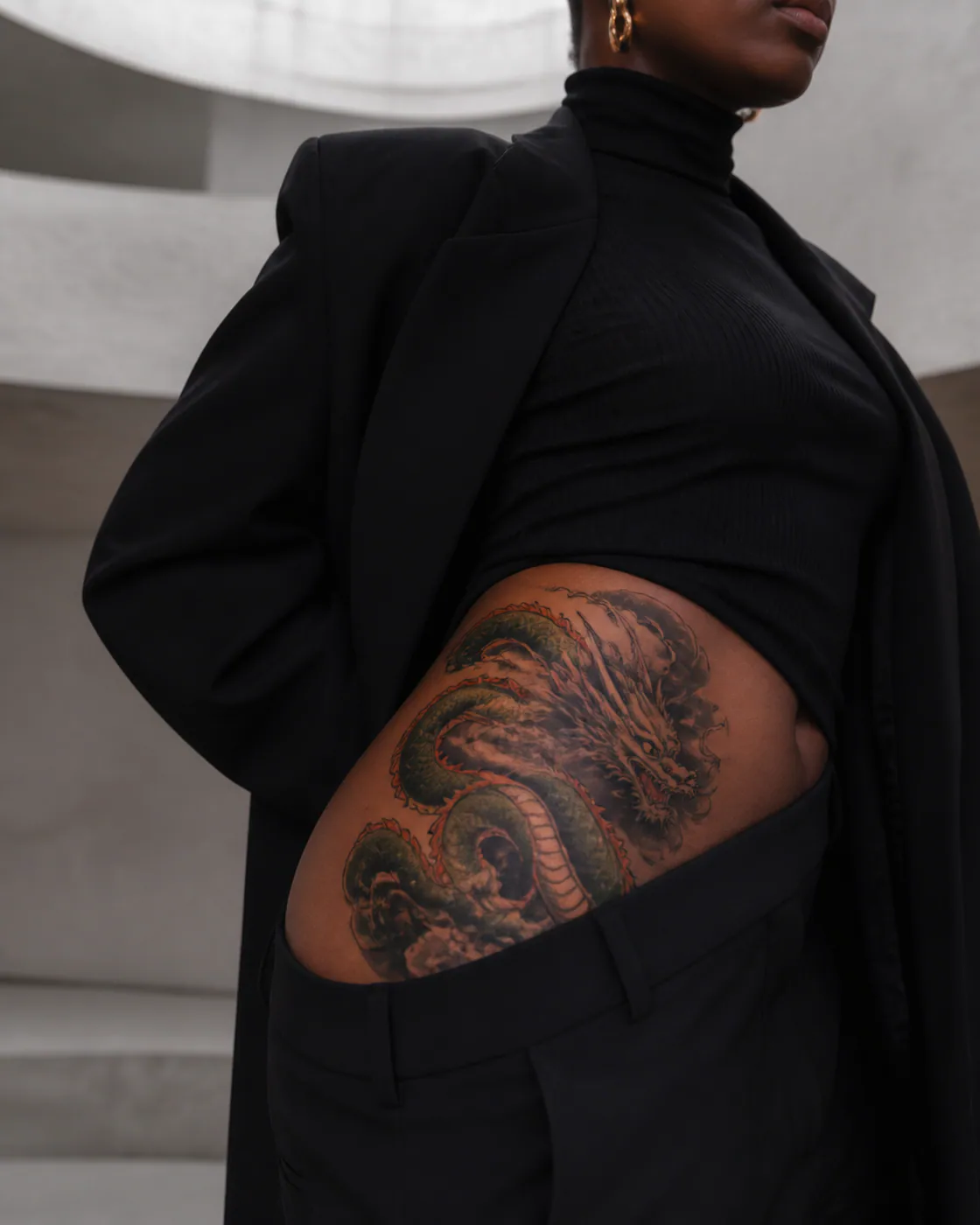
New School Mythic Tattoo for the Hip
An original mythic concept shaped as a healed new school tattoo for the hip.
- New School
- Mythic
- Hip
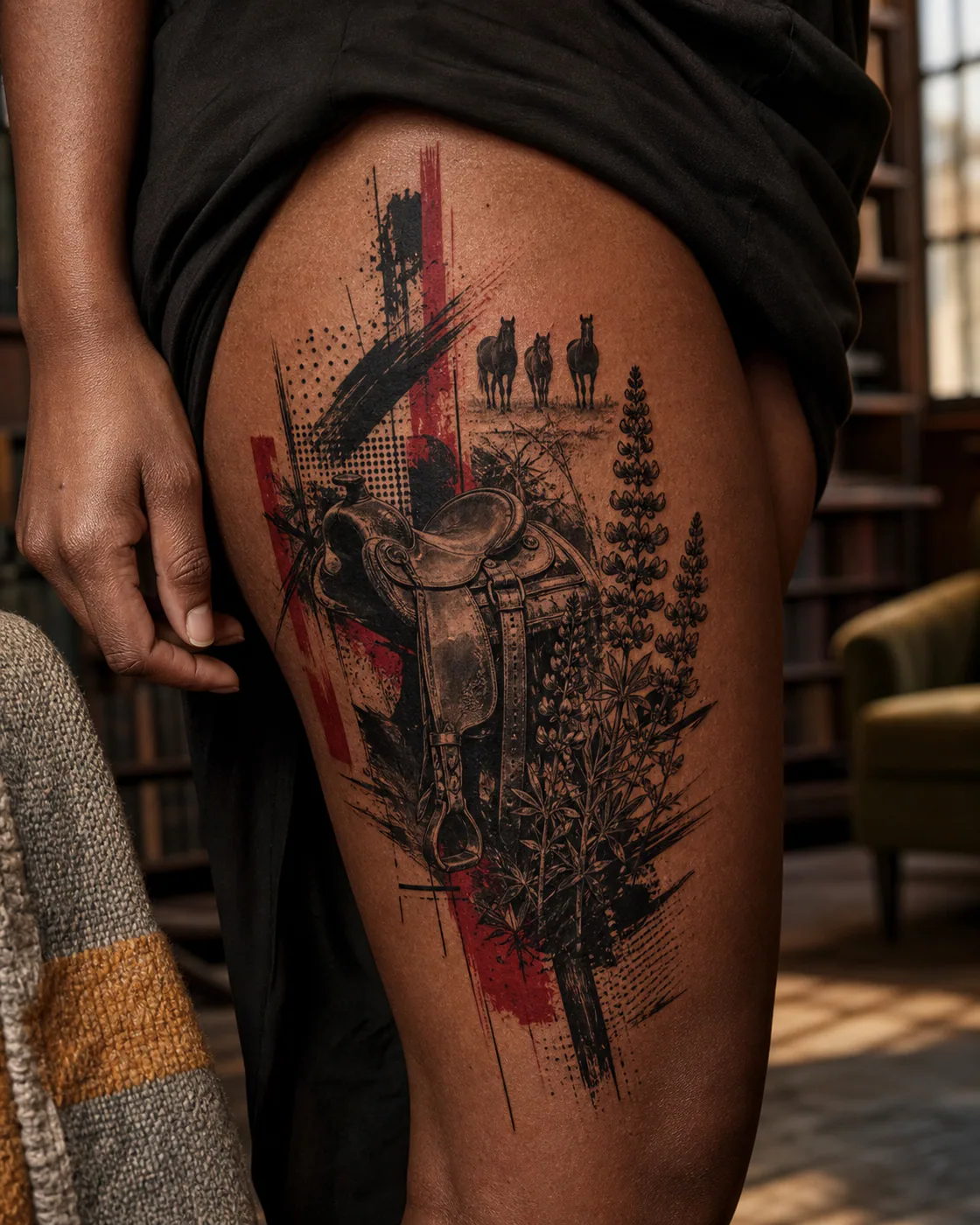
Trash Polka Family Western Tattoo for the Thigh
An original western concept shaped as a healed trash polka tattoo for the thigh.
- Trash Polka
- Western
- Thigh
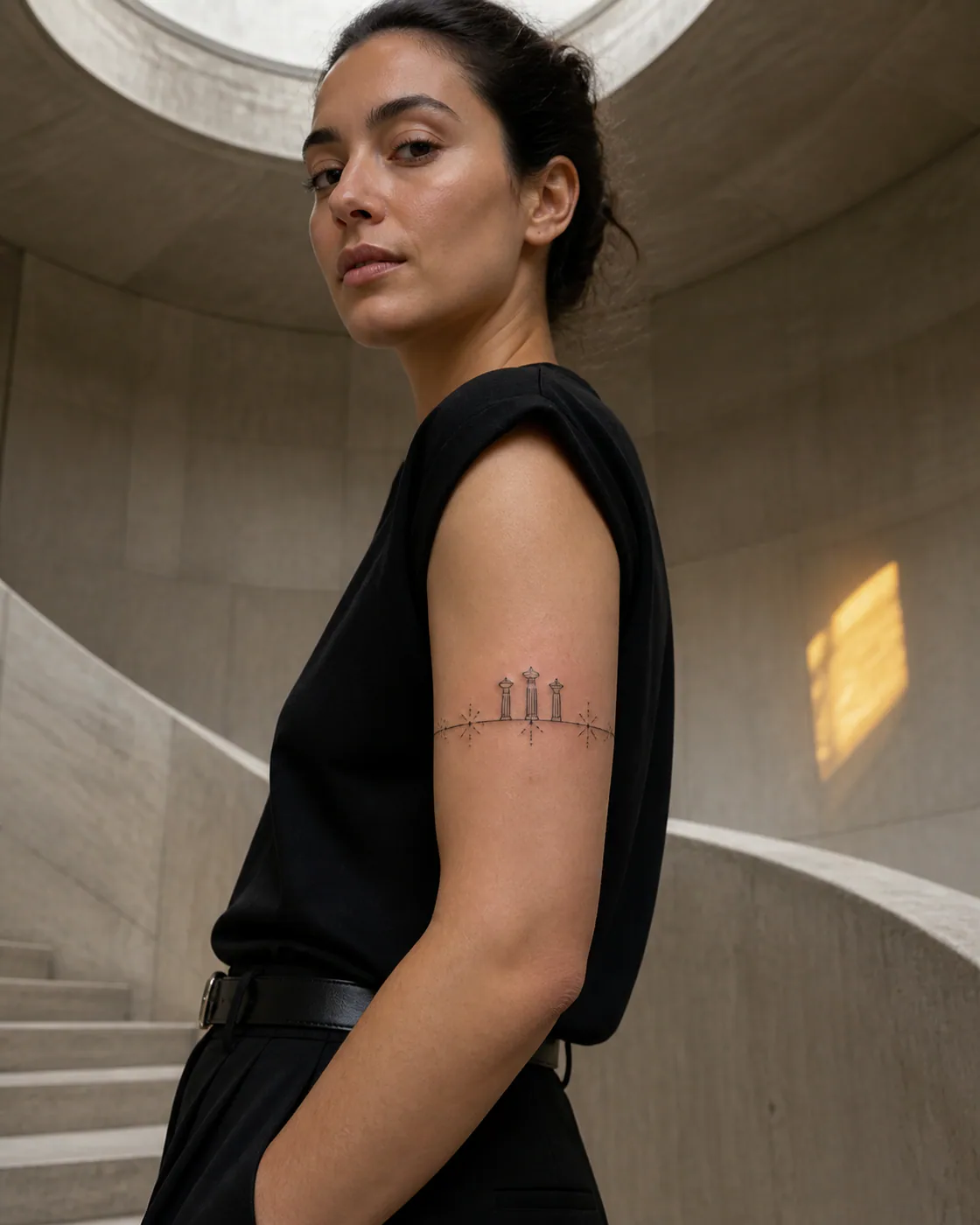
Minimalist Family Music Tattoo for the Armband
An original music concept shaped as a healed minimalist tattoo for the armband.
- Minimalist
- Music
- Armband
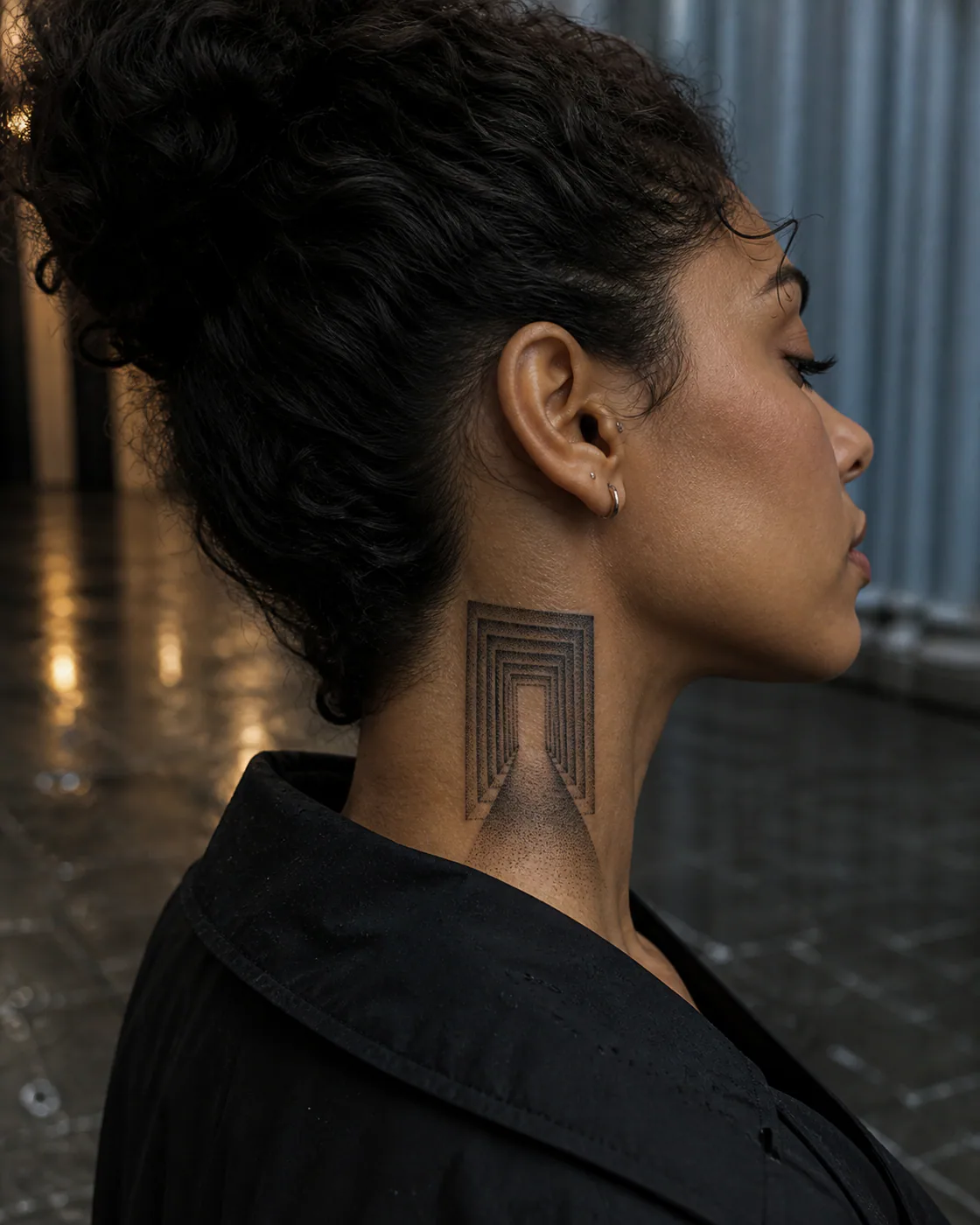
Dotwork Geometric Tattoo for the Neck
An original geometric concept shaped as a healed dotwork tattoo for the neck.
- Dotwork
- Geometric
- Neck
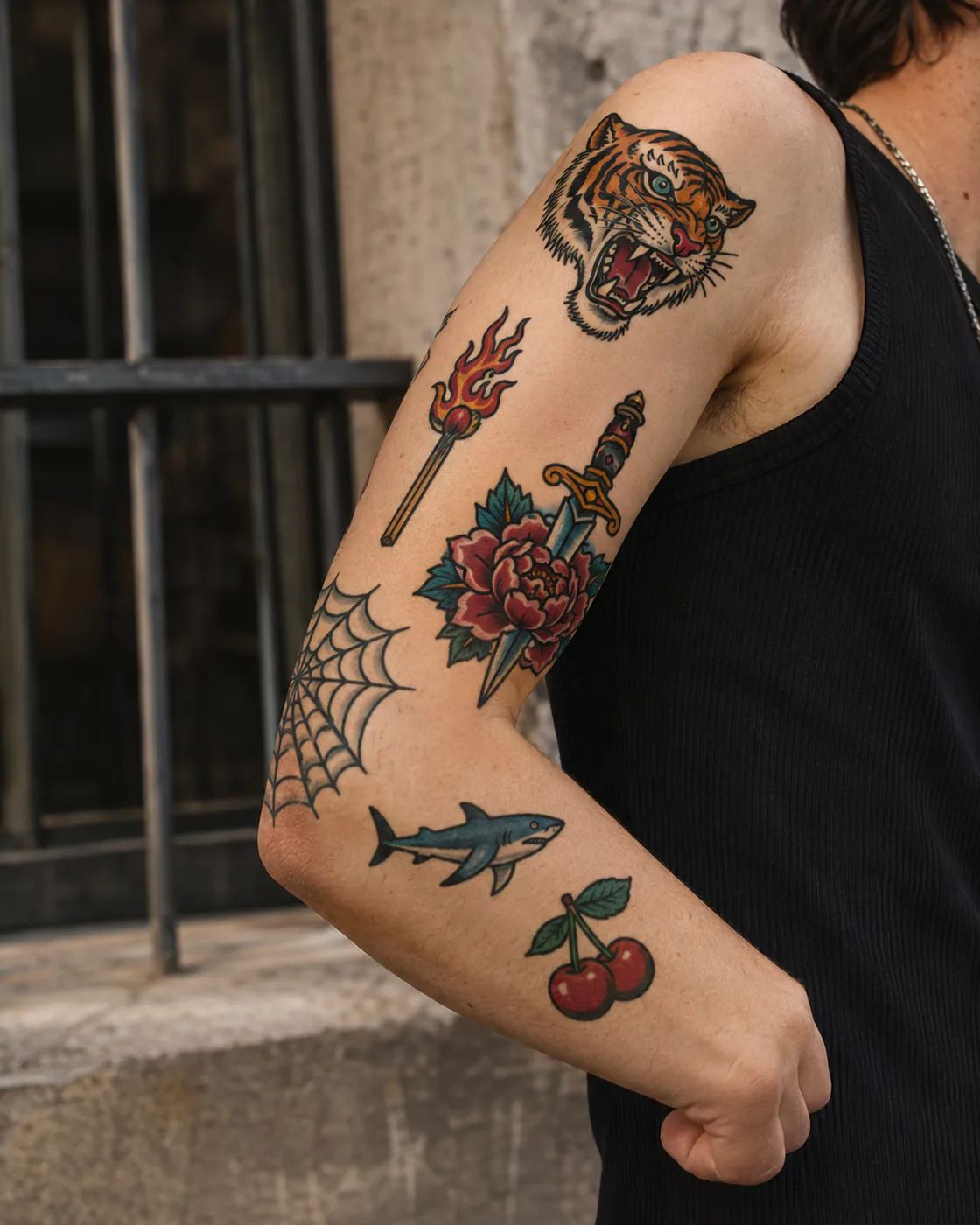
Tiger and peony elbow composition
The bent-arm view shows how round flowers and a web can negotiate the elbow between stronger vertical anchors.
- American Traditional
- Animals
- Full Sleeve
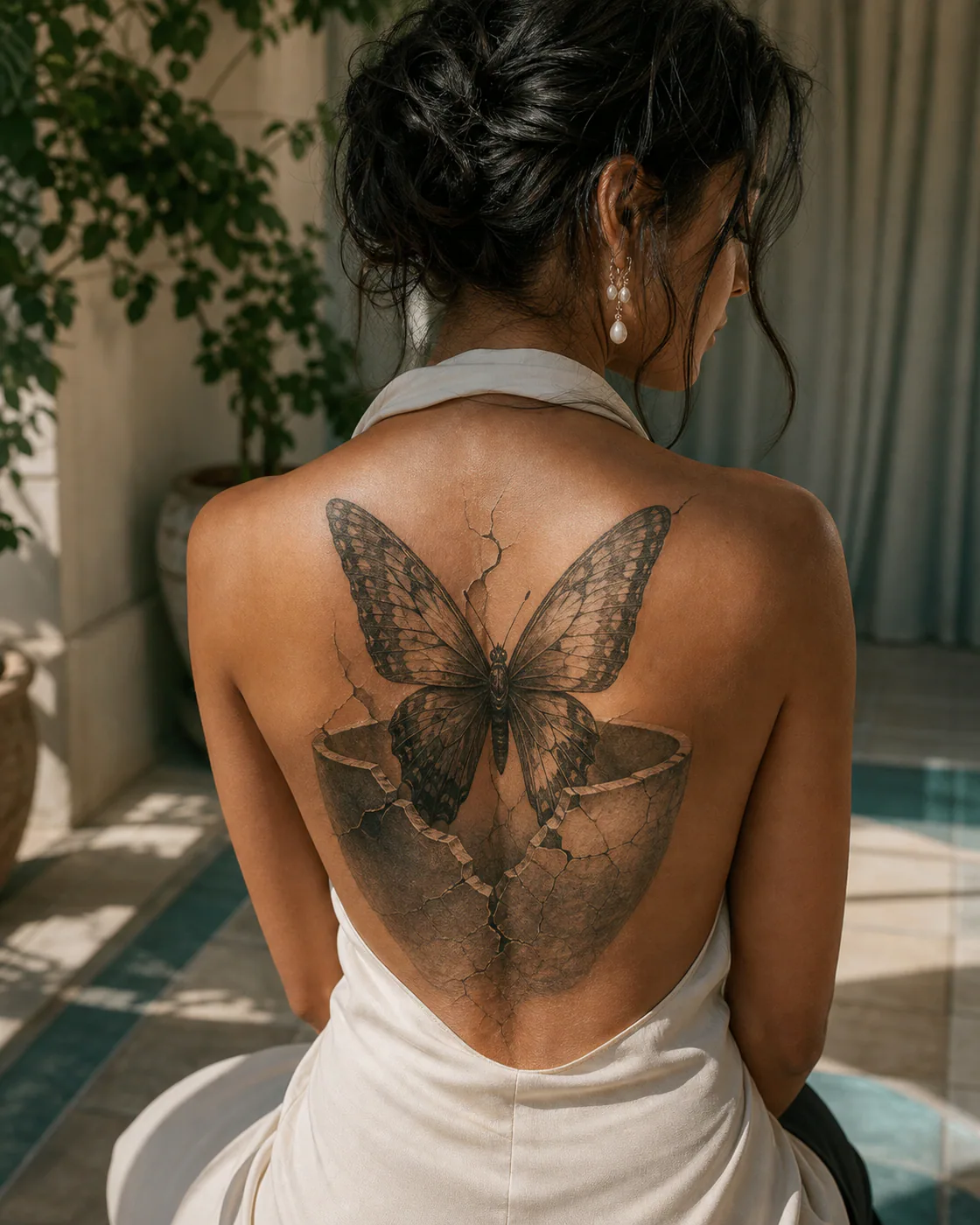
Black And Grey Symbolic Tattoo for the Upper Back
An original symbolic concept shaped as a healed black and grey tattoo for the upper back.
- Black & Gray
- Symbols & meaning
- Upper Back
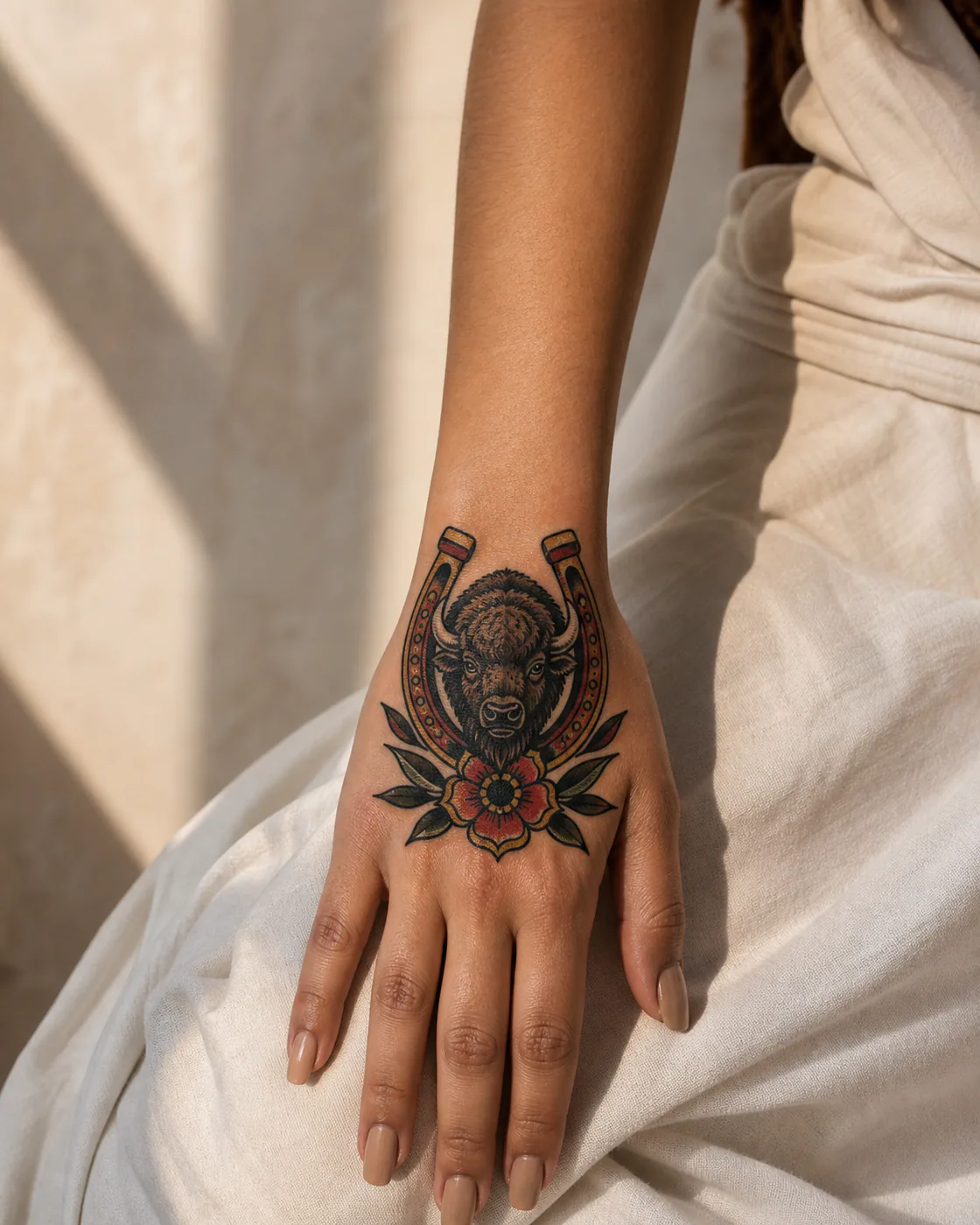
American Traditional Western Tattoo for the Hand
An original western concept shaped as a healed american traditional tattoo for the hand.
- American Traditional
- Western
- Hand
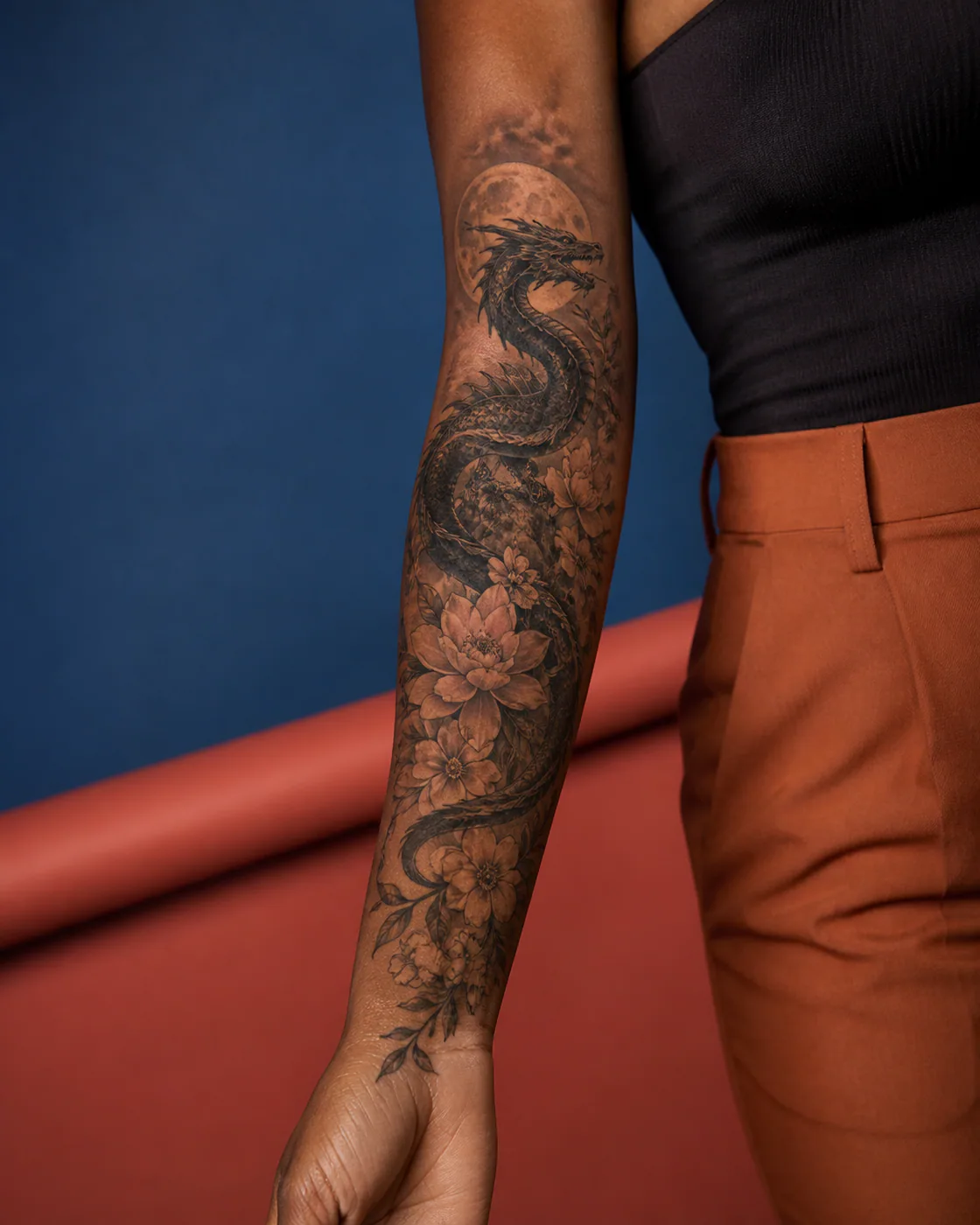
Floral Mythic Tattoo for the Forearm
An original mythic concept shaped as a healed floral tattoo for the forearm.
- Floral
- Mythic
- Forearm
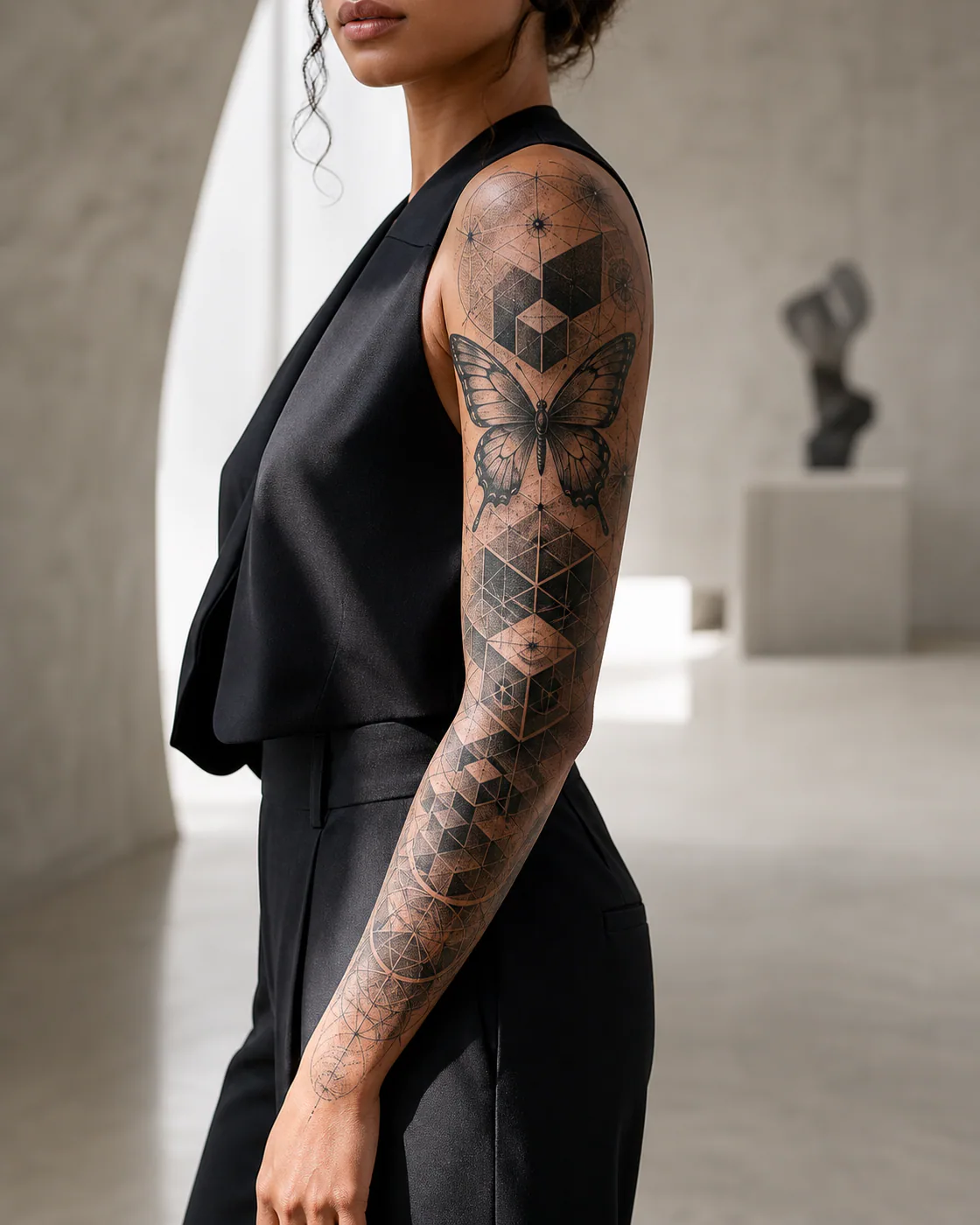
Geometric Geometric Tattoo for the Full Sleeve
An original geometric concept shaped as a healed geometric tattoo for the full sleeve.
- Geometric
- Geometric
- Full Sleeve
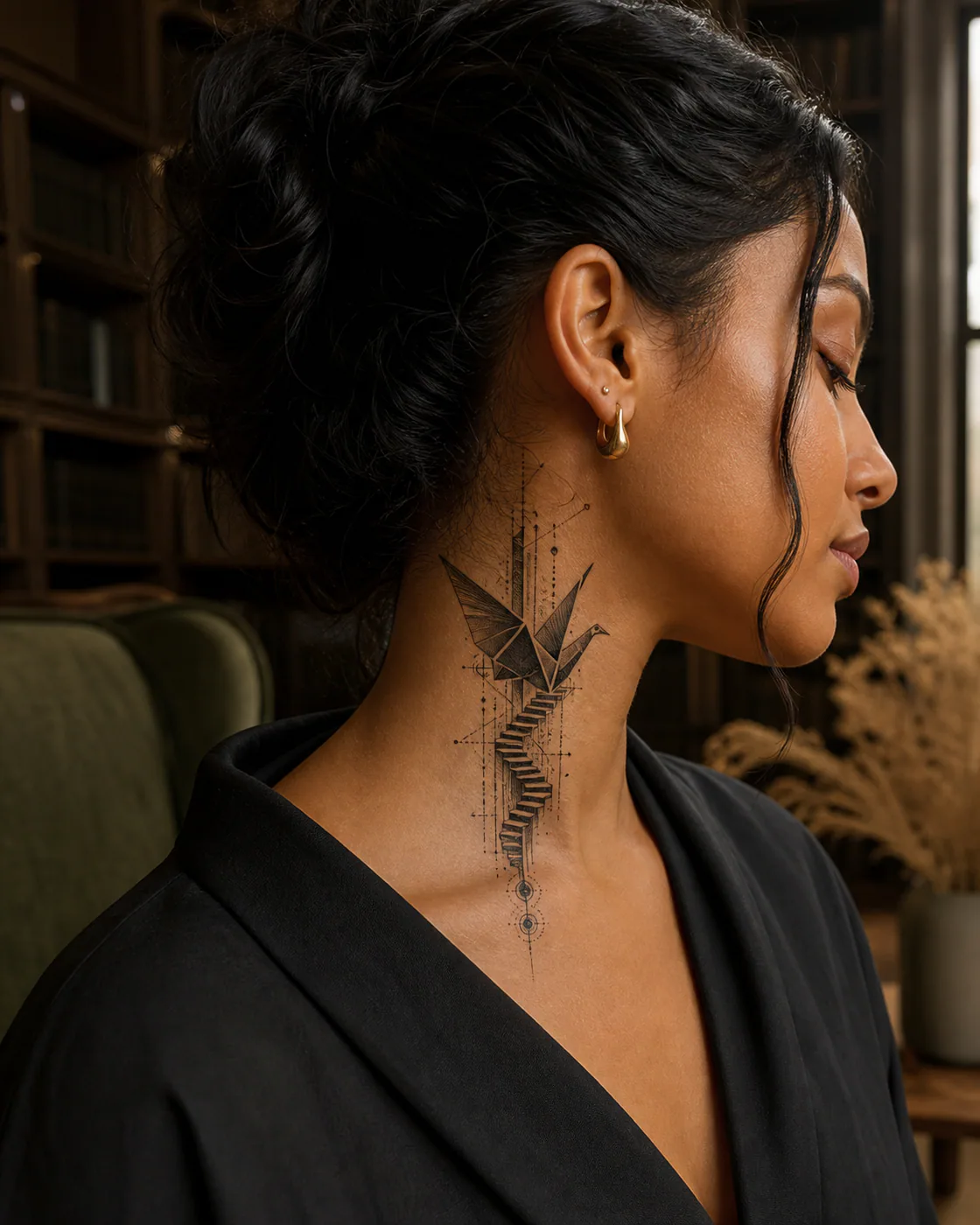
Cyber Sigilism Surreal Tattoo for the Neck
An original surreal concept shaped as a healed cyber sigilism tattoo for the neck.
- Cybersigilism
- Surreal
- Neck
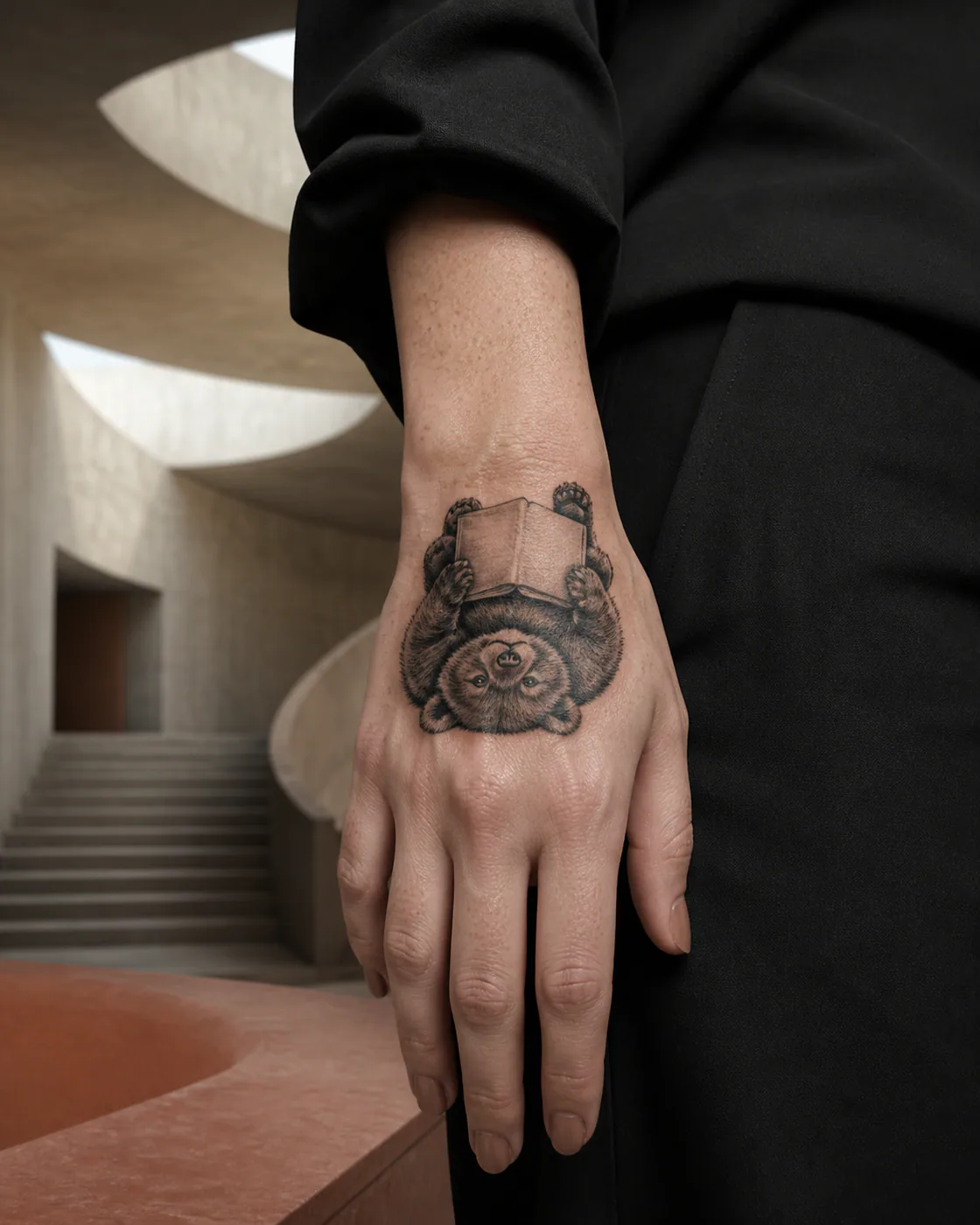
Realism Playful Tattoo for the Hand
An original playful concept shaped as a healed realism tattoo for the hand.
- Realism
- Playful
- Hand
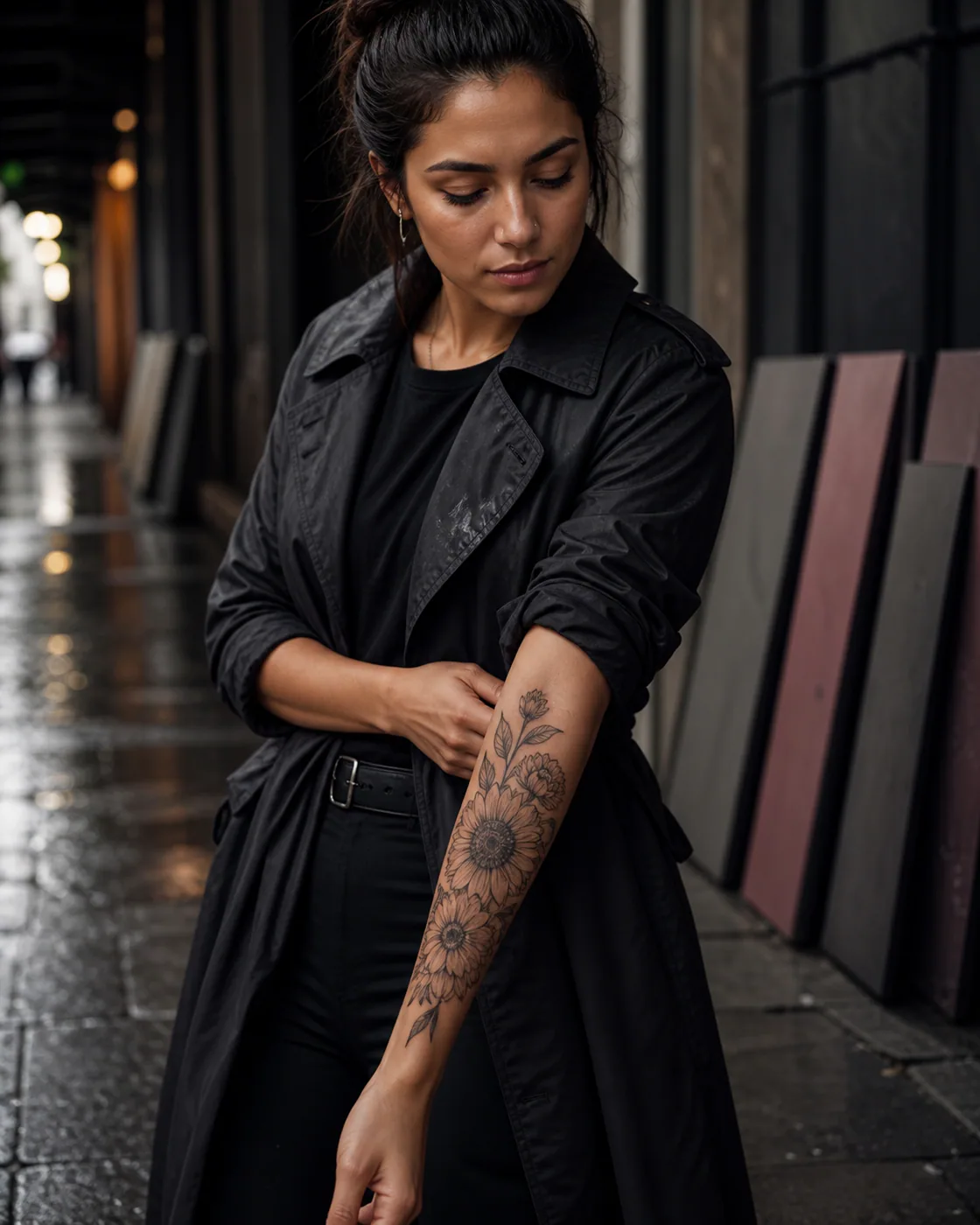
Illustrative Flower Tattoo for the Forearm
An original flower concept shaped as a healed illustrative tattoo for the forearm.
- Illustrative
- Flowers & Botanicals
- Forearm
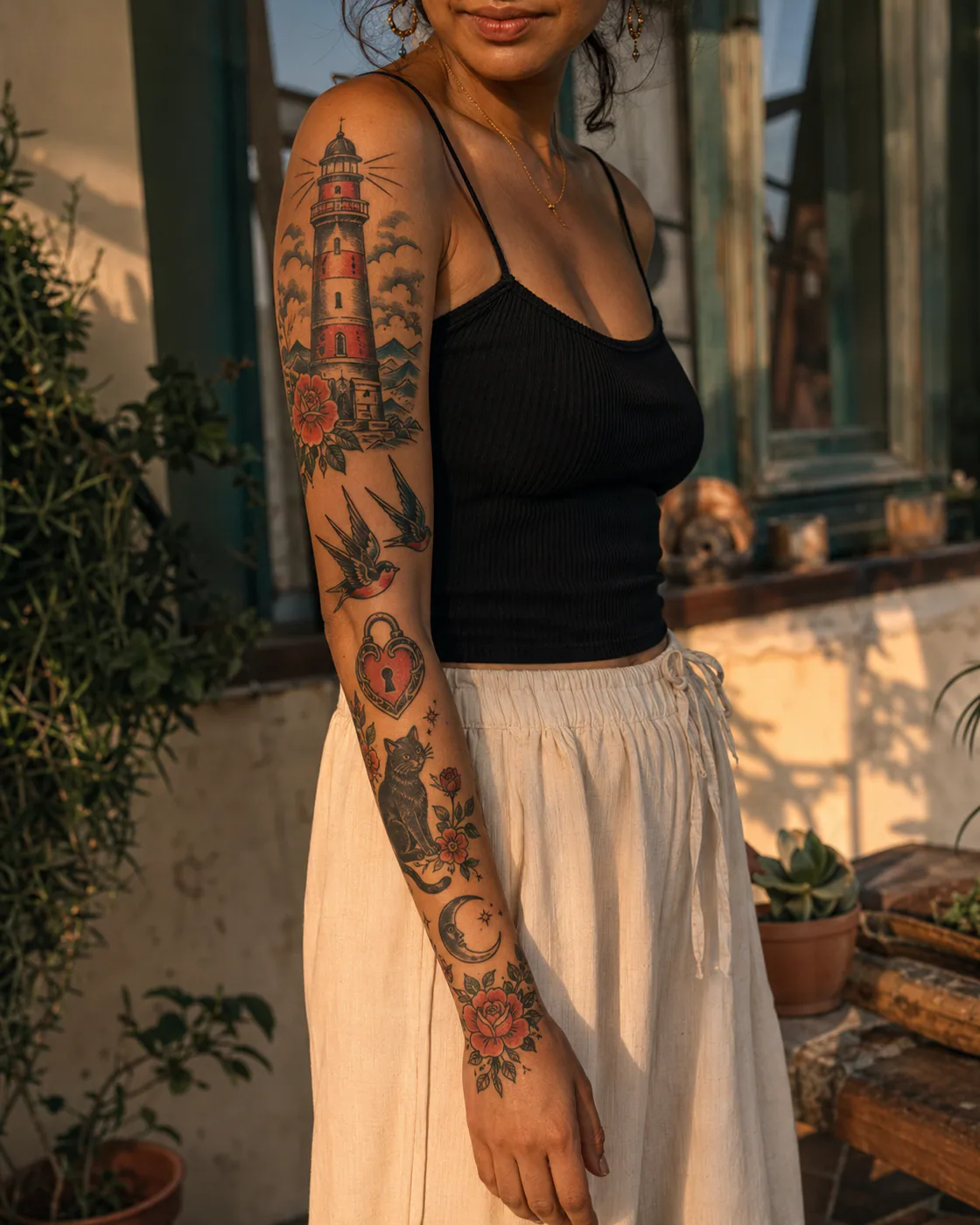
Lighthouse and black cat collection
A tall lighthouse controls the forearm rhythm while the cat and small symbols taper naturally toward the wrist.
- American Traditional
- Nautical
- Full Sleeve
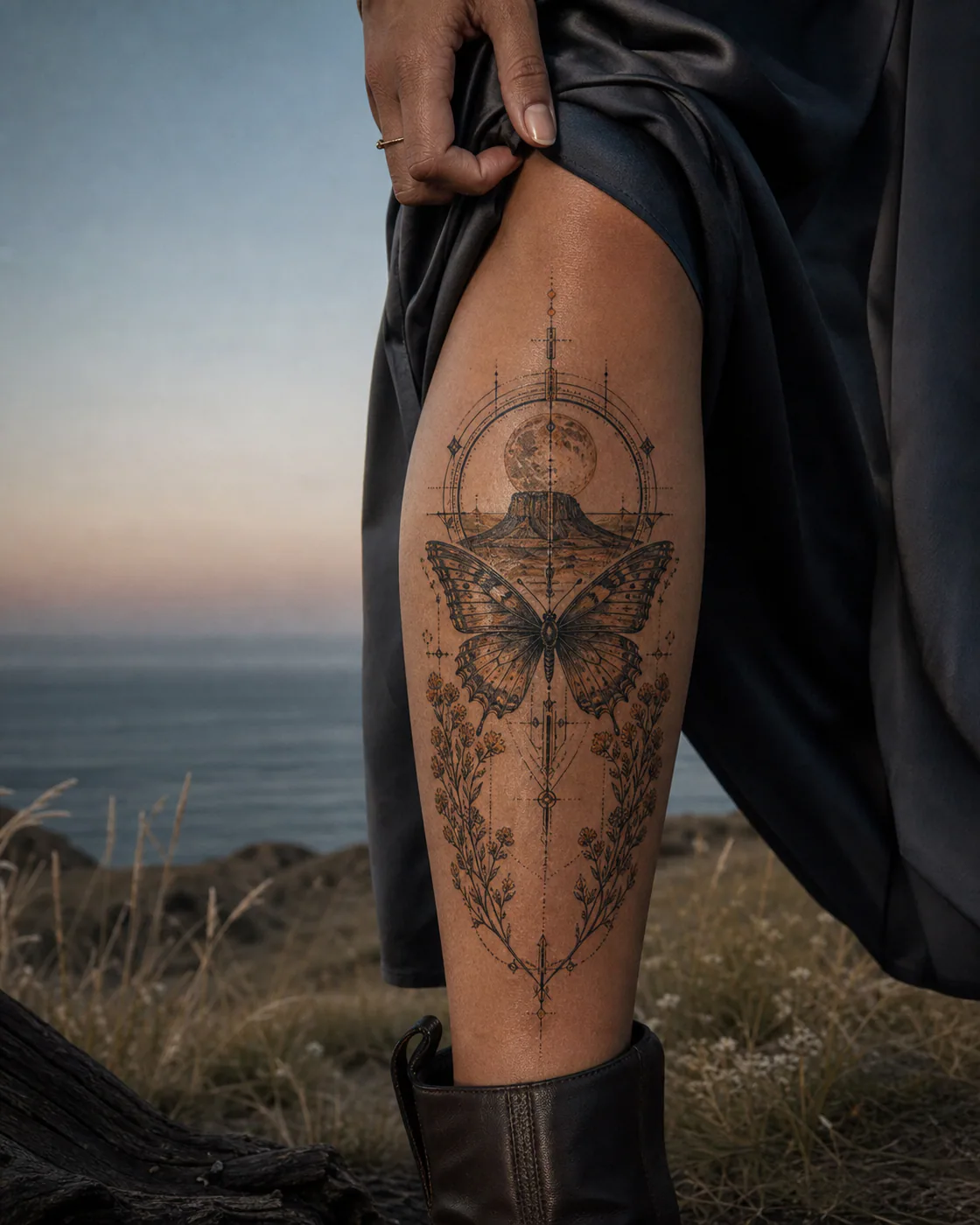
Cyber Sigilism Western Tattoo for the Calf
An original western concept shaped as a healed cyber sigilism tattoo for the calf.
- Cybersigilism
- Western
- Calf
DESIGN DIRECTIONS TO EXPLORE
Women’s tattoo ideas with distinct visual personalities
Compare ideas by the feeling they create and the way they sit on the body. Any direction can be adapted in scale, palette, density, or symbolism.
Birth flowers with hidden personal details
Combine one or two meaningful blooms with a date, initial, tiny object, or deliberate number of leaves to avoid a generic bouquet.
Ornamental forms shaped to the body
Use balanced curves and negative space for sternum, spine, shoulder, or thigh pieces that respond to anatomy rather than copying flat decoration.
Bold illustrative animals
A tiger, serpent, bird, hare, or moth can feel graceful or forceful depending on posture, line weight, contrast, and surrounding elements.
Tiny narrative symbols
A key, match, shell, fruit, book, or familiar household object can carry more specificity than a common icon when it comes from your own story.
Abstract movement and color
Brush-like marks, flowing shapes, and selective color can represent a feeling without relying on a literal subject, especially across larger placements.
Botanical blackwork with contrast
Solid leaves, thorny stems, and open skin breaks give plant subjects more graphic presence while preserving their natural movement.
DESIGN AROUND THE PERSON, NOT A GENDER TEMPLATE
Compare tattoo directions for women without limiting the style
Women's tattoo ideas can be delicate, graphic, ornamental, realistic, or bold. The useful comparison is how line weight, movement, visibility, and scale support the wearer's intent and body placement.
Direction: Body-flow botanical work
- Often works well for
- Stems, leaves, flowers, and organic compositions that follow a collarbone, arm, hip, or spine.
- Scale cue
- Small single stems through large arrangements shaped around the chosen body line.
- What to check
- Make the composition fit the real curve rather than transferring a flat reference unchanged.
Direction: Anatomical ornamental symmetry
- Often works well for
- Structured decoration on the sternum, back, shoulder, thigh, or other centered placements.
- Scale cue
- Medium to large when alignment and repeated detail define the design.
- What to check
- Symmetry should be mapped while the body is in a neutral position and checked in motion.
Direction: Graphic blackwork statement
- Often works well for
- Bold silhouettes, contemporary abstract work, dark florals, and high-contrast sleeves.
- Scale cue
- Medium to large, with deliberate open skin balancing the heaviest areas.
- What to check
- Compare coverage and visibility at everyday viewing distance, not only in close-up images.
Direction: Personal fine-line symbol
- Often works well for
- Dates, small memorials, celestial marks, handwriting, and discreet illustrative concepts.
- Scale cue
- Small to medium, with detail reduced to what the placement can keep readable.
- What to check
- Ask for healed portfolio examples and give tiny lettering and close parallel lines more space.
BUILD YOUR DIRECTION
Choose for your life, body, and visual taste
The right idea balances how visible you want it to be, how much visual weight you enjoy, and what you want the tattoo to keep saying years from now.
Separate delicacy from size
A large tattoo can use airy linework, while a small tattoo can be bold and graphic. Treat scale and visual weight as different decisions.
Design with movement
Follow the shoulder cap, spine, hip, forearm, or thigh rather than forcing the body to fit a rectangular reference image.
Use symbolism specifically
If a flower, moon, butterfly, or snake matters to you, identify the exact species, phase, posture, or story that makes it yours.
Plan visibility honestly
Think about clothing, work, family, sun exposure, and whether you want to see the tattoo yourself. Visibility is part of the design brief.
ARTIST HANDOFF
Explain what feels essential and what can evolve
Bring references that communicate mood, composition, and line quality, then give your artist space to make the design work on your body.
Include in your brief
- The story or feeling the tattoo should preserve.
- The exact body area and how visible you want the finished work to be.
- References for line weight, contrast, color, and overall movement.
- The details that must stay and the elements your artist may reinterpret.
- Verified spelling, dates, botanical species, and cultural references.
KEEP EXPLORING
Related tattoo idea collections
Use another placement, size, audience, or subject to make your direction more specific.

Flower Tattoo Ideas
Explore specific blooms, botanical structures, symbolic pairings, and compositions from tiny stems to large body-led florals.
Explore the collection
Small Tattoo Ideas
Find compact concepts designed around clear silhouettes, selective detail, and enough space to remain readable.
Explore the collection
Forearm Tattoo Ideas
Compare inner, outer, wraparound, and vertical forearm compositions designed for movement and everyday visibility.
Explore the collectionCOMMON QUESTIONS
What to know before choosing this direction
What tattoo ideas are popular for women?
Florals, fine line symbols, ornamental work, animals, lettering, celestial subjects, and abstract compositions are widely explored. The more useful question is which subject and visual weight fit your own story.
Where is a good placement for a first tattoo for women?
The forearm, outer upper arm, thigh, calf, shoulder blade, and ankle are common choices. Consider visibility, pain tolerance, sun exposure, clothing friction, and how much space the design needs.
Do women’s tattoos need to be small or fine line?
No. Women wear every tattoo style and scale. Choose delicate, bold, traditional, blackwork, color, or large-scale work based on your visual preference and the needs of the design.
How can I make a common flower or butterfly idea original?
Choose a specific species, life stage, posture, season, supporting object, or personal reference. A clear composition and a reason for each element make a familiar subject feel individual.
How do I choose between a subtle and statement tattoo?
Compare visibility, scale, contrast, and how much of the composition you want to see at once. A subtle tattoo can still be graphic, while a statement piece can use restrained color and generous negative space.
Can a tattoo be planned so it can grow later?
Yes. Tell the artist about possible future additions so they can protect useful space, avoid closed-off edges, and place the first focal point where a larger composition could develop naturally.
TURN INSPIRATION INTO AN ORIGINAL CONCEPT
Keep designing with your own story
Take the subject, placement, and style into the AI generator, then use virtual try-on to judge approximate scale. A tattoo artist should still redraw the final design for your body.