TATTOO SLEEVE IDEAS
Tattoo sleeve ideas that connect, not just accumulate
A strong sleeve creates rhythm across the shoulder, elbow, forearm, and wrist. Whether you prefer one continuous story or collected patchwork, plan hierarchy and open space before filling every gap.

SLEEVE TATTOOS LIBRARY
Explore 72 curated sleeve tattoos ideas
This parent gallery automatically combines every published, indexable subcollection. Narrow the results with the same styles used by the AI tattoo generator, then continue into a more specific SEO collection when one exists.
123 design directions
Page 1 of 6
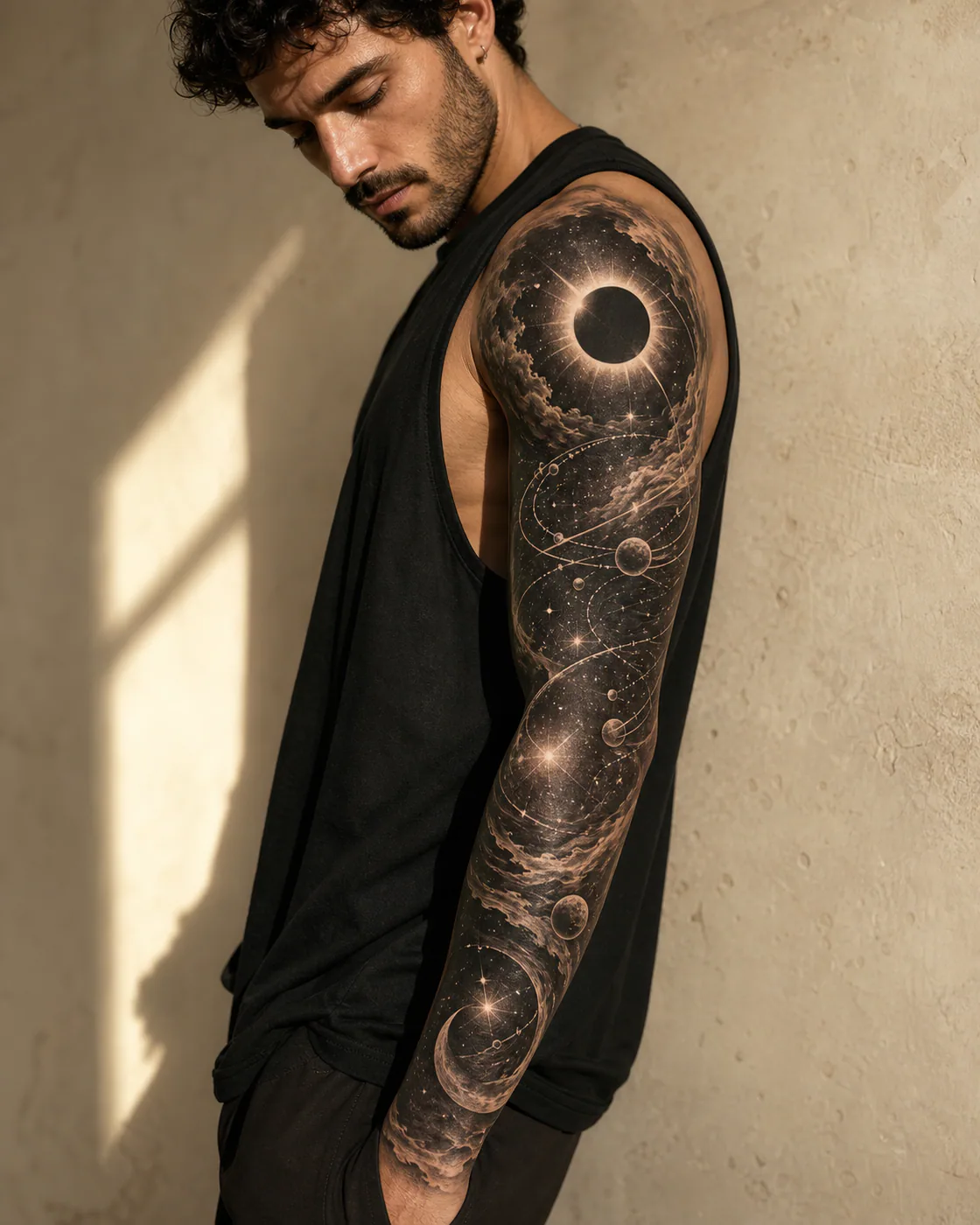
Black And Grey Celestial Tattoo for the Full Sleeve
An original celestial concept shaped as a healed black and grey tattoo for the full sleeve.
- Black & Gray
- Celestial
- Full sleeve
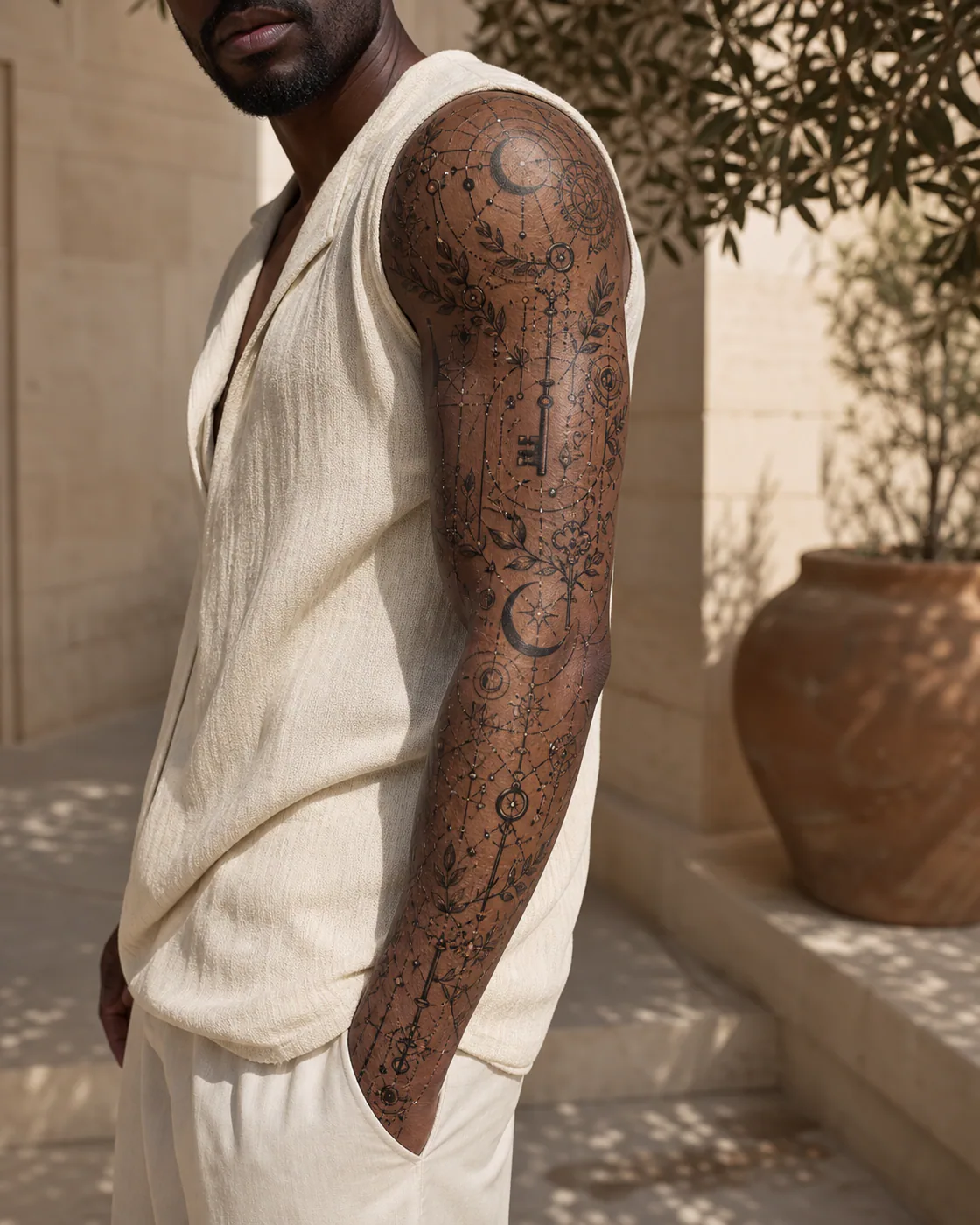
Cyber Sigilism Filler Tattoo for the Full Sleeve
An original filler concept shaped as a healed cyber sigilism tattoo for the full sleeve.
- Cybersigilism
- Fillers
- Full sleeve
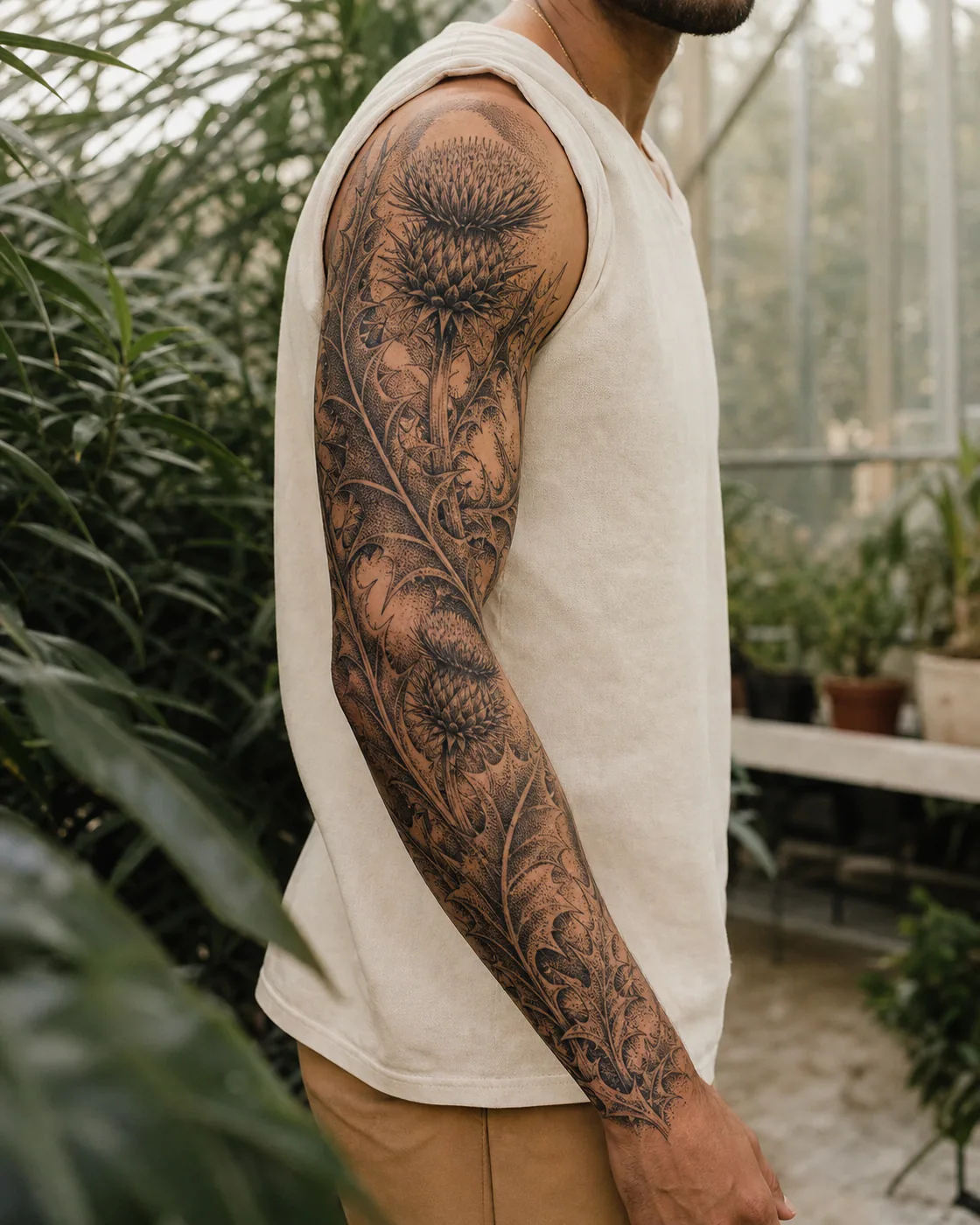
Dotwork Botanical Tattoo for the Full Sleeve
An original botanical concept shaped as a healed dotwork tattoo for the full sleeve.
- Dotwork
- Flowers & Botanicals
- Full sleeve
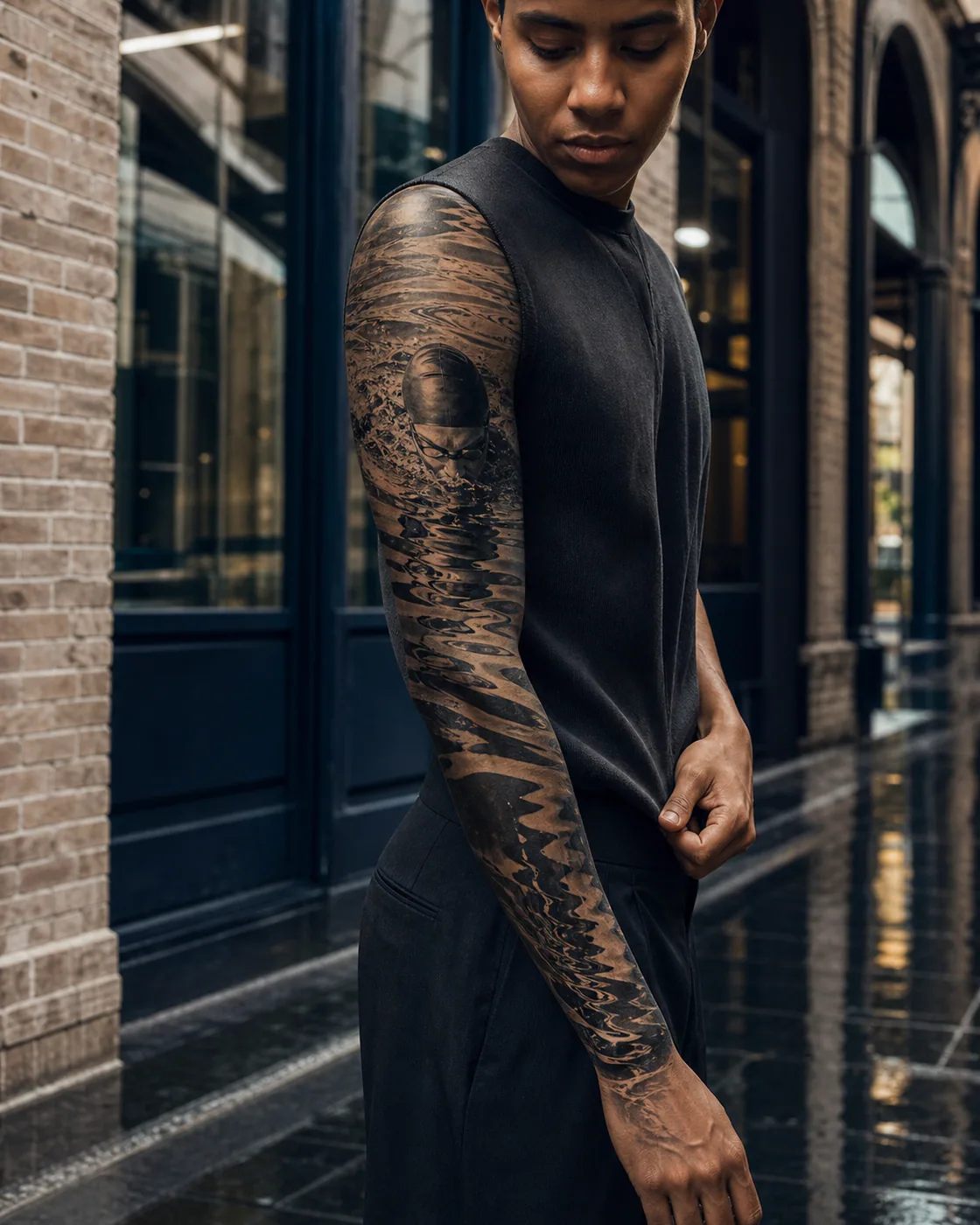
Black And Grey Portrait Tattoo for the Full Sleeve
An original portrait concept shaped as a healed black and grey tattoo for the full sleeve.
- Black & Gray
- Portrait
- Full sleeve
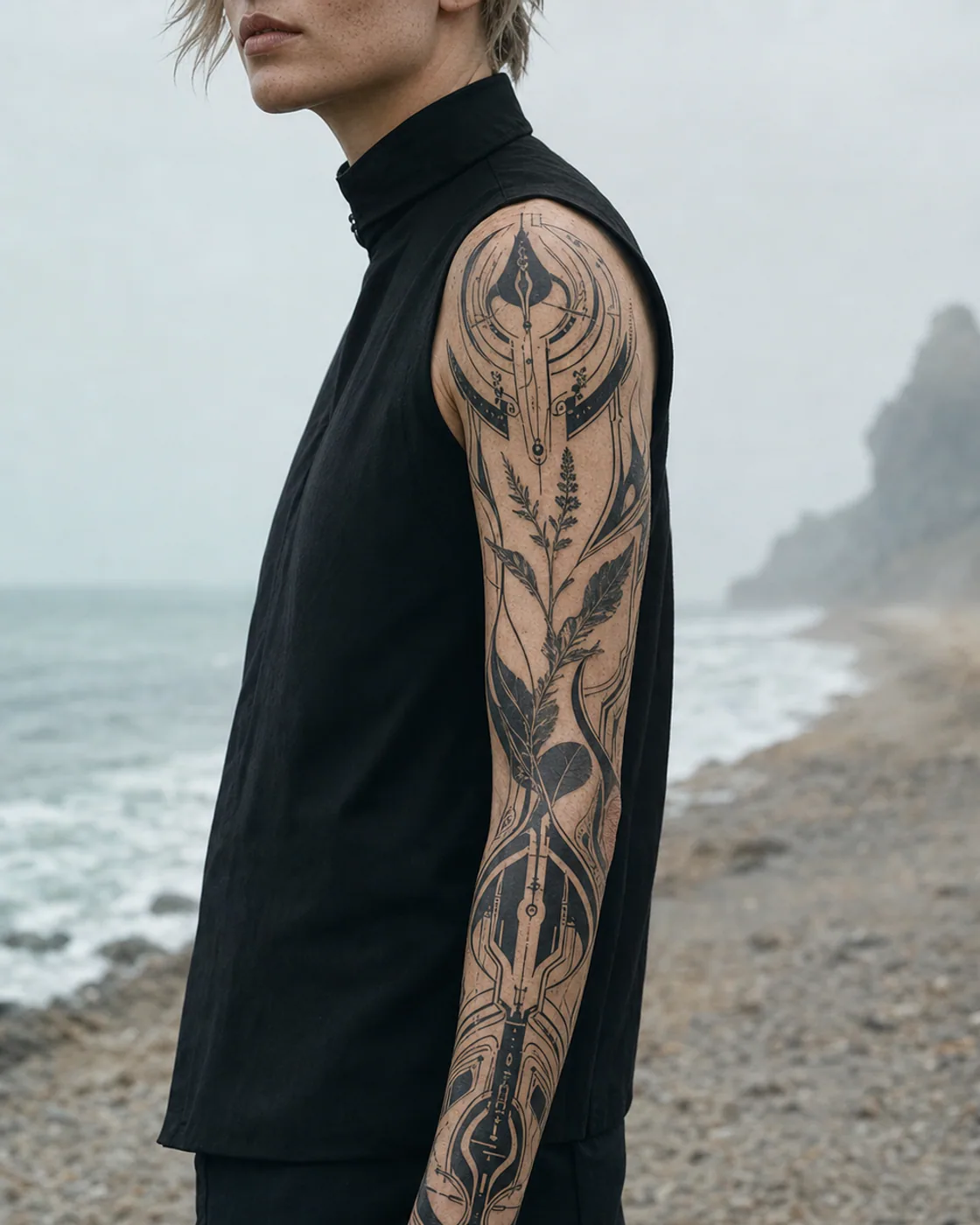
Cyber Sigilism Botanical Tattoo for the Full Sleeve
An original botanical concept shaped as a healed cyber sigilism tattoo for the full sleeve.
- Cybersigilism
- Flowers & Botanicals
- Full sleeve
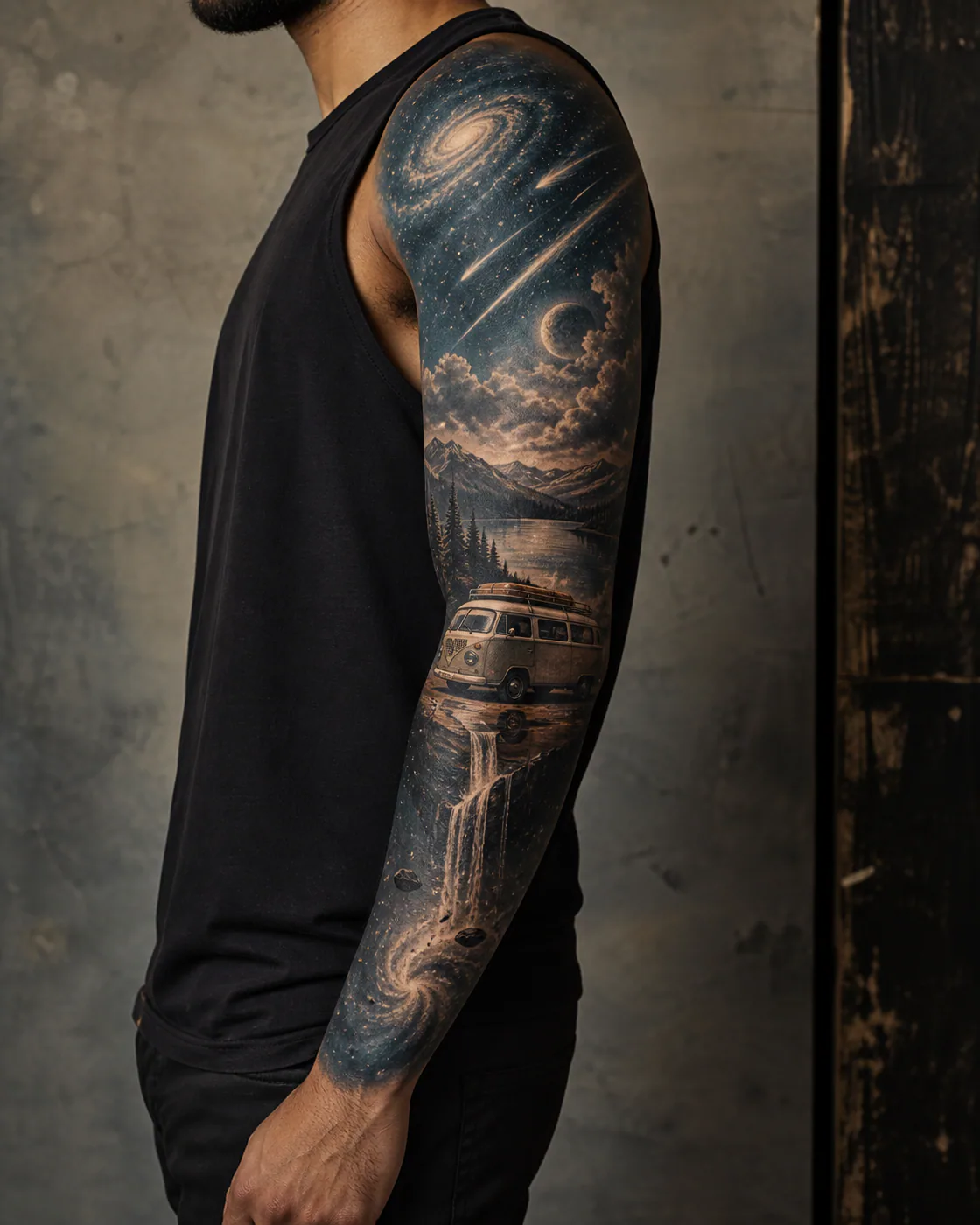
Surrealism Travel Tattoo for the Full Sleeve
An original travel concept shaped as a healed surrealism tattoo for the full sleeve.
- Surrealism
- Travel
- Full sleeve
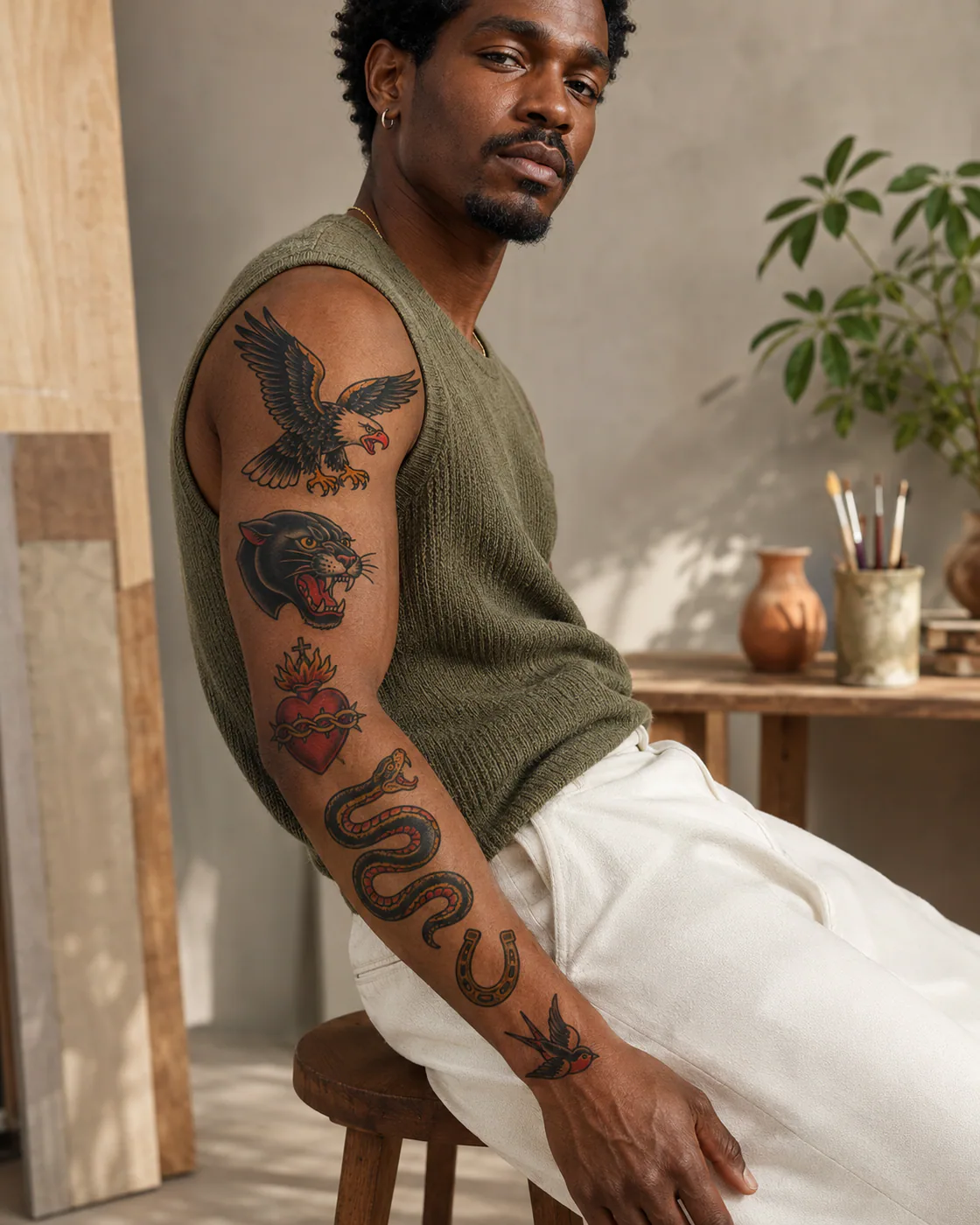
Eagle and panther heritage sleeve
Bold black outlines and a restrained red-gold palette unite several classic flash subjects without closing the skin gaps.
- American Traditional
- Animals
- Full sleeve
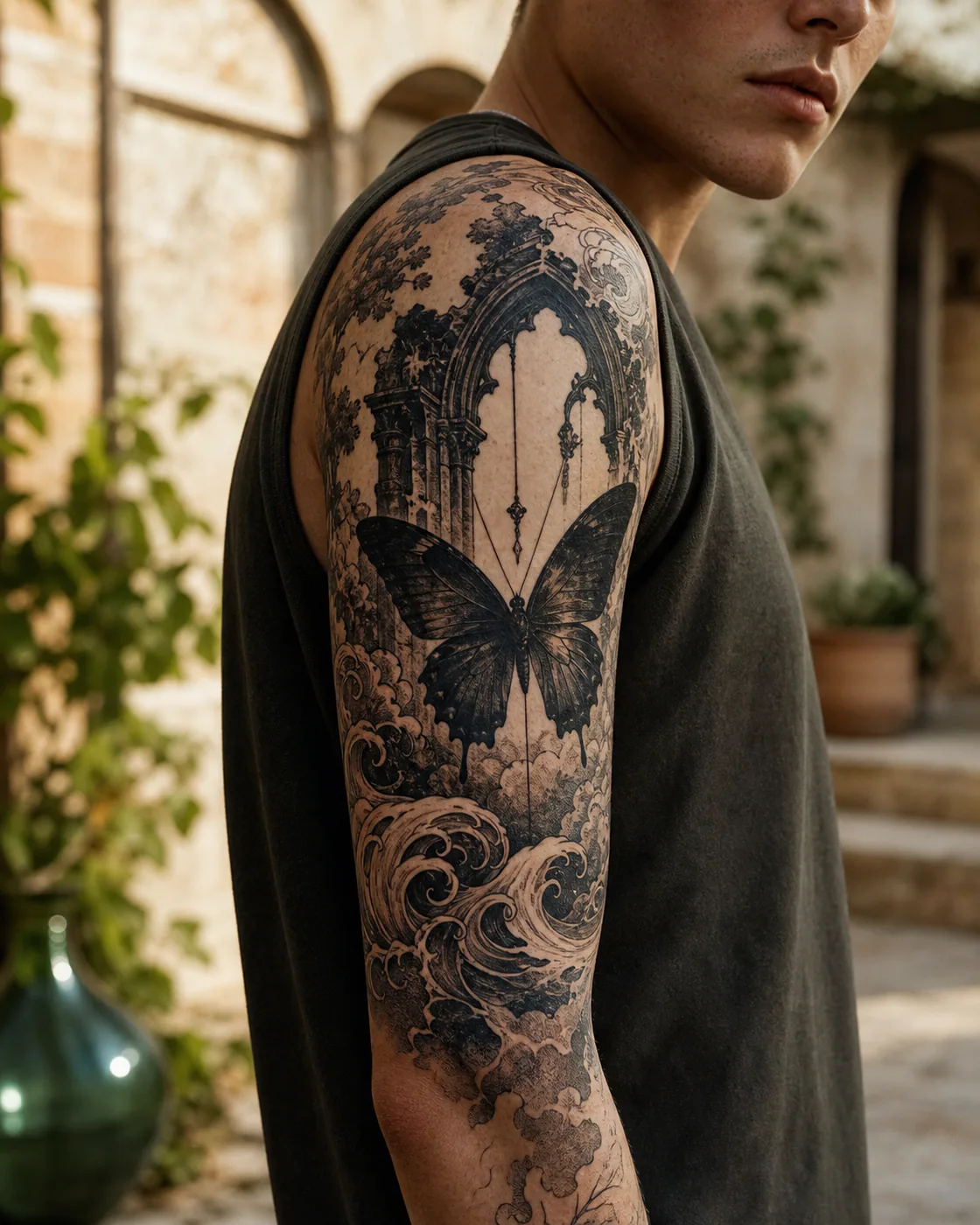
Japanese Gothic Tattoo for the Half Sleeve
An original gothic concept shaped as a healed japanese tattoo for the half sleeve.
- Japanese
- Gothic
- Half Sleeve
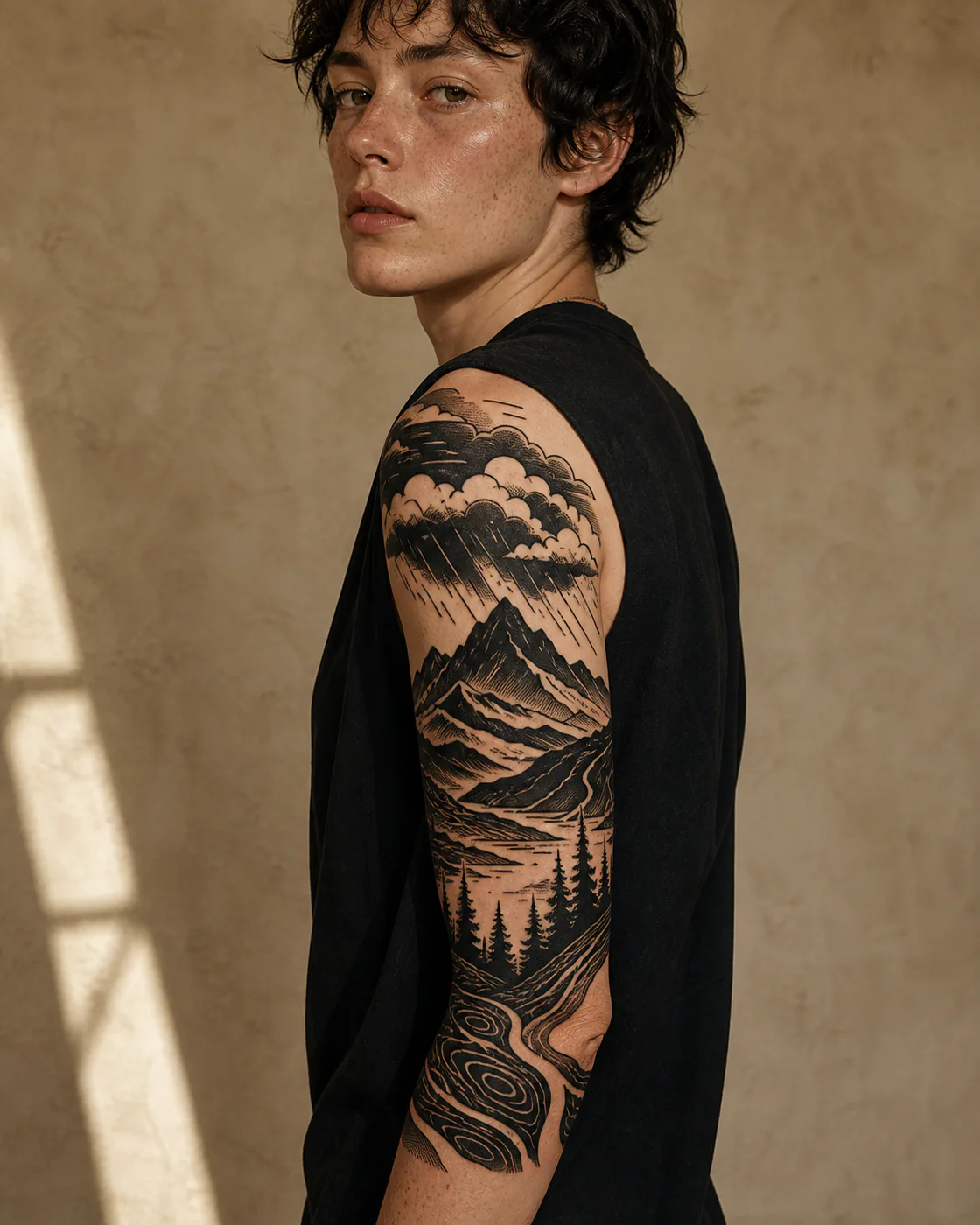
Blackwork Nature Tattoo for the Half Sleeve
An original nature concept shaped as a healed blackwork tattoo for the half sleeve.
- Blackwork
- Nature
- Half Sleeve
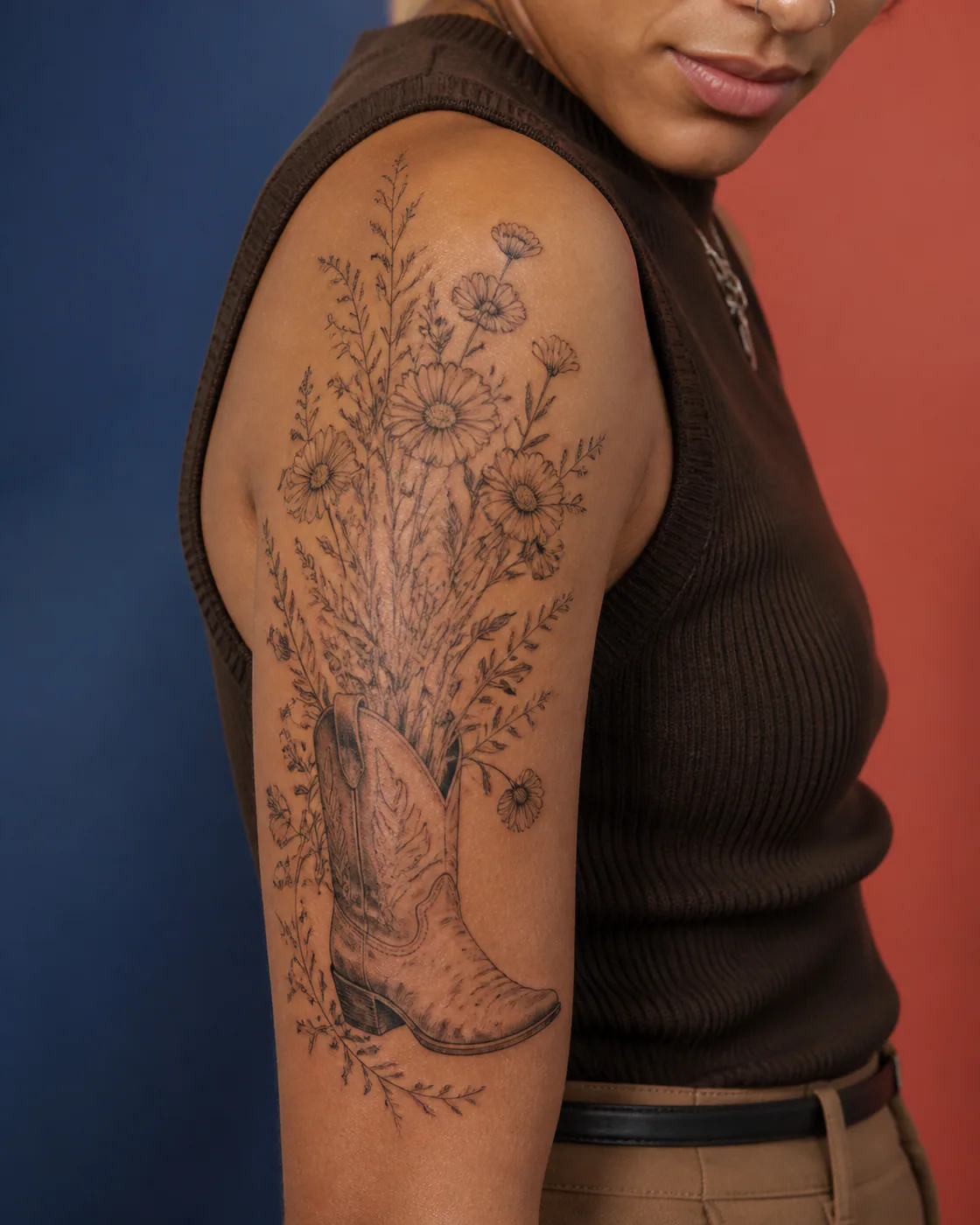
Fine Line Western Tattoo for the Half Sleeve
An original western concept shaped as a healed fine line tattoo for the half sleeve.
- Fine Line
- Western
- Half Sleeve
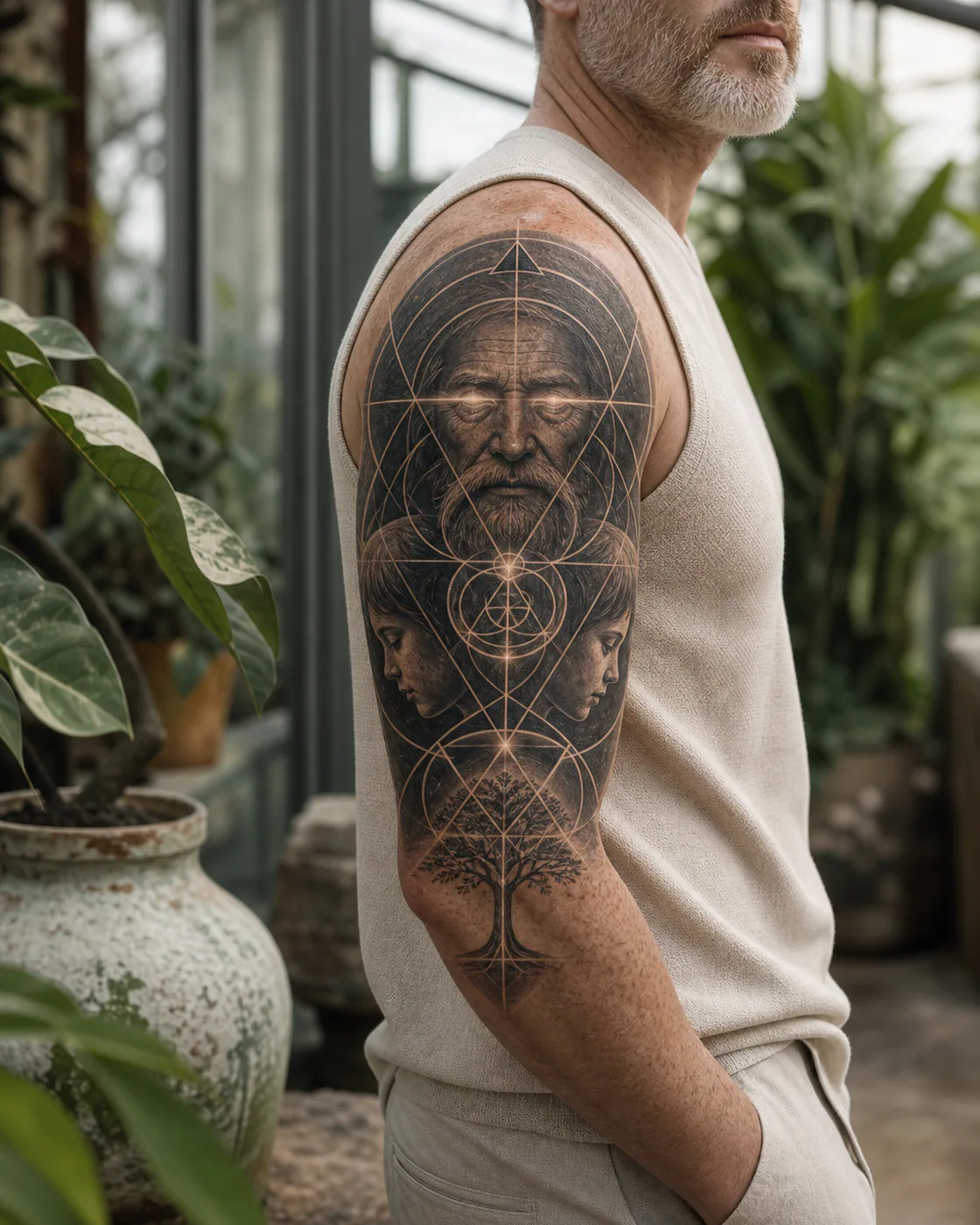
Geometric Family Portrait Tattoo for the Half Sleeve
An original portrait concept shaped as a healed geometric tattoo for the half sleeve.
- Geometric
- Portrait
- Half Sleeve
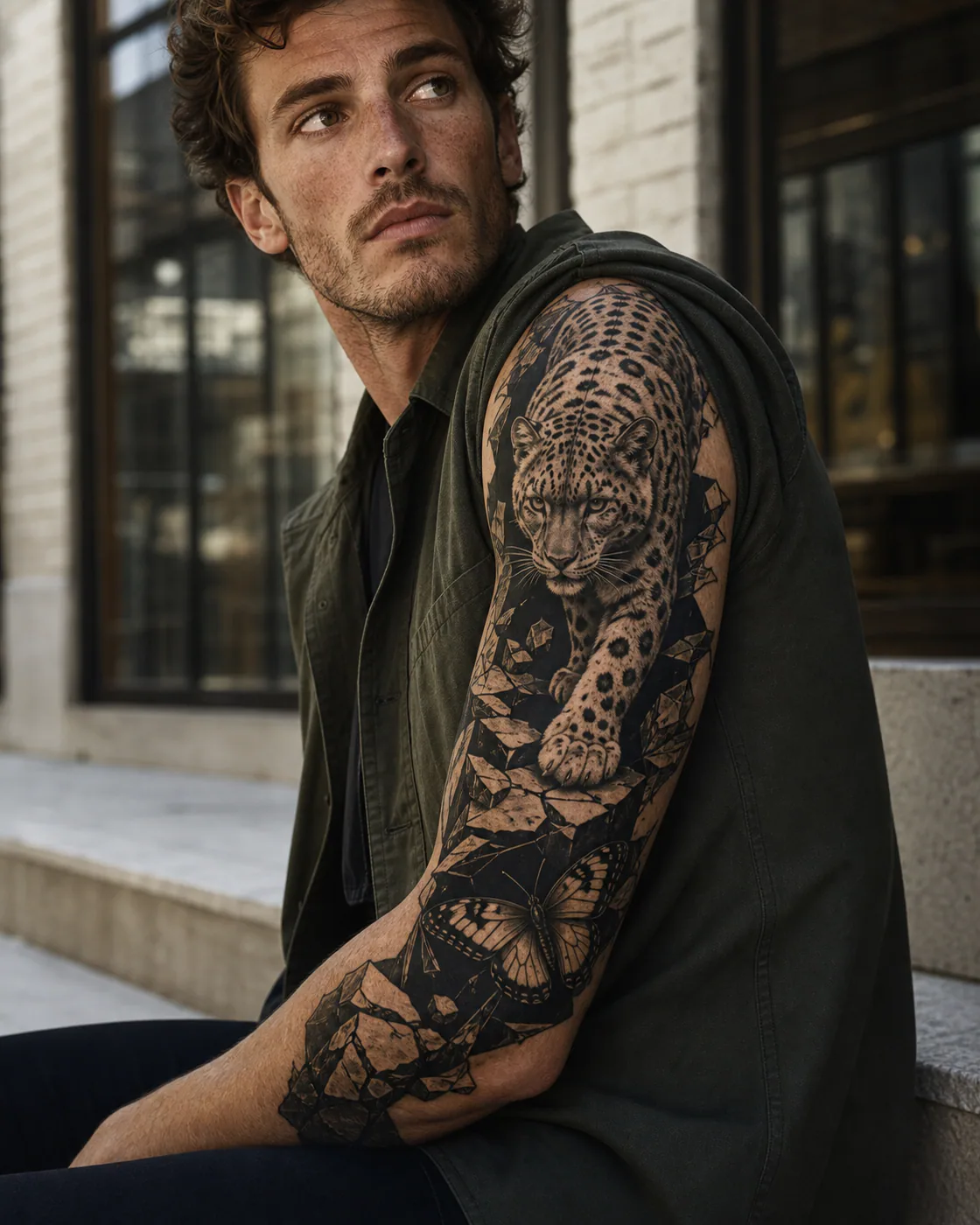
Blackwork Animal Tattoo for the Half Sleeve
An original animal concept shaped as a healed blackwork tattoo for the half sleeve.
- Blackwork
- Animals
- Half Sleeve
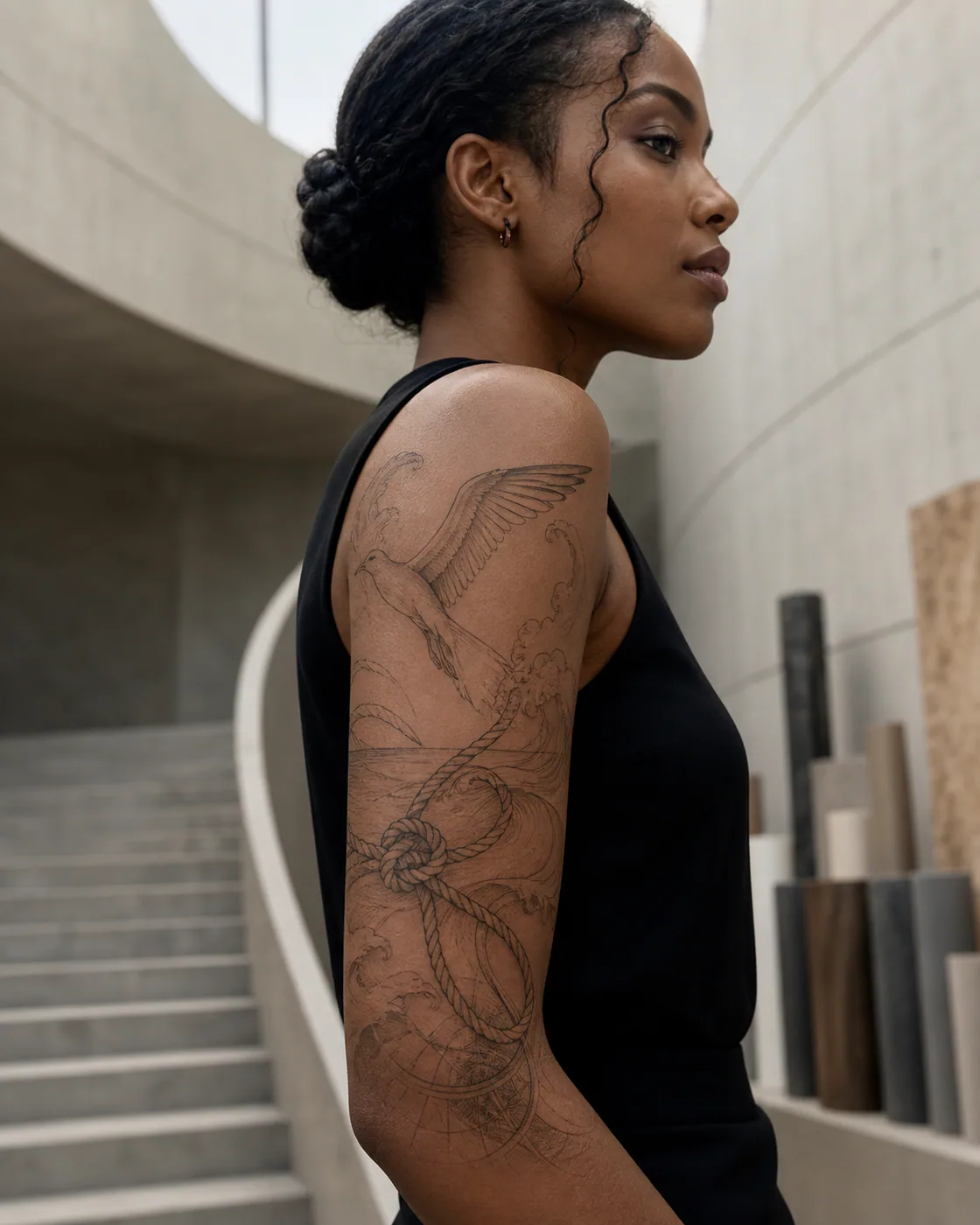
Fine Line Nautical Tattoo for the Half Sleeve
An original nautical concept shaped as a healed fine line tattoo for the half sleeve.
- Fine Line
- Nautical
- Half Sleeve
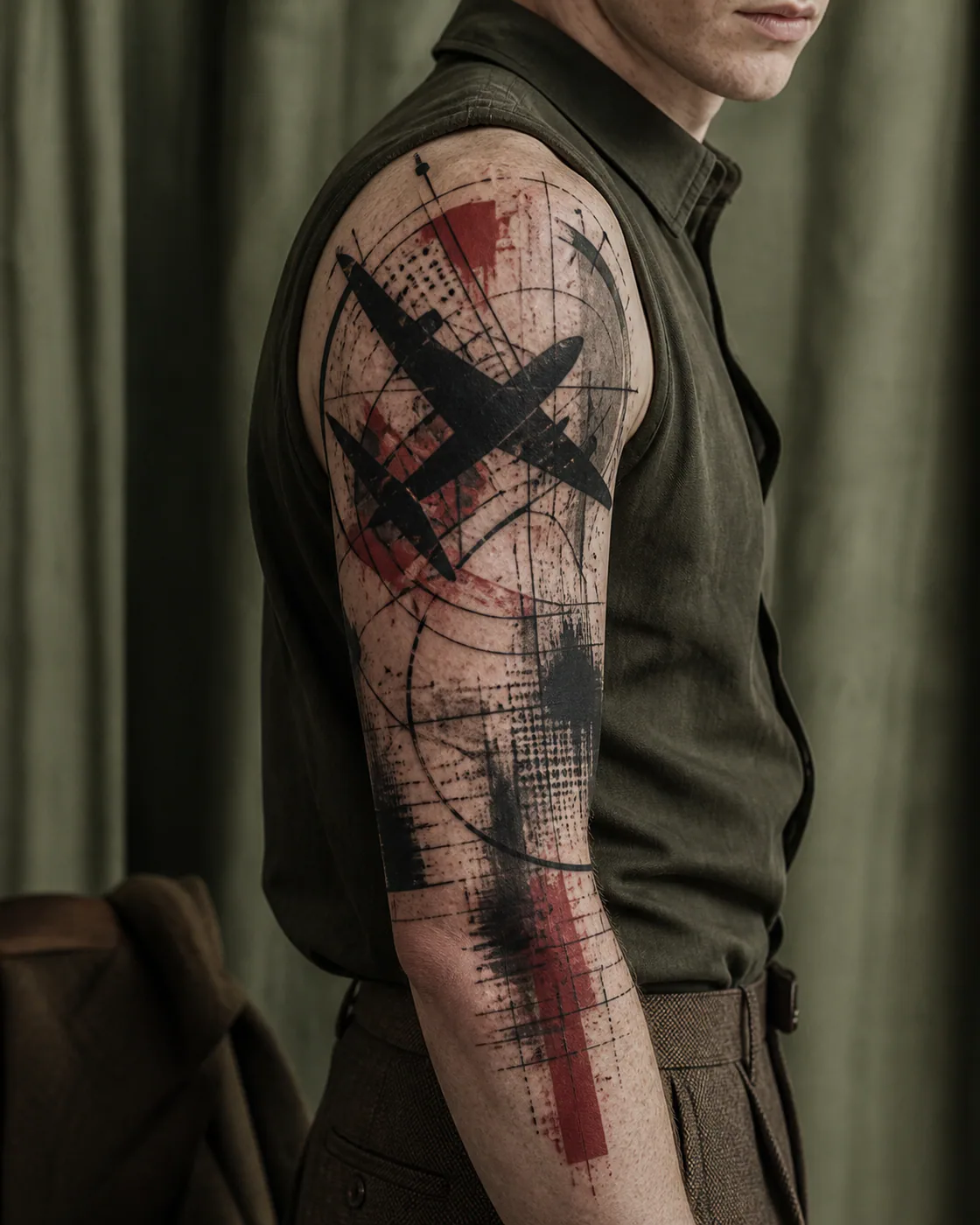
Trash Polka Geometric Tattoo for the Half Sleeve
An original geometric concept shaped as a healed trash polka tattoo for the half sleeve.
- Trash Polka
- Geometric
- Half Sleeve
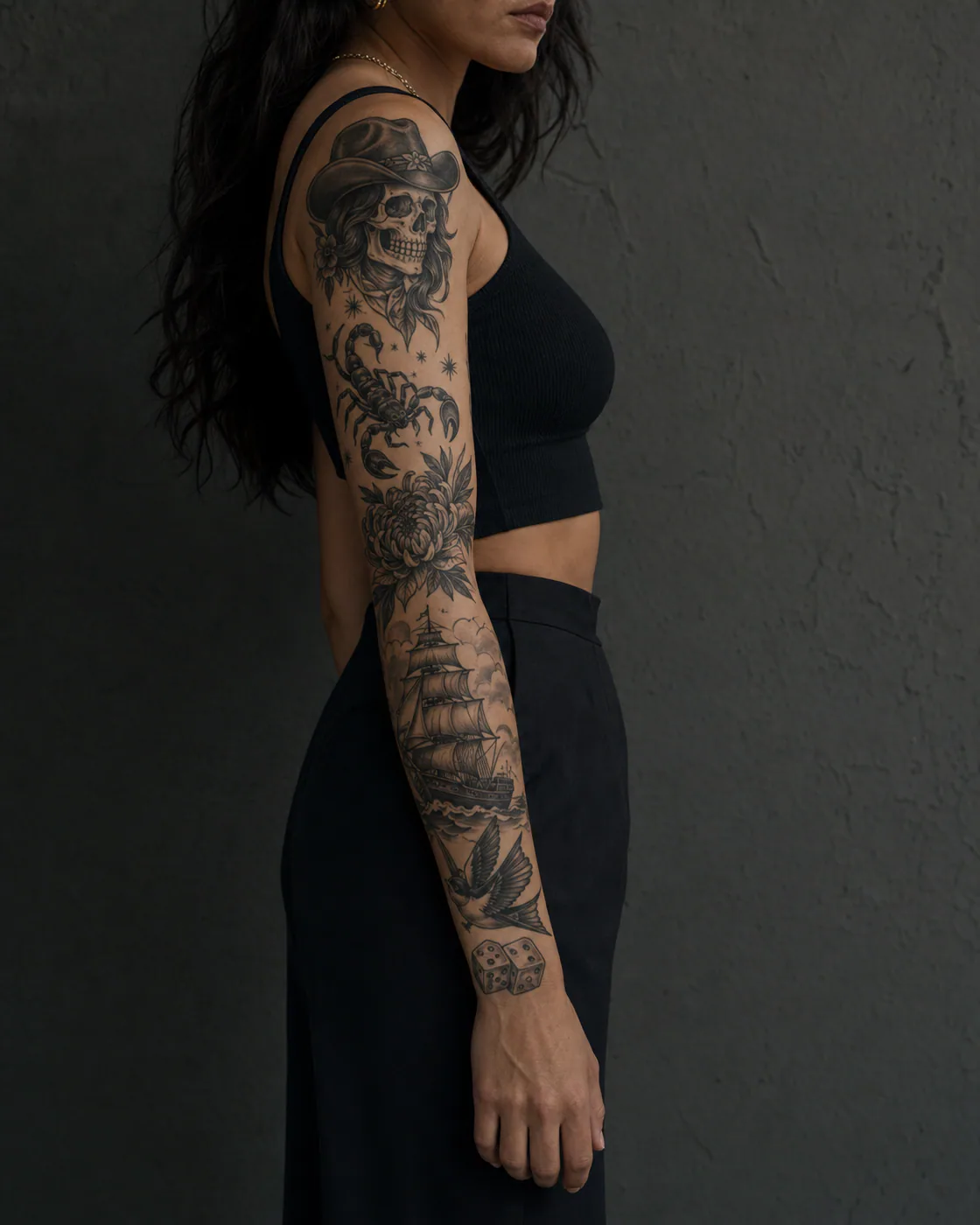
Cowgirl and scorpion story sleeve
Western attitude meets maritime flash in a darker collection balanced by one large floral anchor.
- American Traditional
- Western
- Full sleeve
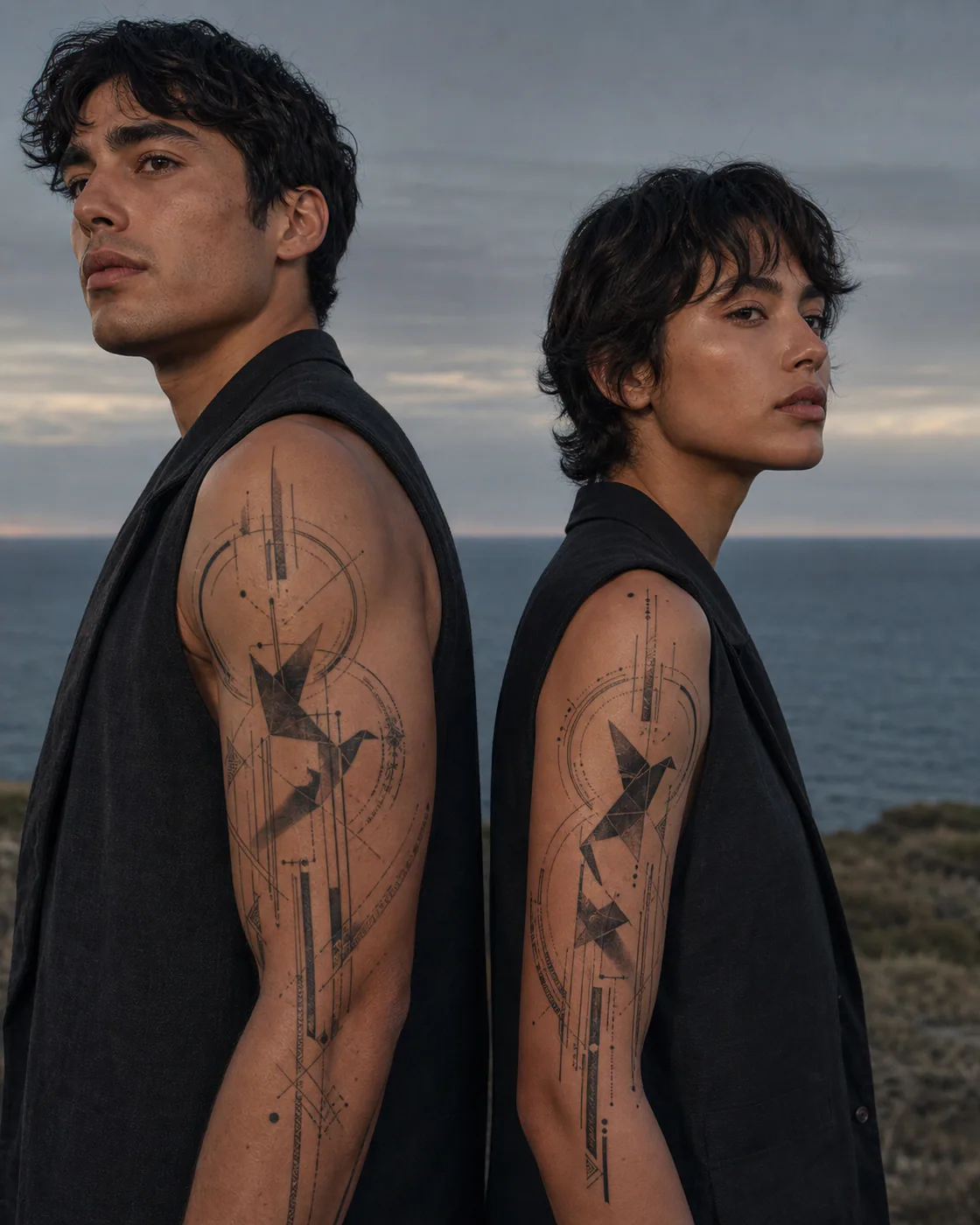
Cyber Sigilism Couple Memory Tattoo for the Half Sleeve
An original memory concept shaped as a healed cyber sigilism tattoo for the half sleeve.
- Cybersigilism
- Memory
- Half Sleeve
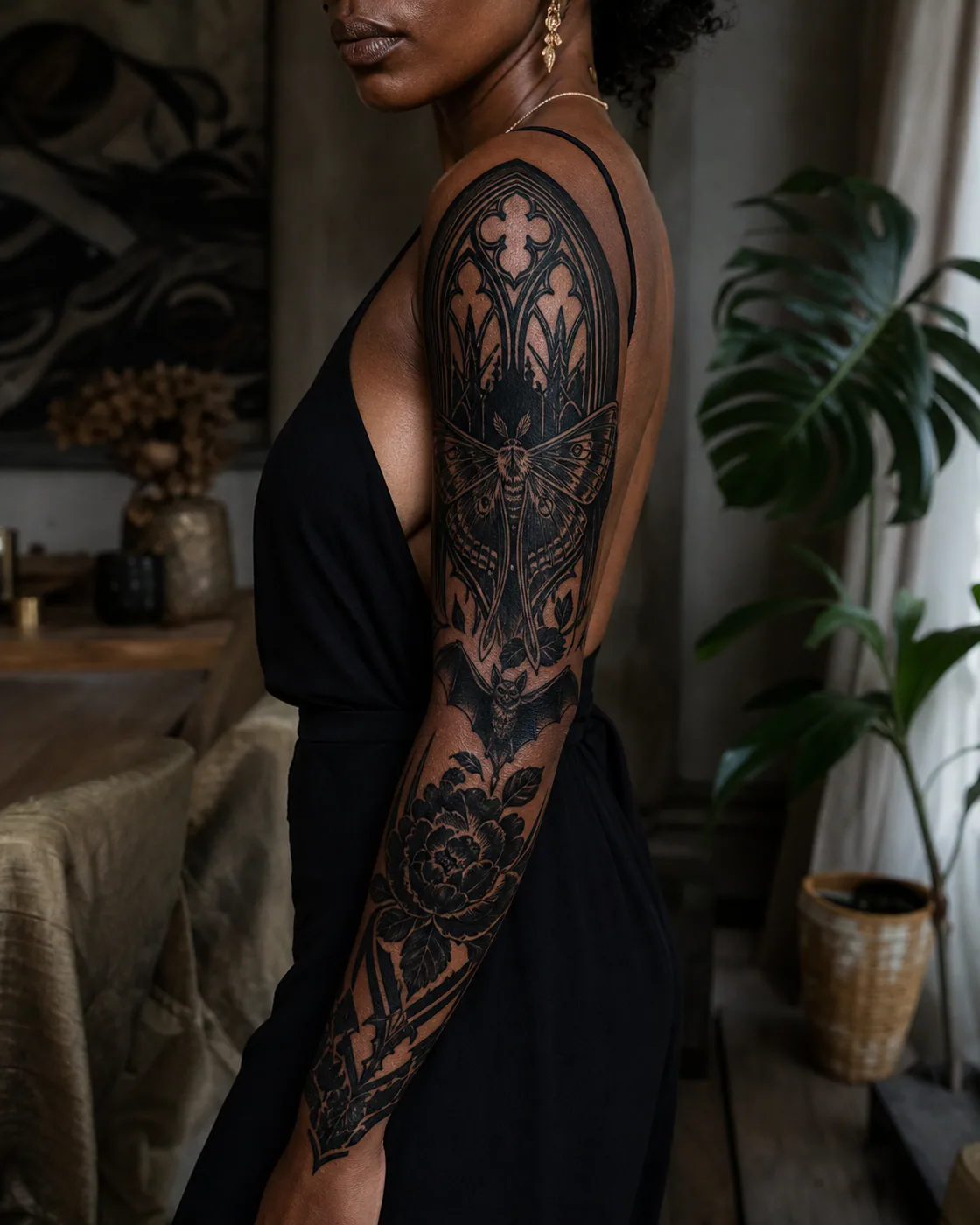
Blackwork Gothic Tattoo for the Full Sleeve
An original gothic concept shaped as a healed blackwork tattoo for the full sleeve.
- Blackwork
- Gothic
- Full sleeve
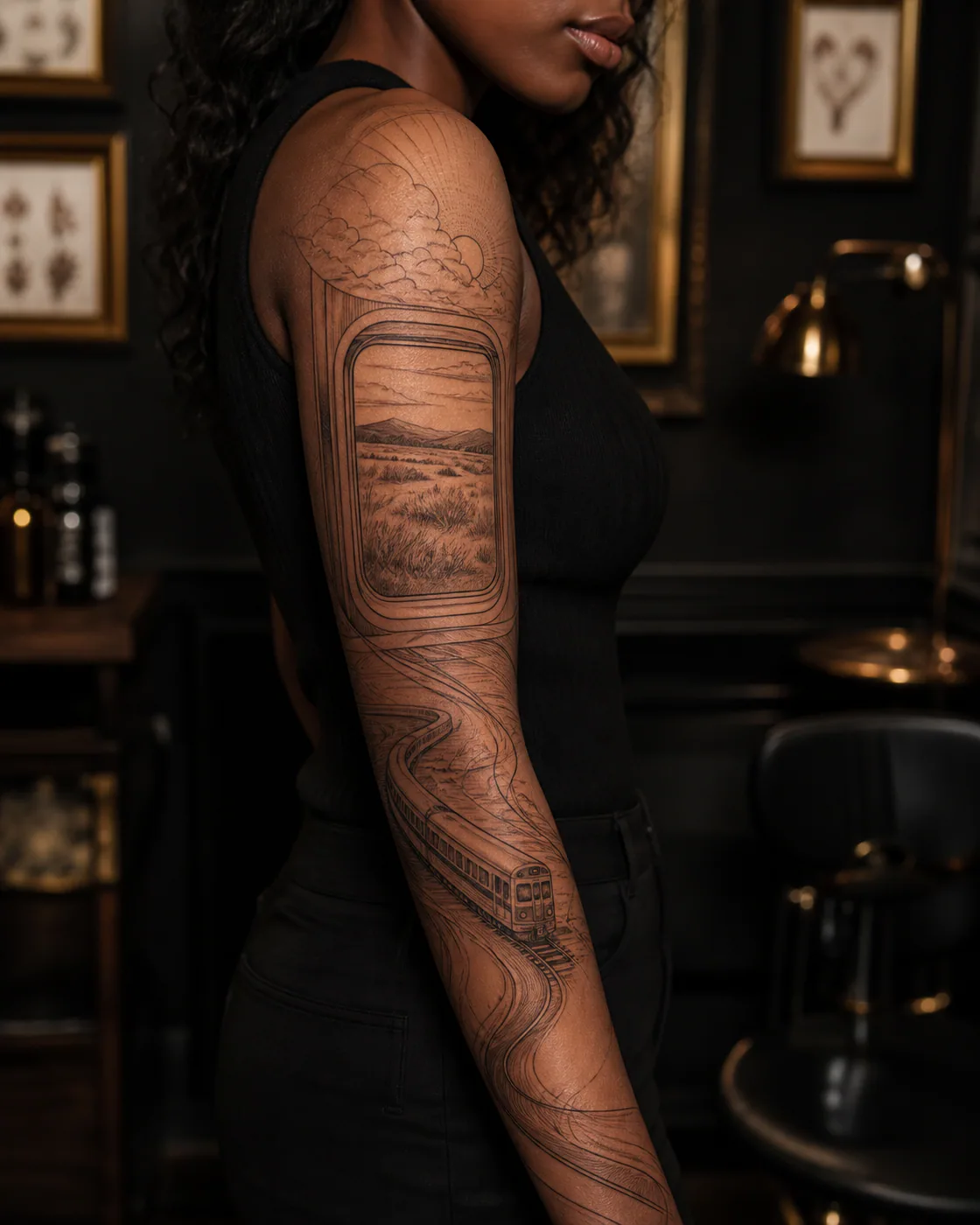
Fine Line Travel Tattoo for the Full Sleeve
An original travel concept shaped as a healed fine line tattoo for the full sleeve.
- Fine Line
- Travel
- Full sleeve
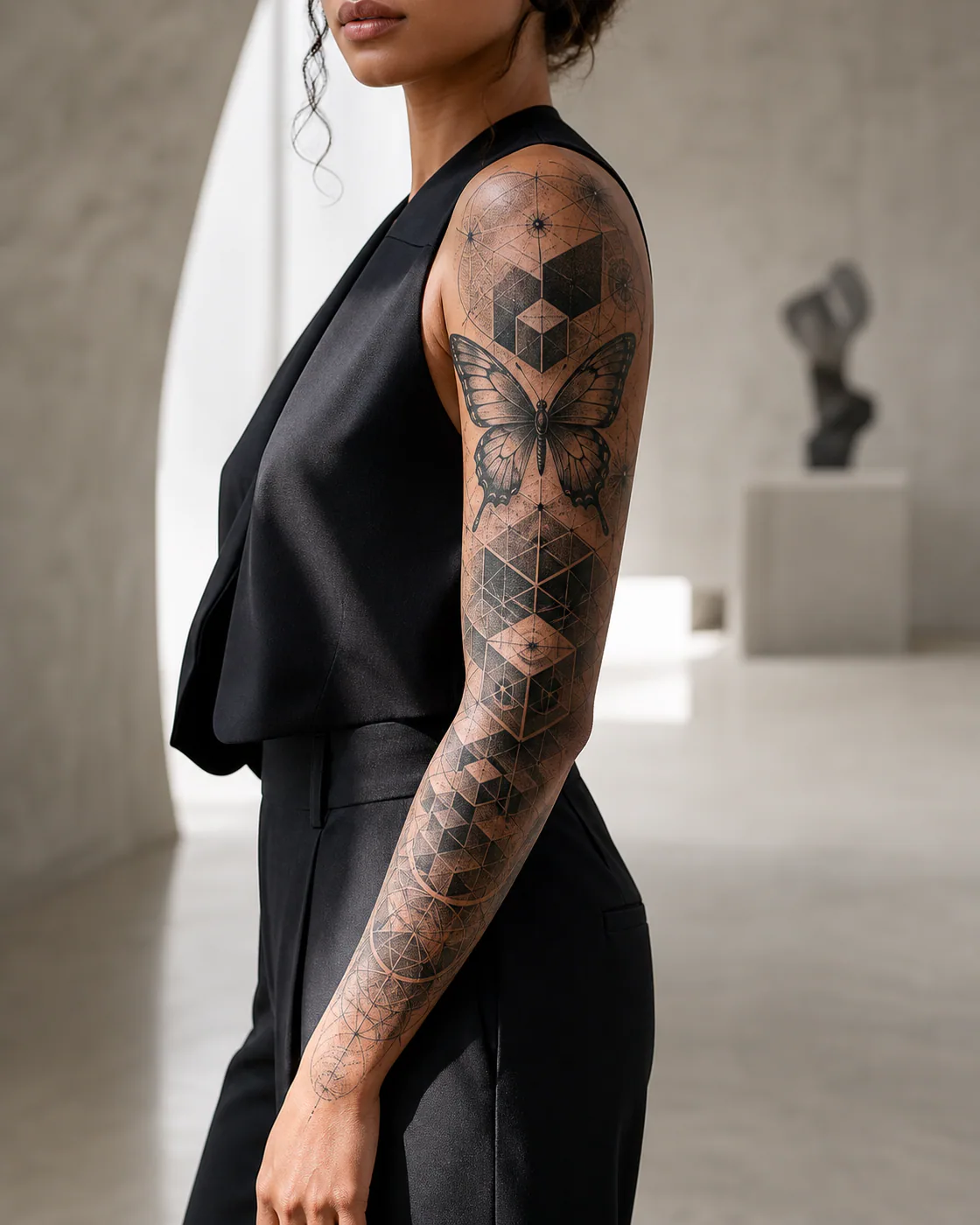
Geometric Geometric Tattoo for the Full Sleeve
An original geometric concept shaped as a healed geometric tattoo for the full sleeve.
- Geometric
- Geometric
- Full sleeve
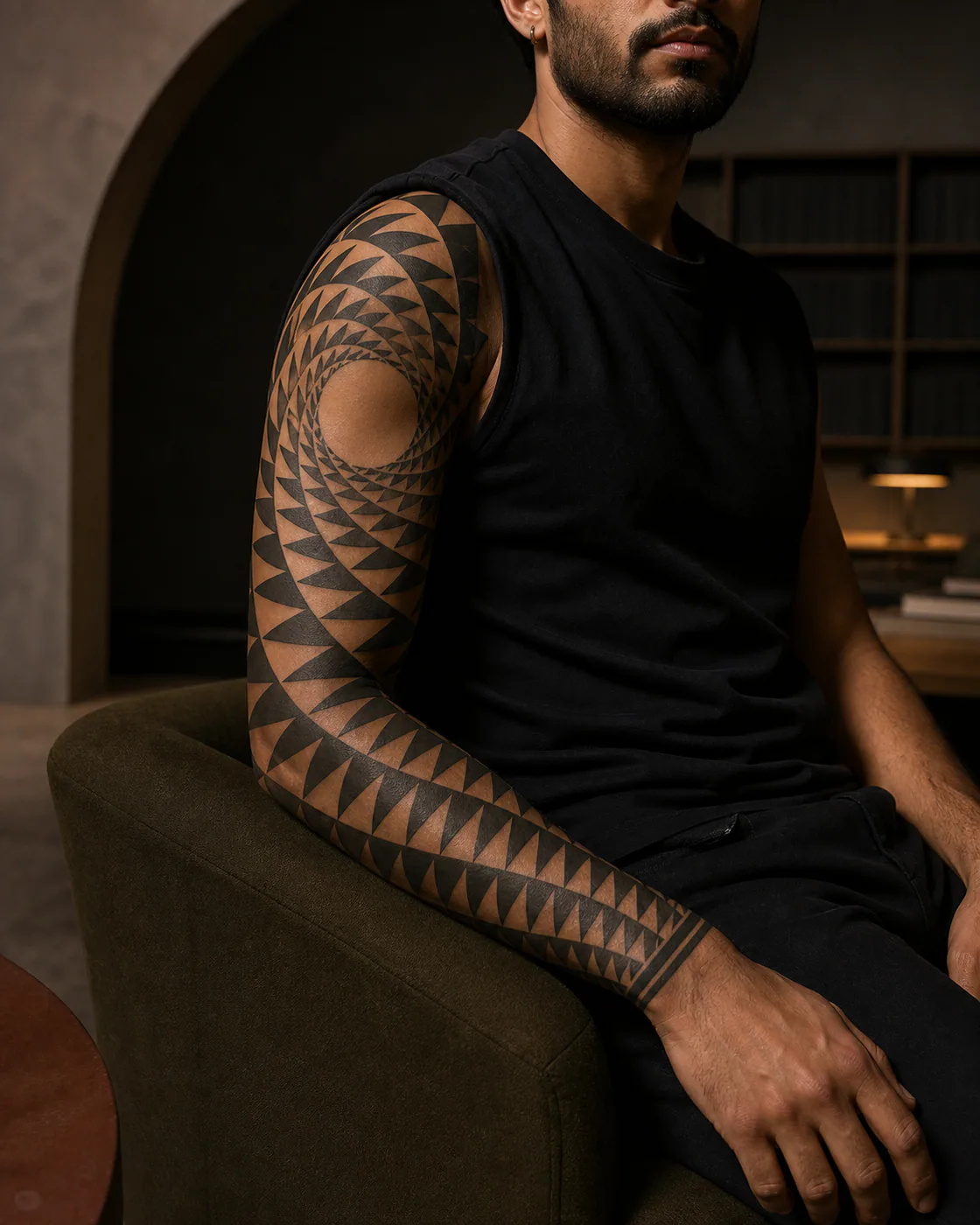
Blackwork Geometric Tattoo for the Full Sleeve
An original geometric concept shaped as a healed blackwork tattoo for the full sleeve.
- Blackwork
- Geometric
- Full sleeve
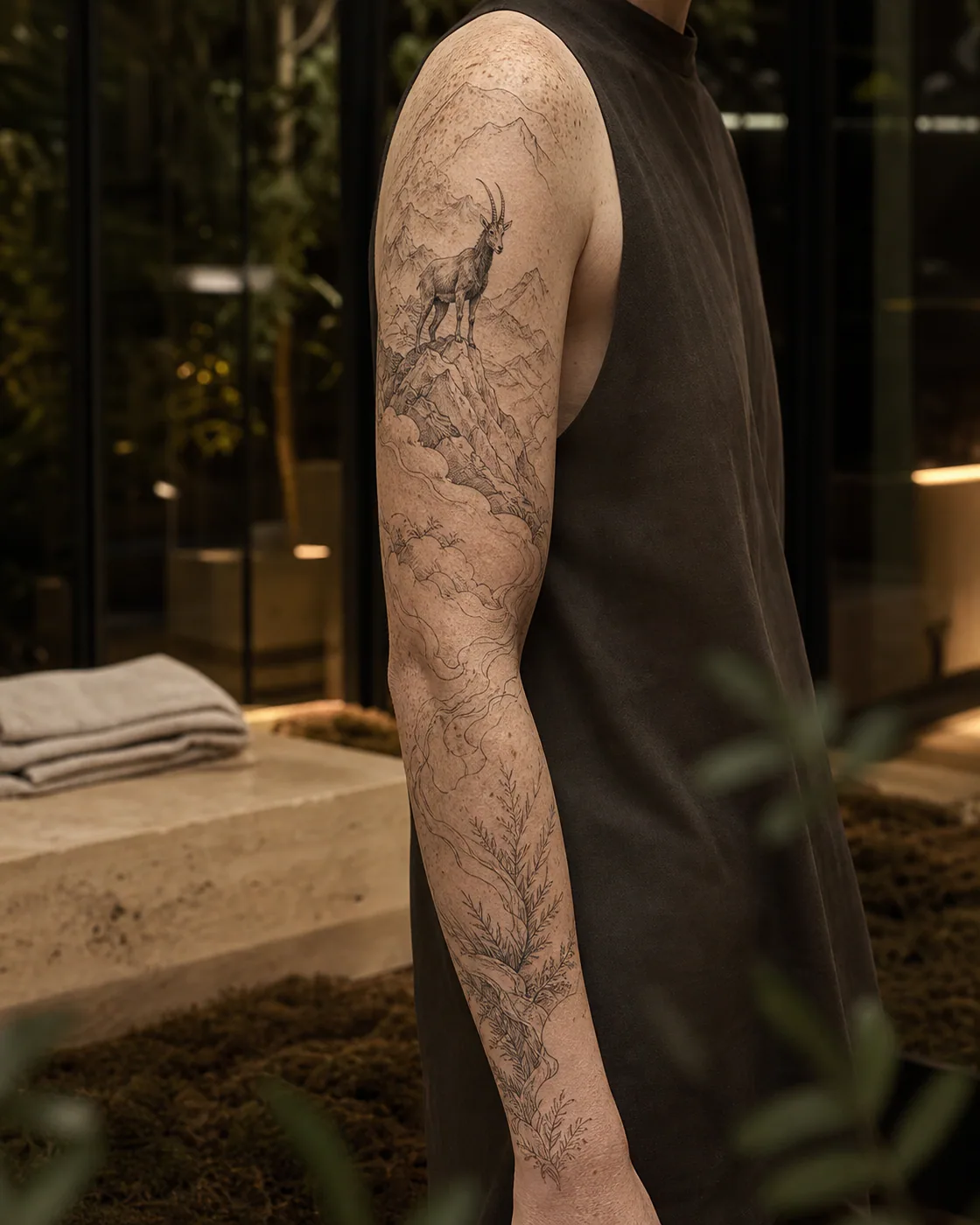
Fine Line Animal Tattoo for the Full Sleeve
An original animal concept shaped as a healed fine line tattoo for the full sleeve.
- Fine Line
- Animals
- Full sleeve
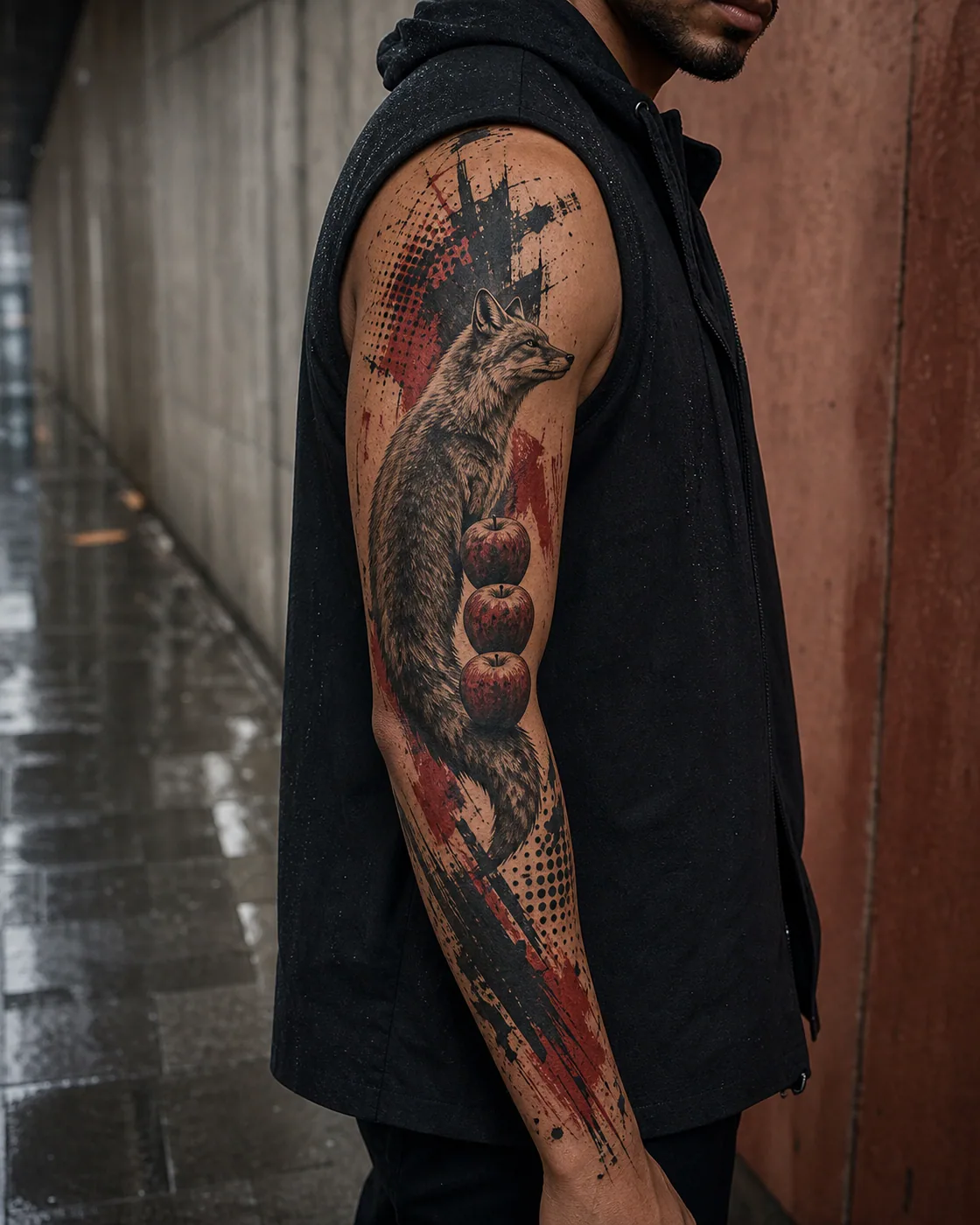
Trash Polka Playful Tattoo for the Full Sleeve
An original playful concept shaped as a healed trash polka tattoo for the full sleeve.
- Trash Polka
- Playful
- Full sleeve
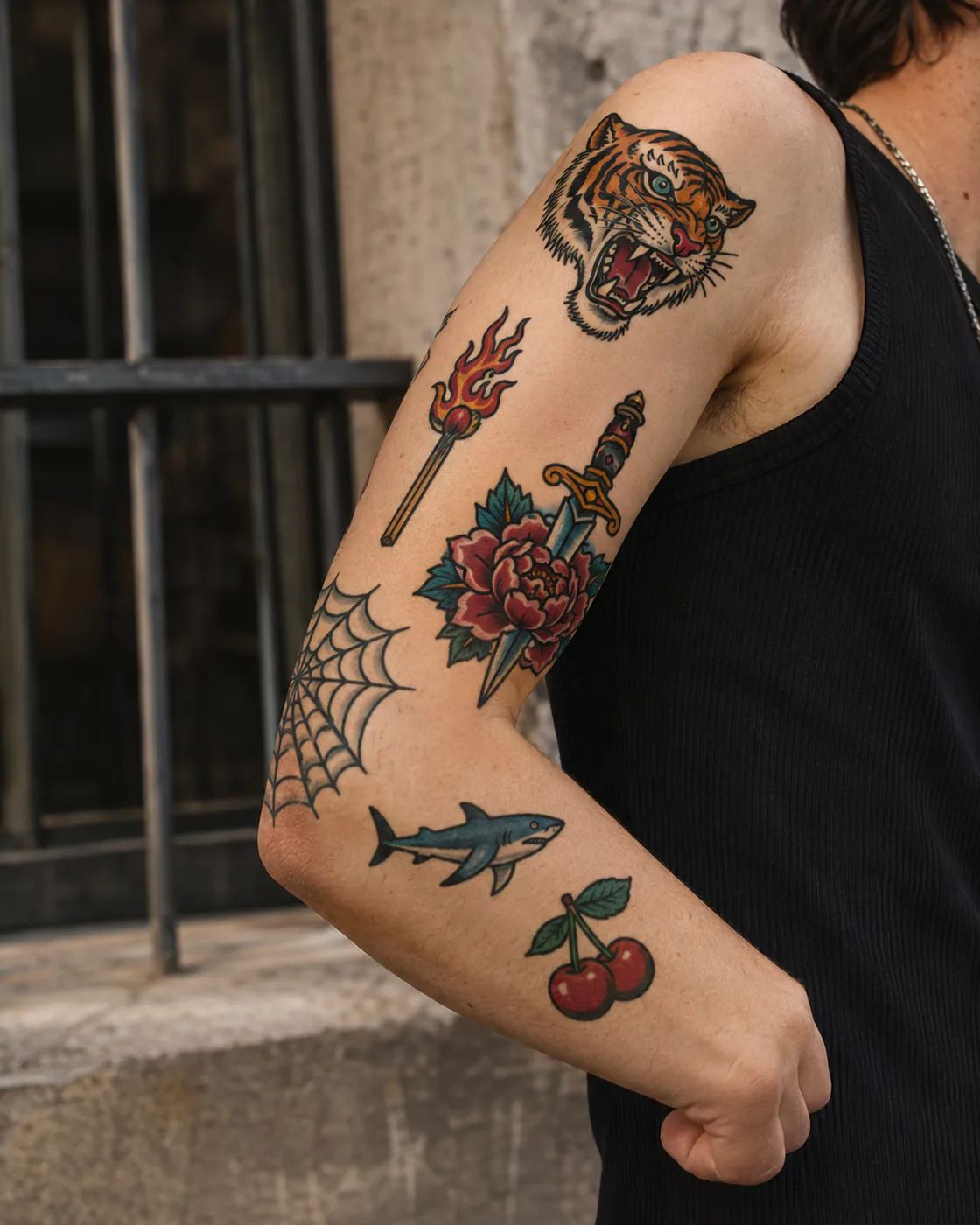
Tiger and peony elbow composition
The bent-arm view shows how round flowers and a web can negotiate the elbow between stronger vertical anchors.
- American Traditional
- Animals
- Full sleeve
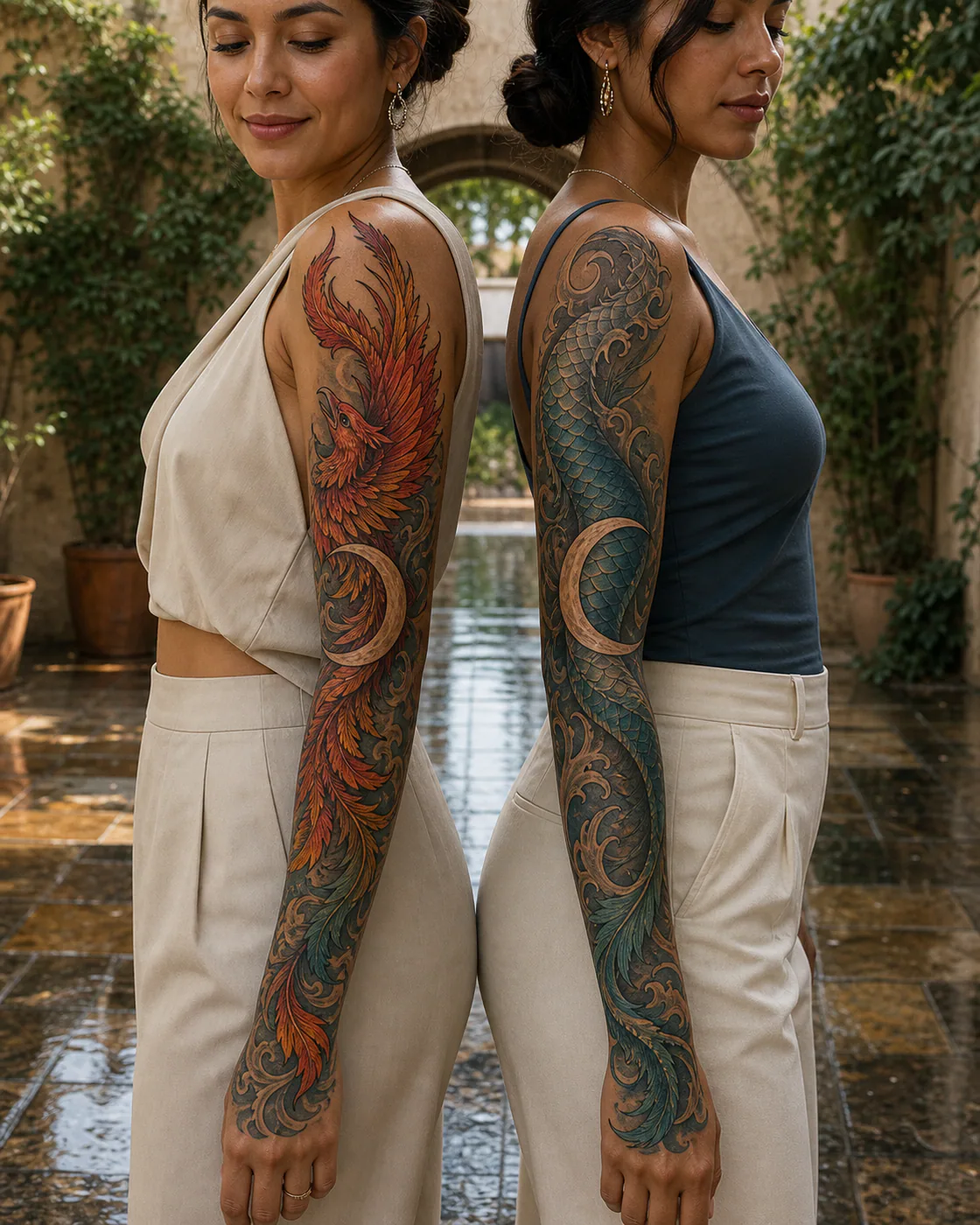
Neo Traditional Couple Mythic Tattoo for the Full Sleeve
An original mythic concept shaped as a healed neo traditional tattoo for the full sleeve.
- Neo-Traditional
- Mythic
- Full sleeve
GO DEEPER
Sleeve subcollections
Explore a specific sleeve structure with more focused planning, spacing, and design references.
SYSTEM-LEVEL DIRECTIONS
Sleeve concepts built around a visual system
Think beyond a list of subjects. The sleeve needs a repeatable language for scale, transitions, background, contrast, and the way focal points turn around the arm.
Nature-to-sky narrative
Move from roots, rock, or water near the wrist toward trees, animals, weather, and open sky higher on the arm.
Japanese-inspired continuous flow
Use wind, water, cloud, flowers, and one or two primary subjects to create movement across joints without treating filler as an afterthought.
Blackwork focal-and-rest rhythm
Alternate solid forms with deliberate skin breaks so the sleeve feels powerful without becoming one undifferentiated dark mass.
Curated patchwork collection
Keep varied subjects coherent through a shared palette, line weight, spacing rule, or era while allowing each piece to retain its identity.
Mythological story arc
Choose one narrative and assign the shoulder, upper arm, forearm, and inner arm distinct roles instead of repeating equally sized characters.
Botanical anatomy map
Let stems, leaves, thorns, insects, and negative space travel with muscle lines and use blooms as focal punctuation.
PLAN THE COVERAGE AS ONE MOVING SYSTEM
Compare full, half, lower-arm, and quarter sleeve commitments
Sleeve length changes the available story, visibility, transitions, and expansion strategy. A strong sleeve is designed for a curved arm and its joints rather than assembled from a flat poster.
Sleeve format: Full shoulder-to-wrist sleeve
- Often works well for
- Large narratives, Japanese compositions, blackwork systems, realism, and connected themes.
- Coverage cue
- The complete arm, with focal subjects distributed across shoulder, upper arm, and forearm.
- What to check
- Plan elbow, wrist, background, contrast rhythm, sessions, and budget before the first section.
Sleeve format: Upper-arm half sleeve
- Often works well for
- Shoulder-led compositions, larger focal images, and coverage that is easier to conceal.
- Coverage cue
- Shoulder to elbow, wrapping the bicep and tricep as a three-dimensional unit.
- What to check
- Keep a deliberate lower edge and leave a viable transition if extension remains possible.
Sleeve format: Lower-arm half sleeve
- Often works well for
- Highly visible vertical stories, forearm wraps, and projects built around an existing anchor.
- Coverage cue
- Elbow to wrist, with detail simplified near creases and high-friction boundaries.
- What to check
- Check rotation, cuff placement, wrist termination, and how the design reads with the arm bent.
Sleeve format: Expandable quarter sleeve
- Often works well for
- A shoulder-cap statement or a first stage that may later become a half or full sleeve.
- Coverage cue
- A compact upper-arm section with enough visual weight to stand alone.
- What to check
- Tell the artist about possible expansion so the boundary does not close off future composition.
PLAN THE WHOLE ARM
Build hierarchy before collecting details
A sleeve is seen both as one silhouette and as many close-up moments. Plan the distant read, joint transitions, and session order together.
Choose sleeve format
A full sleeve, upper half sleeve, lower half sleeve, and patchwork sleeve each create different boundaries and expansion options.
Place focal points first
Reserve the shoulder cap, outer upper arm, and major forearm plane for the subjects that matter most. Supporting elements should guide the eye between them.
Respect elbows and rotation
Joints stretch, compress, and rotate. Flexible texture, simplified shapes, or intentional open space can transition more naturally than a rigid central face.
Plan sessions and budget
A cohesive sleeve may take many appointments and months of healing. Agree on sequence, estimated hours, and which stages will look complete between sessions.
ARTIST HANDOFF
Choose an artist for the entire visual system
Review healed large-scale work, not only fresh close-ups. A sleeve specialist needs to manage anatomy, consistency, background, and long-term pacing.
Include in your sleeve brief
- Full, upper-half, lower-half, or patchwork format.
- One central theme and a ranked list of required subjects.
- Photographs of every side of the arm and all existing tattoos.
- Preferred palette, contrast level, density, and negative space.
- Approximate budget, schedule, and openness to multiple sessions.
KEEP EXPLORING
Related tattoo idea collections
Use another placement, size, audience, or subject to make your direction more specific.

Forearm Tattoo Ideas
Compare inner, outer, wraparound, and vertical forearm compositions designed for movement and everyday visibility.
Explore the collection
Tattoo Ideas for Men
Explore bold, restrained, symbolic, and placement-aware directions without treating masculinity as a single visual style.
Explore the collection
Flower Tattoo Ideas
Explore specific blooms, botanical structures, symbolic pairings, and compositions from tiny stems to large body-led florals.
Explore the collectionCOMMON QUESTIONS
What to know before choosing this direction
Should I plan a tattoo sleeve all at once?
A cohesive sleeve benefits from an overall plan even if it is tattooed over many sessions. Patchwork can grow more organically, but a shared spacing, palette, or style rule still helps.
What is the difference between a half sleeve and full sleeve?
A full sleeve generally covers shoulder to wrist. A half sleeve commonly covers shoulder to elbow or elbow to wrist. Exact boundaries and wrap coverage should be agreed with the artist.
How many sessions does a sleeve tattoo take?
It varies widely with coverage, detail, color, artist speed, skin response, and session length. A full sleeve can require many sessions, plus healing time between appointments.
Can existing tattoos be connected into a sleeve?
Often yes. An artist may use background, framing, new focal pieces, reworking, or selective cover-ups to create cohesion. Clear photos and an in-person consultation are essential.
How do I choose between a cohesive and patchwork sleeve?
Choose a cohesive sleeve when you want one continuous composition, shared background, or narrative flow. Patchwork suits individually readable tattoos and gradual collecting, but it still benefits from planned spacing, scale, and contrast.
Which tattoo styles can work across a full sleeve?
Japanese, traditional, blackwork, realism, illustrative, ornamental, and mixed-style systems can all work at sleeve scale. The important factor is whether the artist can maintain hierarchy, transitions, and readable contrast around the whole arm.
TURN INSPIRATION INTO AN ORIGINAL CONCEPT
Keep designing with your own story
Take the subject, placement, and style into the AI generator, then use virtual try-on to judge approximate scale. A tattoo artist should still redraw the final design for your body.