TATTOO IDEAS FOR MEN
Tattoo ideas for men with more meaning than muscle
The best men’s tattoo is not defined by one “masculine” look. Start with the story you want to carry, then choose line weight, scale, contrast, and placement that suit both the idea and your body.

MEN'S TATTOOS LIBRARY
Browse curated men's tattoos directions
Browse one curated gallery across related themes, styles, and placements. The same concept may appear in more than one relevant collection.
379 design directions
Page 1 of 16
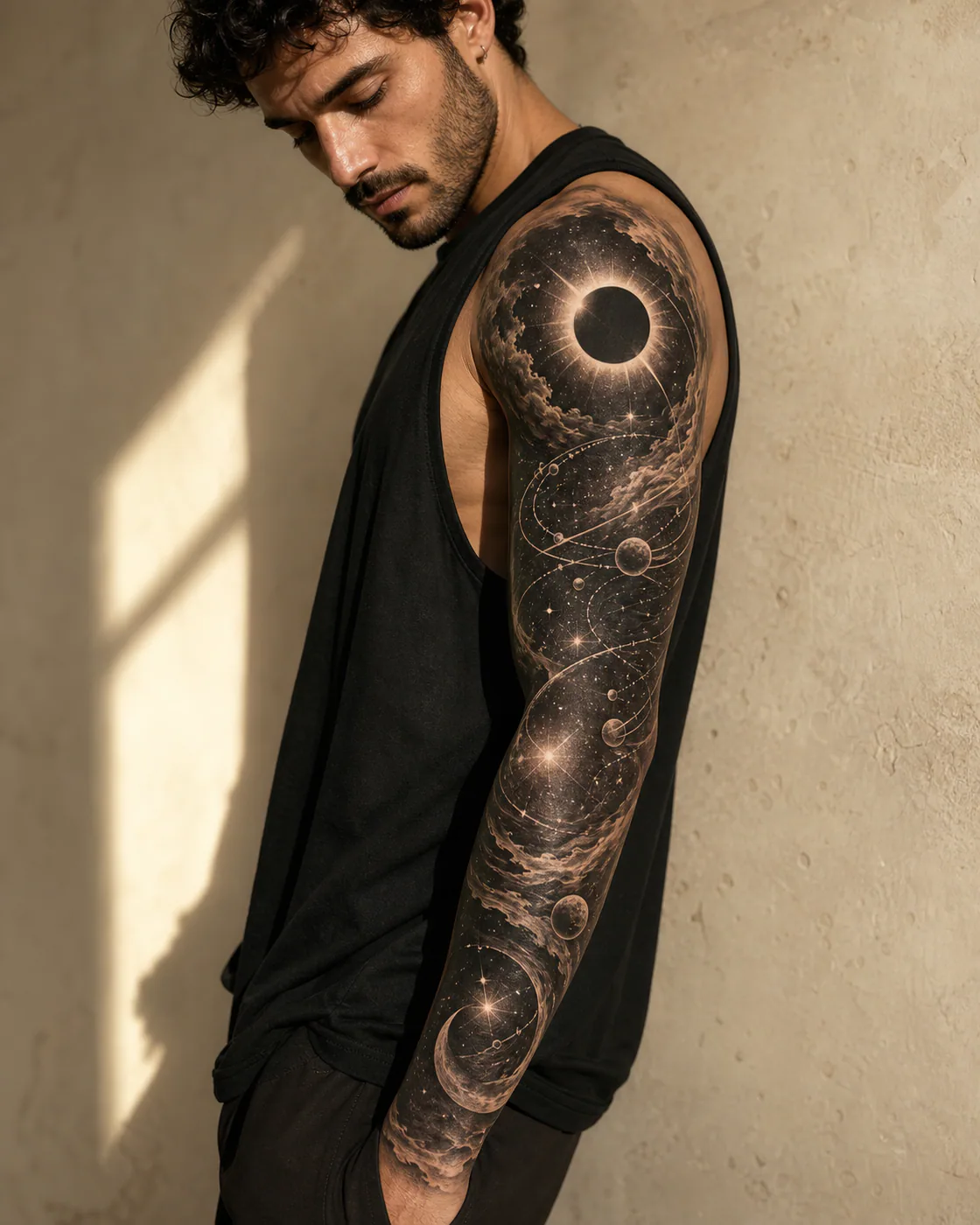
Black And Grey Celestial Tattoo for the Full Sleeve
An original celestial concept shaped as a healed black and grey tattoo for the full sleeve.
- Black & Gray
- Celestial
- Full Sleeve
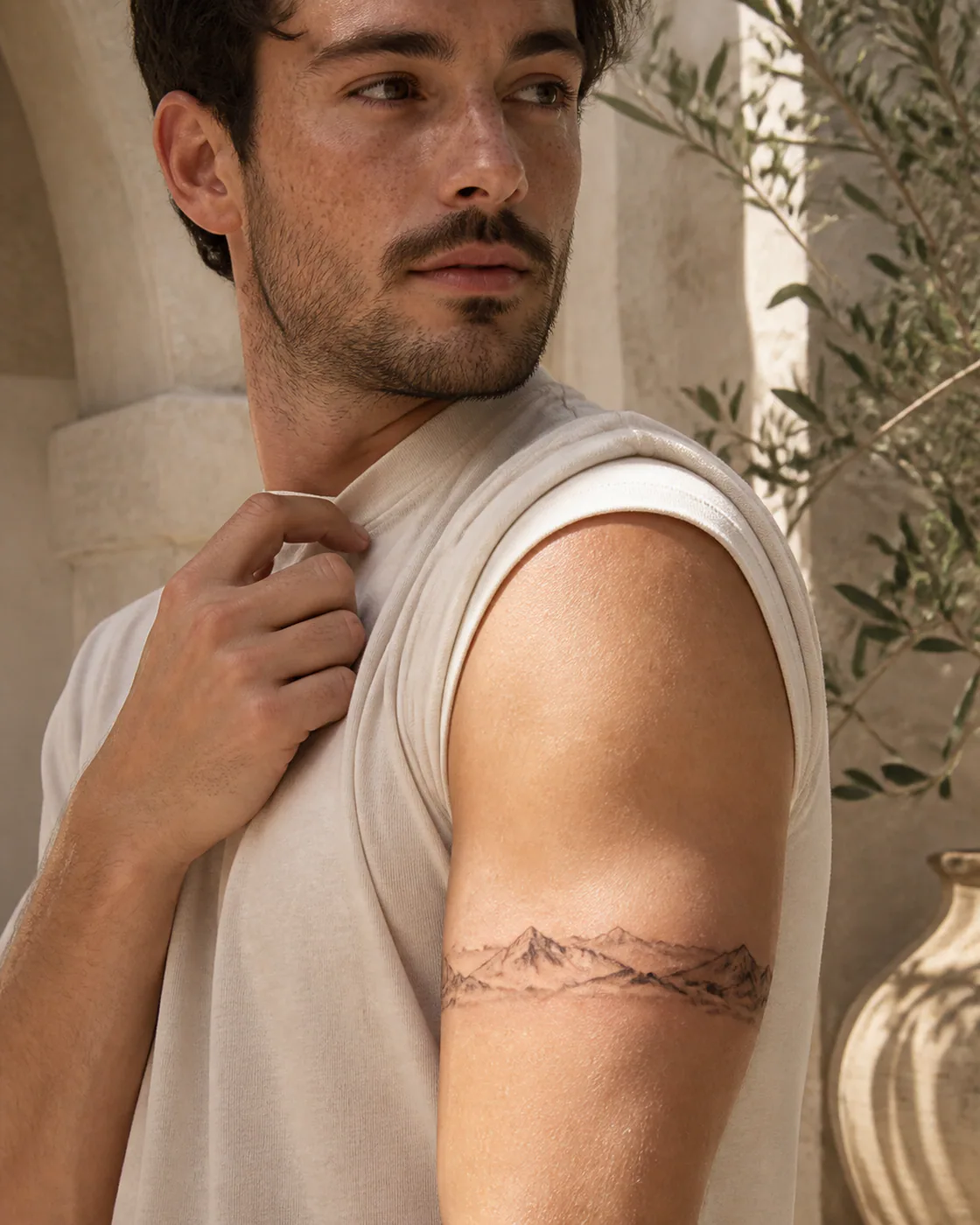
Fine Line Nature Tattoo for the Armband
An original nature concept shaped as a healed fine line tattoo for the armband.
- Fine Line
- Nature
- Armband
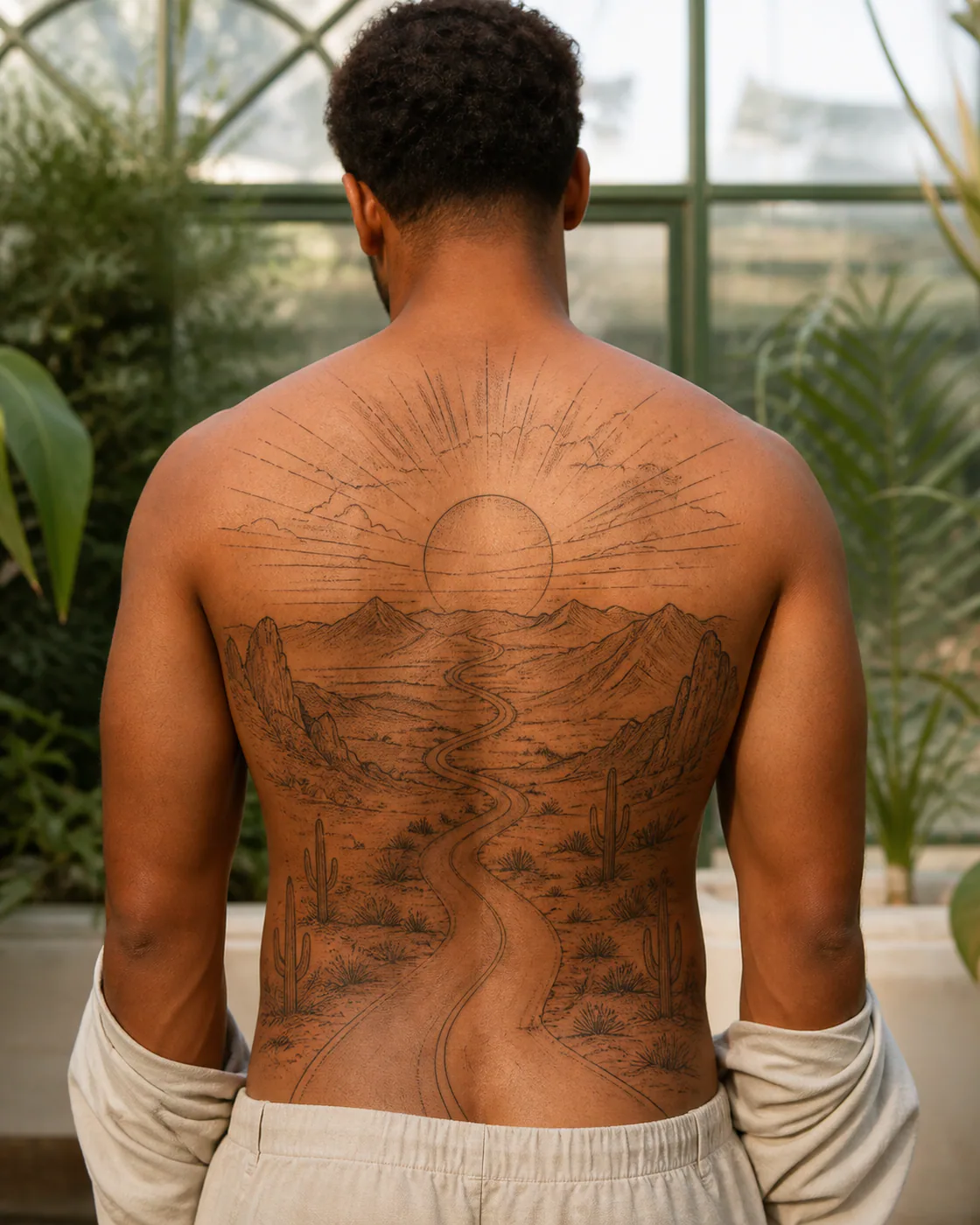
Fine Line Travel Tattoo for the Full Back
An original travel concept shaped as a healed fine line tattoo for the full back.
- Fine Line
- Travel
- Full Back
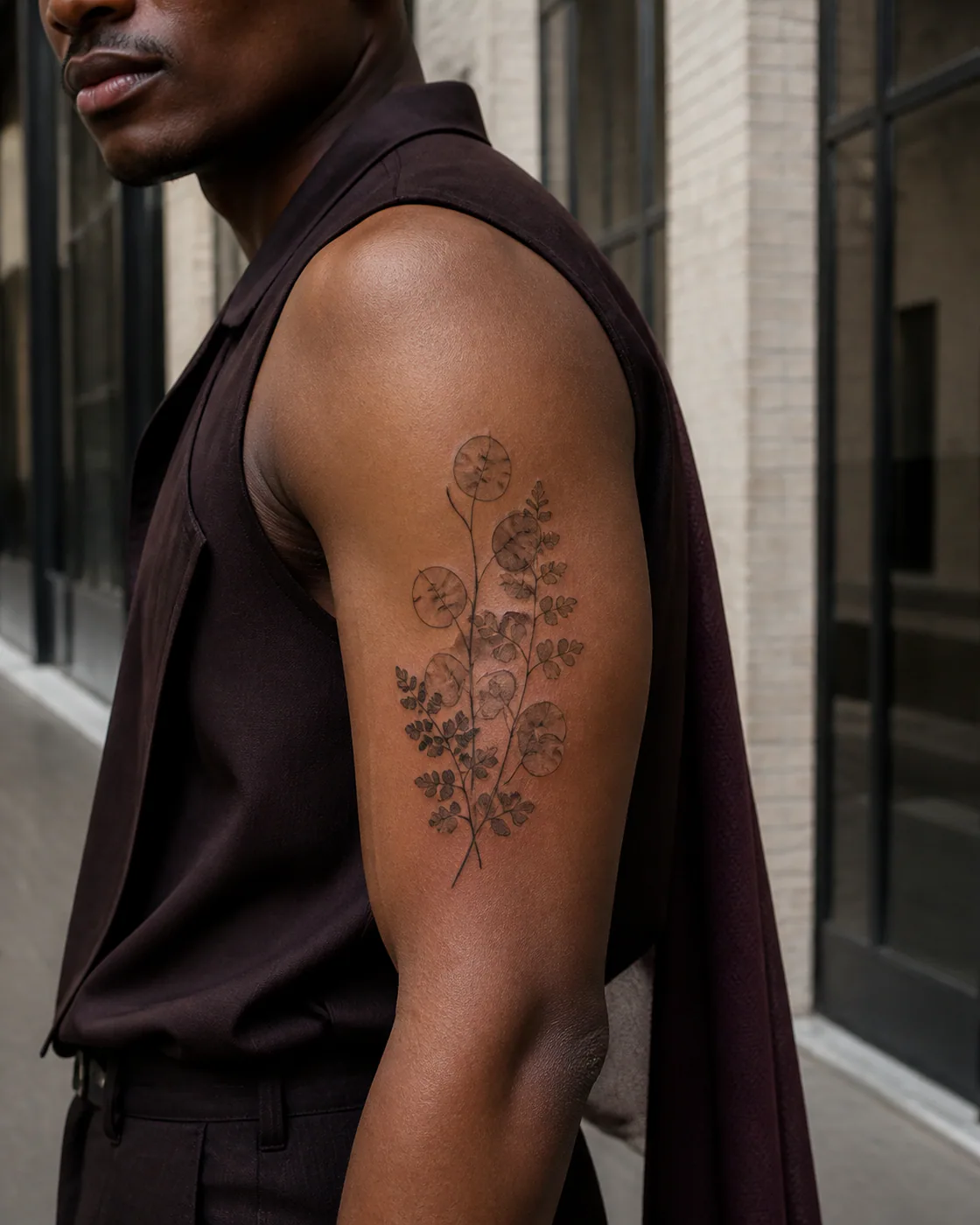
Minimalist Botanical Tattoo for the Upper Arm
An original botanical concept shaped as a healed minimalist tattoo for the upper arm.
- Minimalist
- Flowers & Botanicals
- Upper Arm
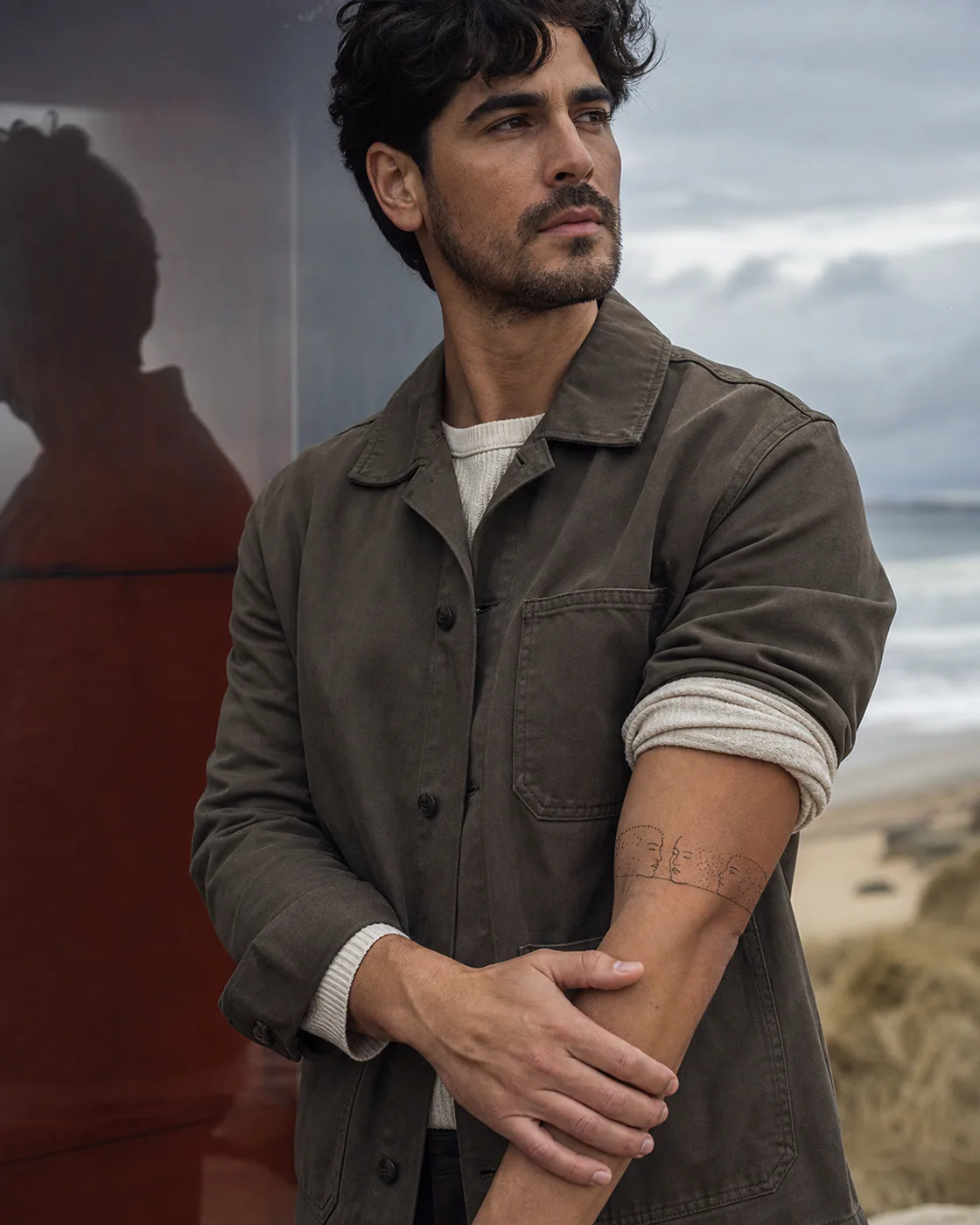
Fine Line Family Portrait Tattoo for the Armband
An original portrait concept shaped as a healed fine line tattoo for the armband.
- Fine Line
- Portrait
- Armband
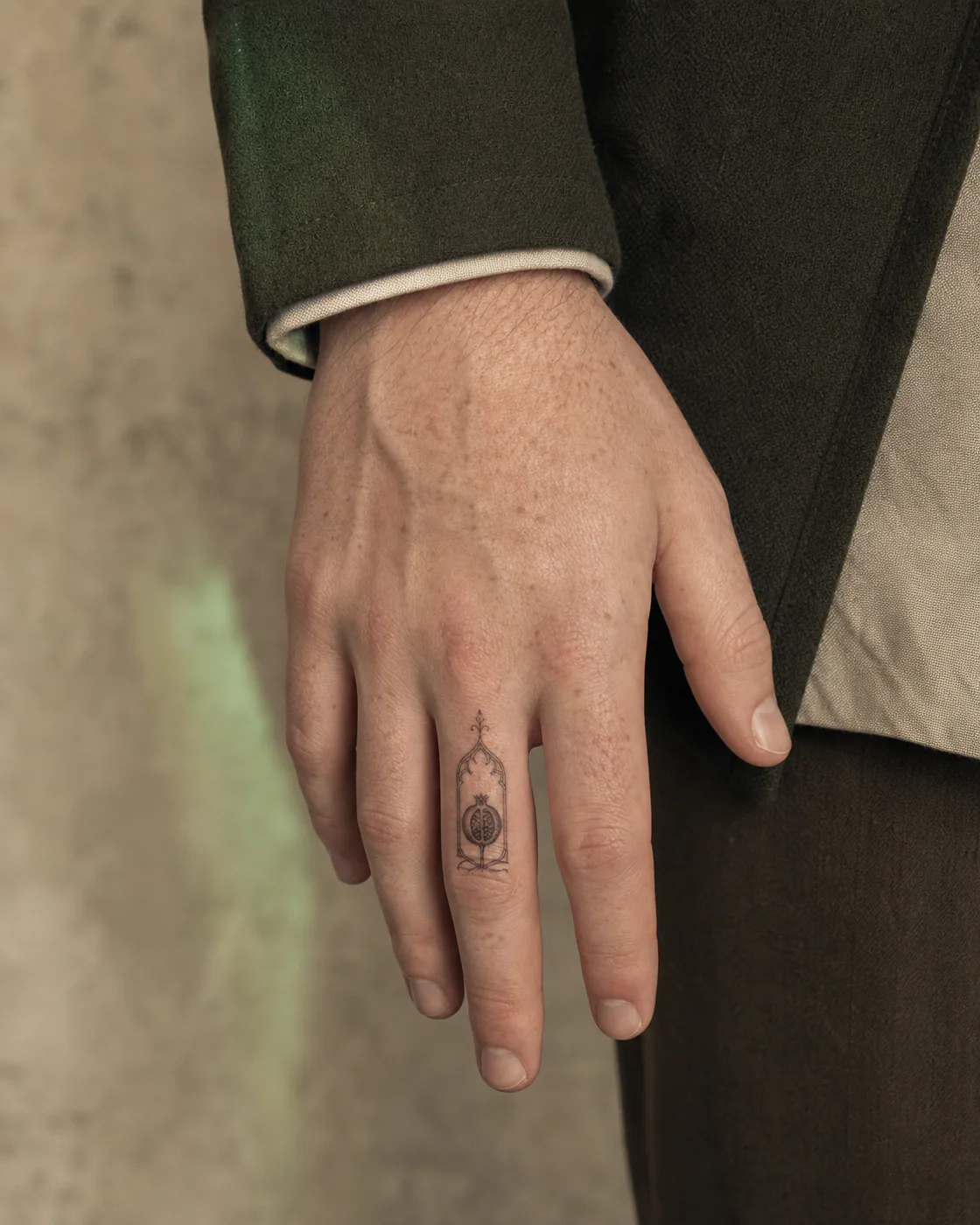
Fine Line Gothic Tattoo for the Finger
An original gothic concept shaped as a healed fine line tattoo for the finger.
- Fine Line
- Gothic
- Finger
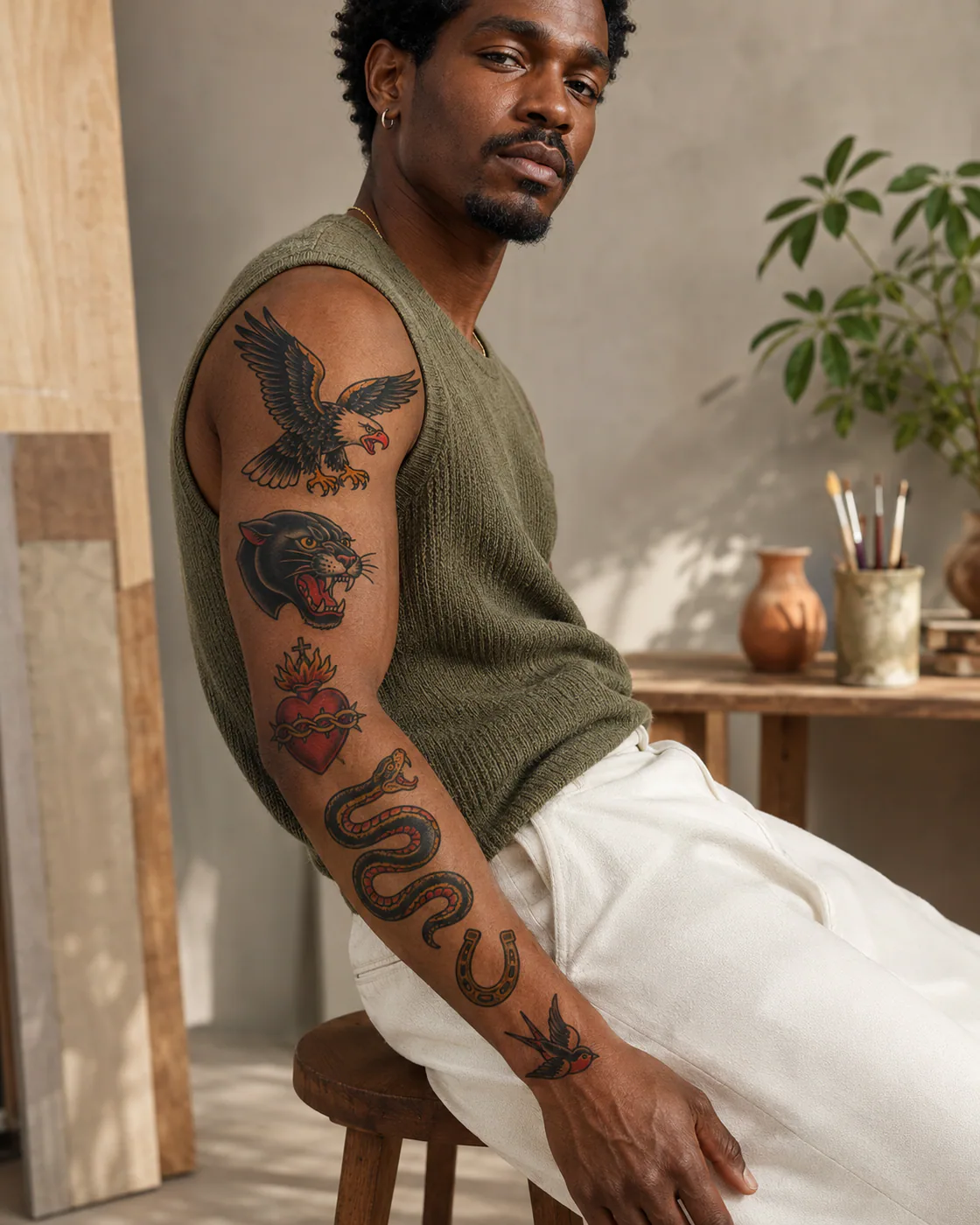
Eagle and panther heritage sleeve
Bold black outlines and a restrained red-gold palette unite several classic flash subjects without closing the skin gaps.
- American Traditional
- Animals
- Full Sleeve
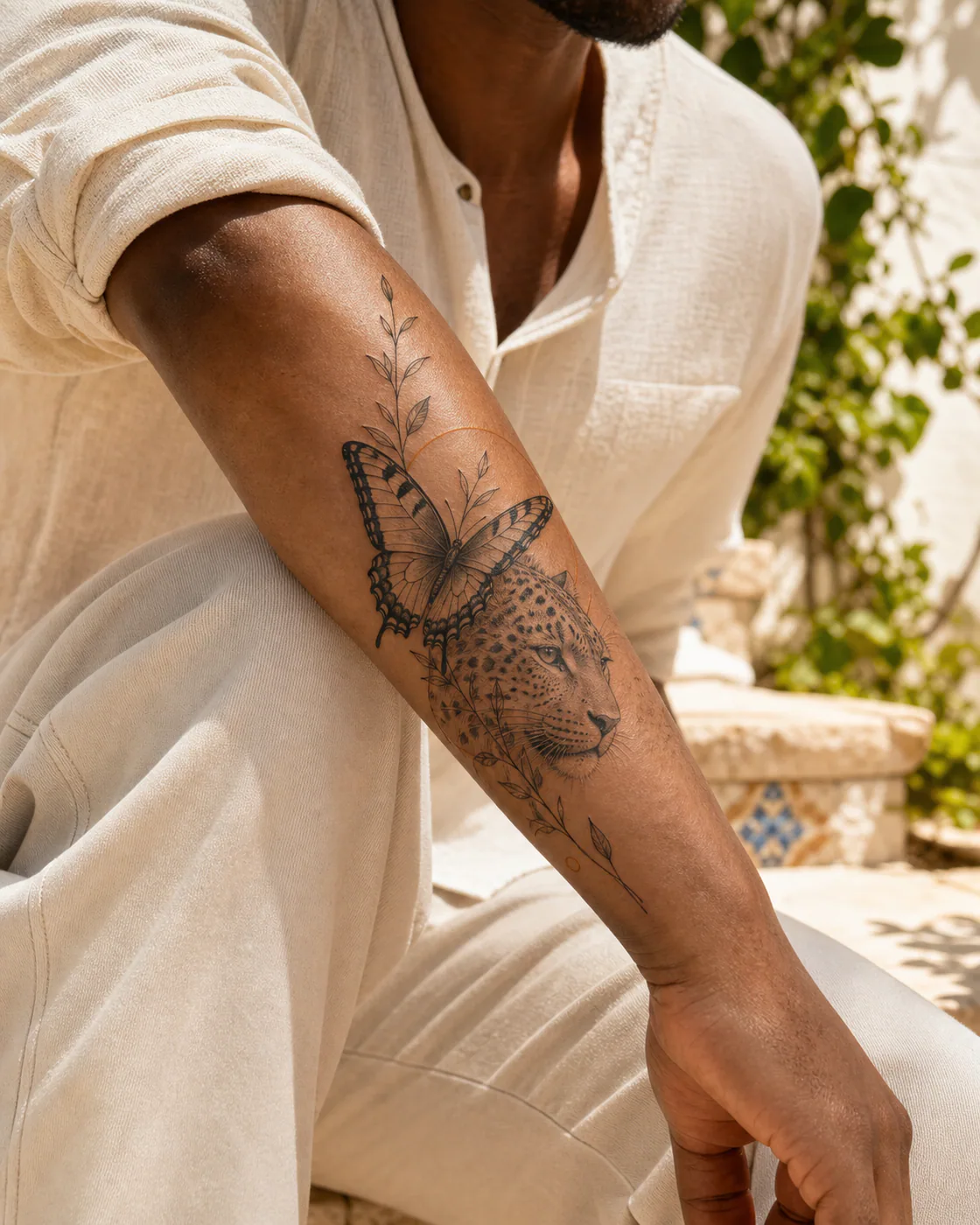
Fine Line Animal Tattoo for the Forearm
An original animal concept shaped as a healed fine line tattoo for the forearm.
- Fine Line
- Animals
- Forearm
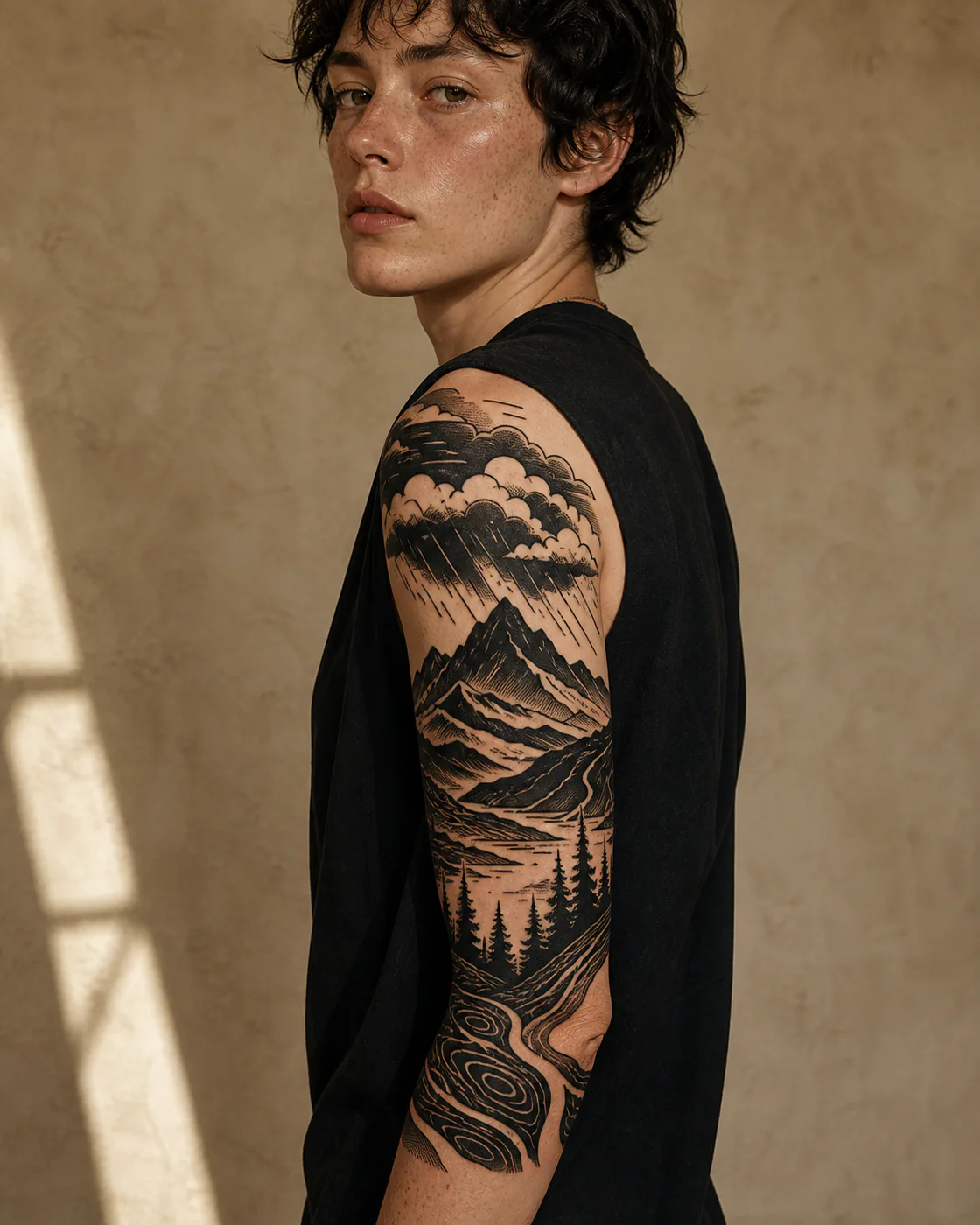
Blackwork Nature Tattoo for the Half Sleeve
An original nature concept shaped as a healed blackwork tattoo for the half sleeve.
- Blackwork
- Nature
- Half Sleeve
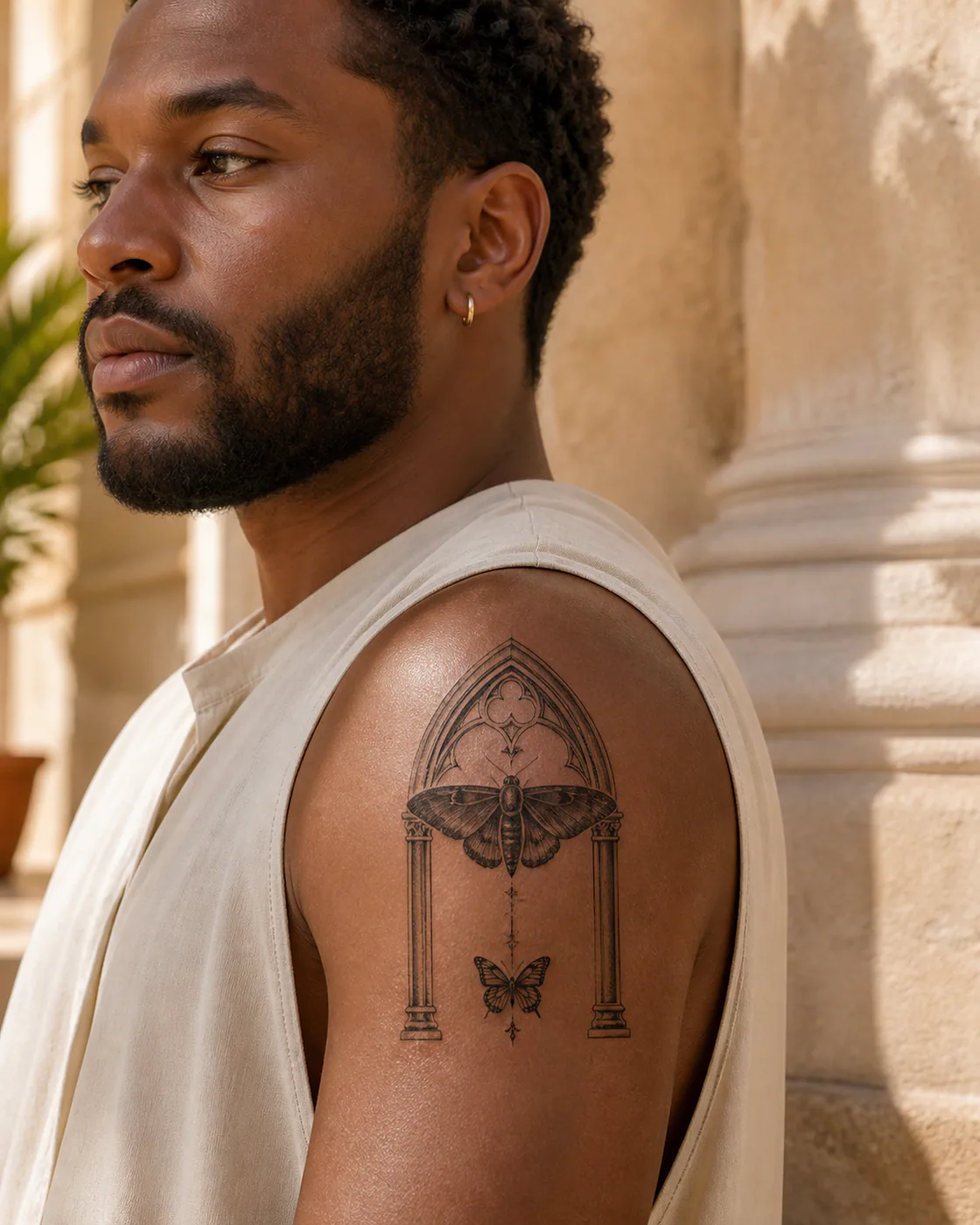
Minimalist Gothic Tattoo for the Shoulder
An original gothic concept shaped as a healed minimalist tattoo for the shoulder.
- Minimalist
- Gothic
- Shoulder
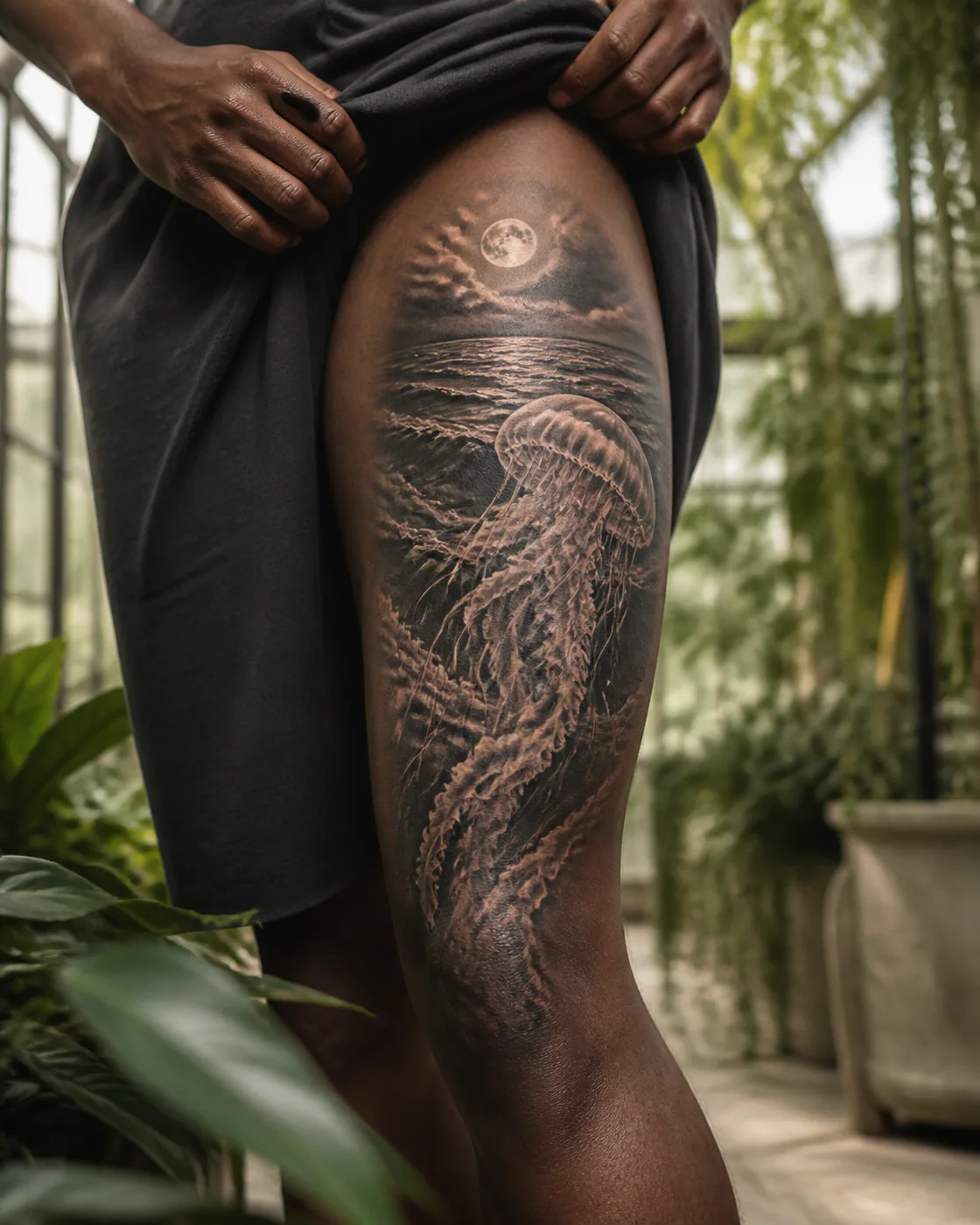
Black And Grey Nautical Tattoo for the Thigh
An original nautical concept shaped as a healed black and grey tattoo for the thigh.
- Black & Gray
- Nautical
- Thigh
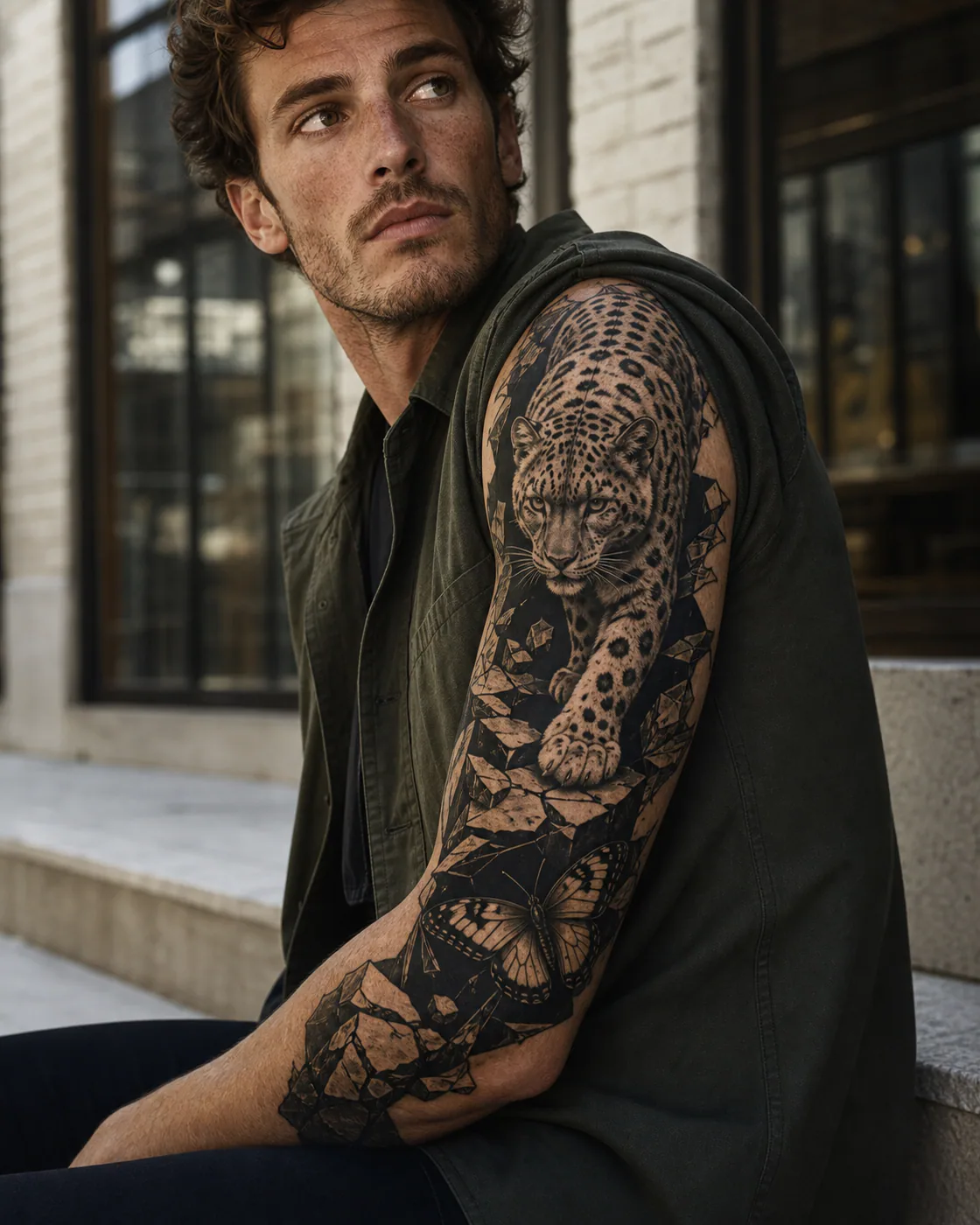
Blackwork Animal Tattoo for the Half Sleeve
An original animal concept shaped as a healed blackwork tattoo for the half sleeve.
- Blackwork
- Animals
- Half Sleeve
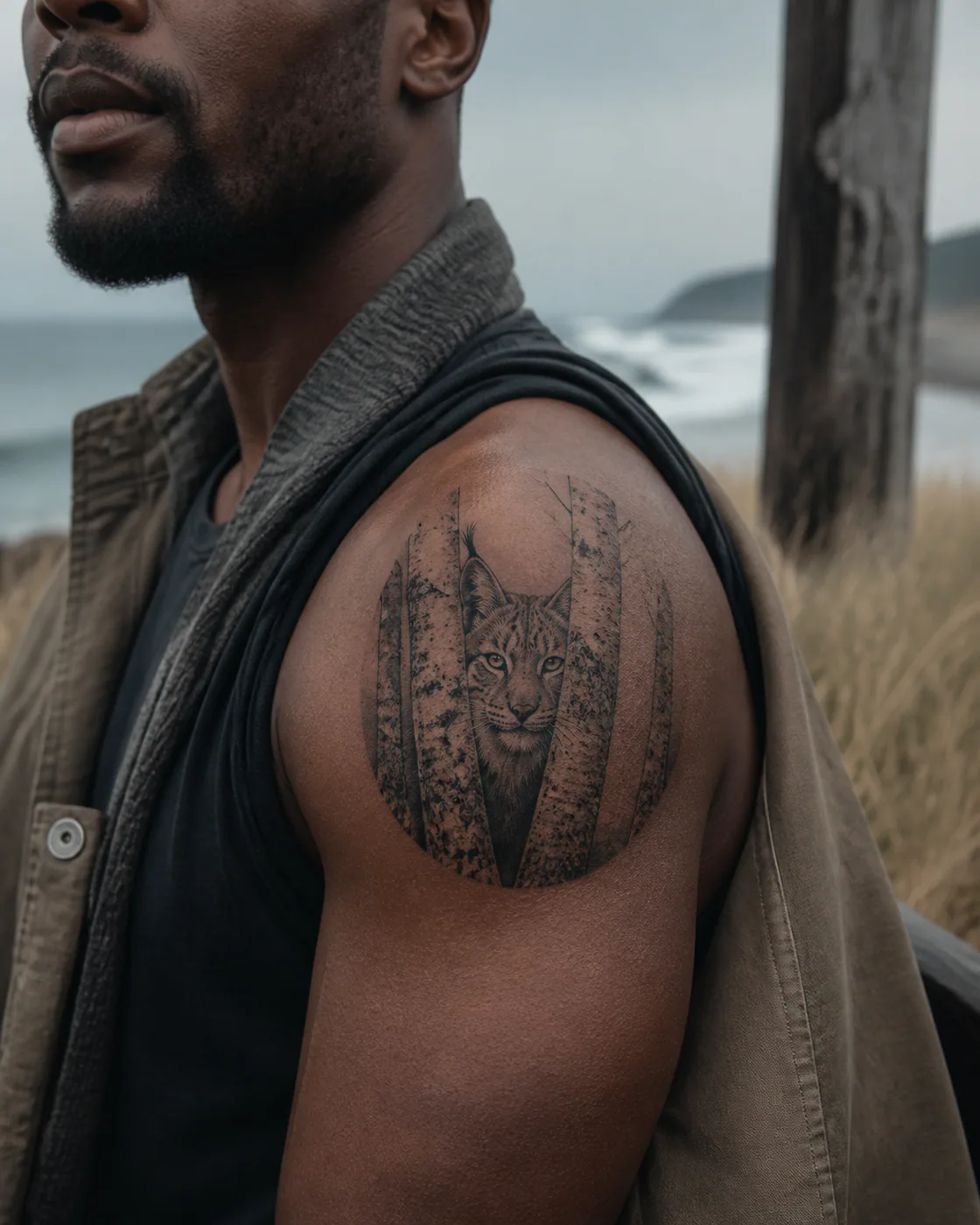
Minimalist Animal Tattoo for the Shoulder
An original animal concept shaped as a healed minimalist tattoo for the shoulder.
- Minimalist
- Animals
- Shoulder
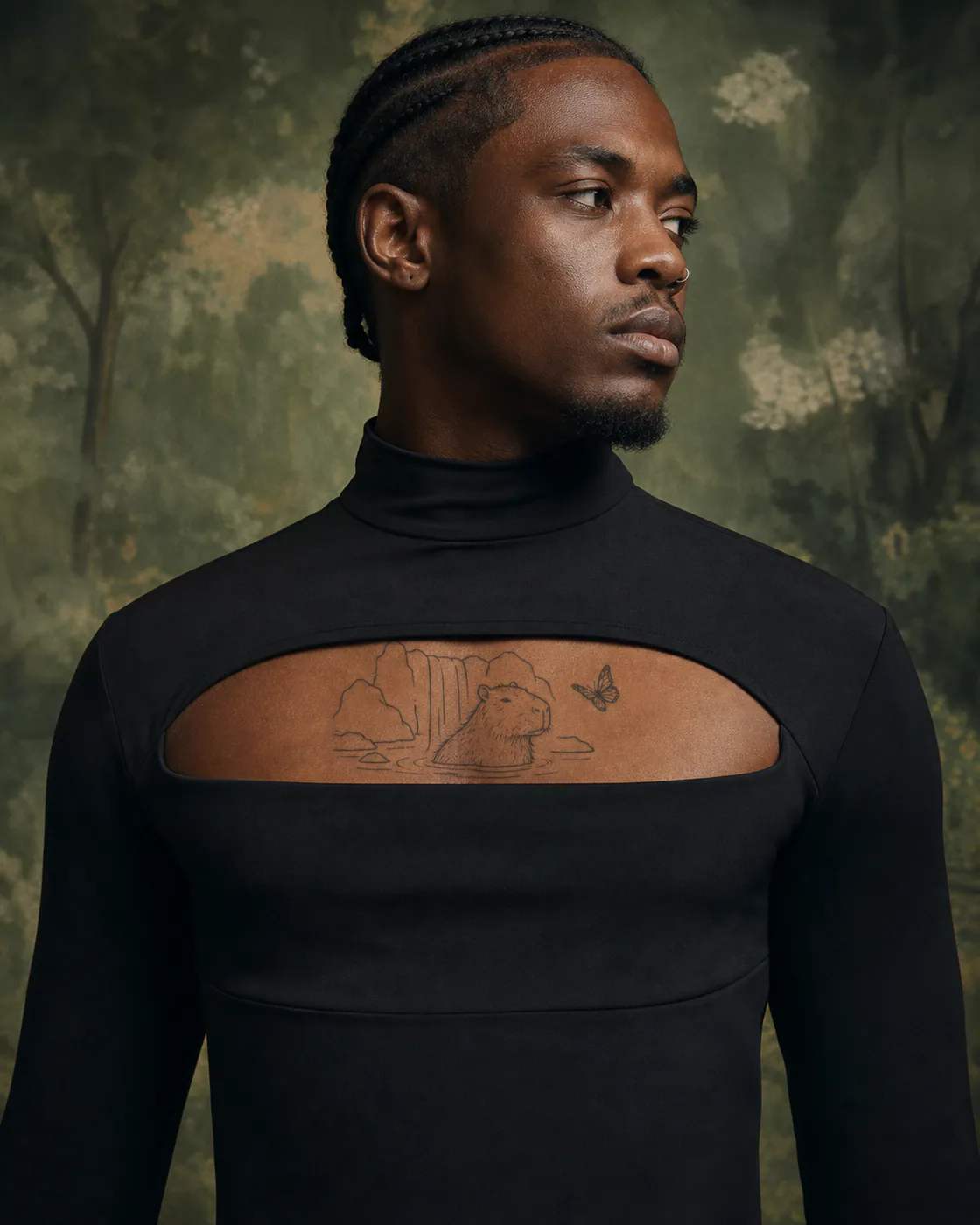
Minimalist Playful Tattoo for the Chest
An original playful concept shaped as a healed minimalist tattoo for the chest.
- Minimalist
- Playful
- Chest
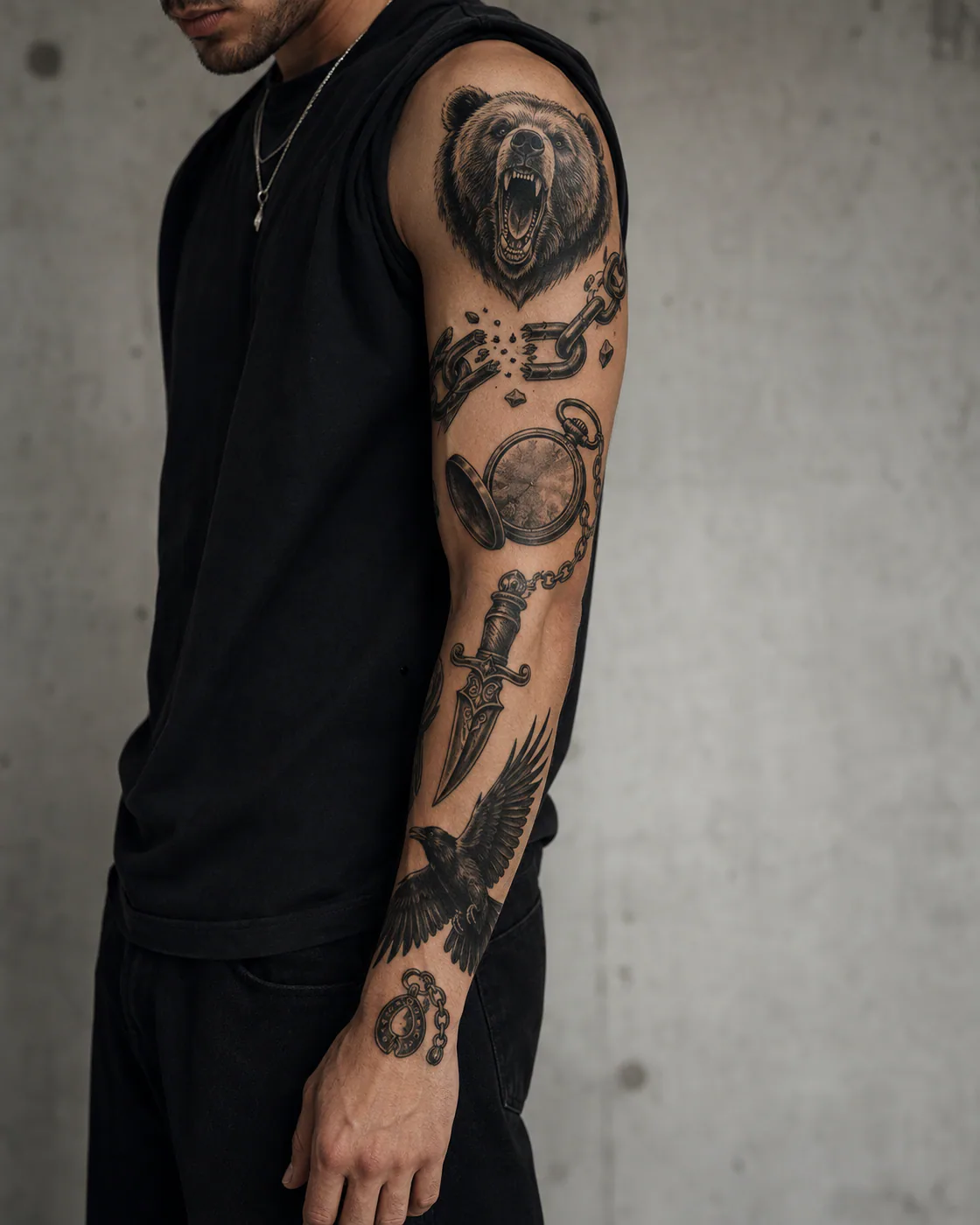
Bear and broken-chain black sleeve
Heavy animal shapes establish the upper arm while narrow objects keep the lower sleeve from feeling blocky.
- American Traditional
- Animals
- Full Sleeve
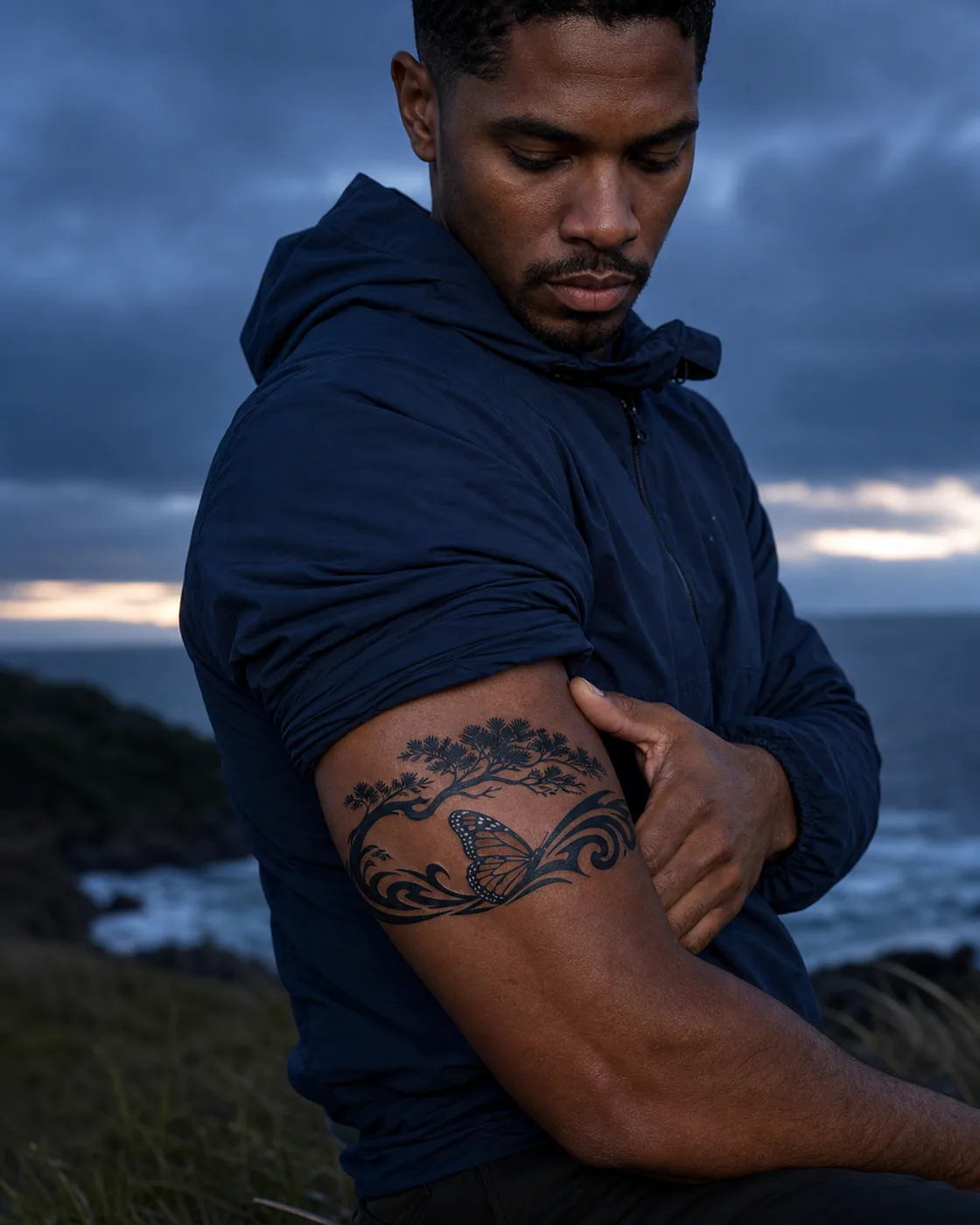
Tribal Nature Tattoo for the Armband
An original nature concept shaped as a healed tribal tattoo for the armband.
- Tribal
- Nature
- Armband
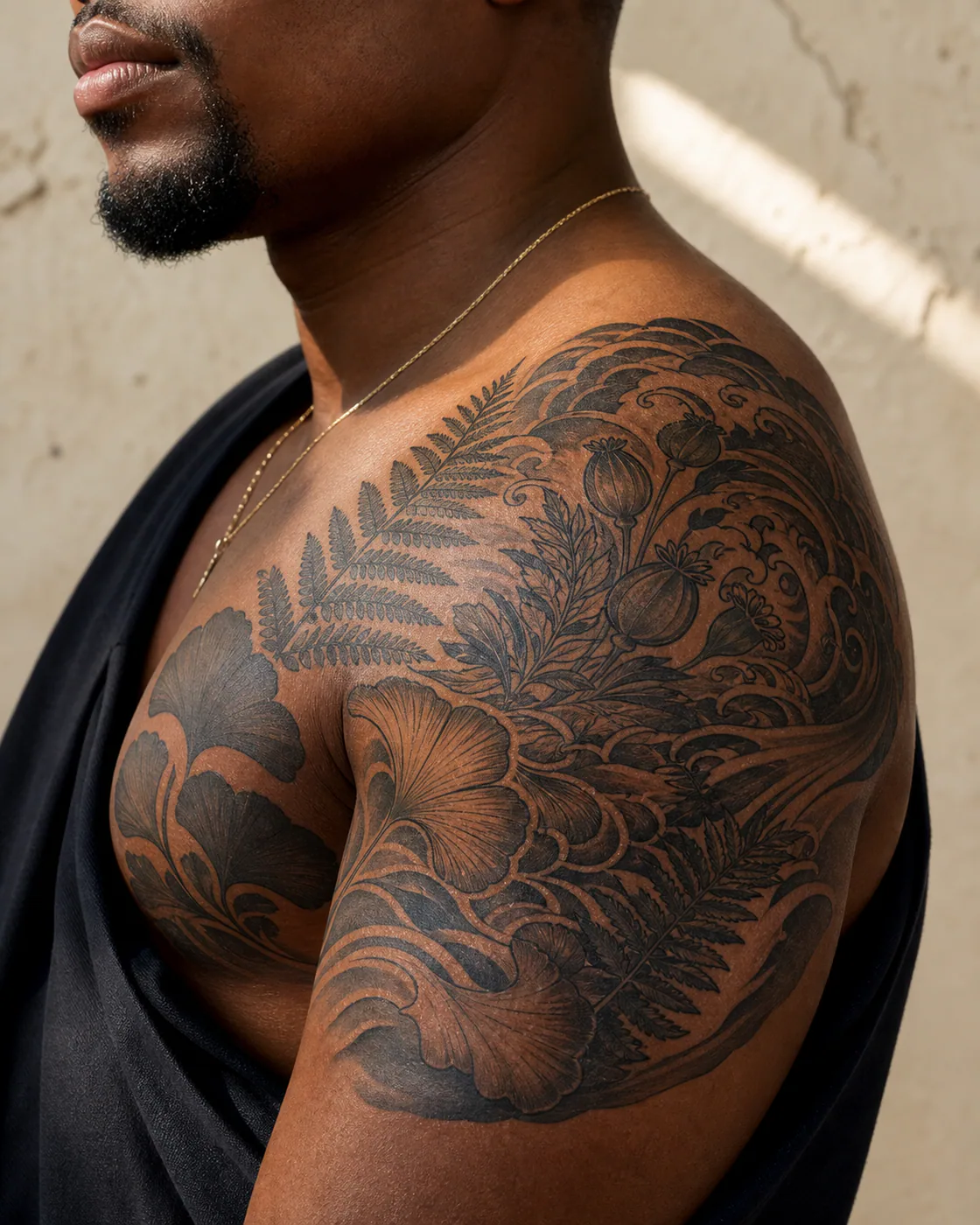
Japanese Botanical Tattoo for the Shoulder
An original botanical concept shaped as a healed japanese tattoo for the shoulder.
- Japanese
- Flowers & Botanicals
- Shoulder
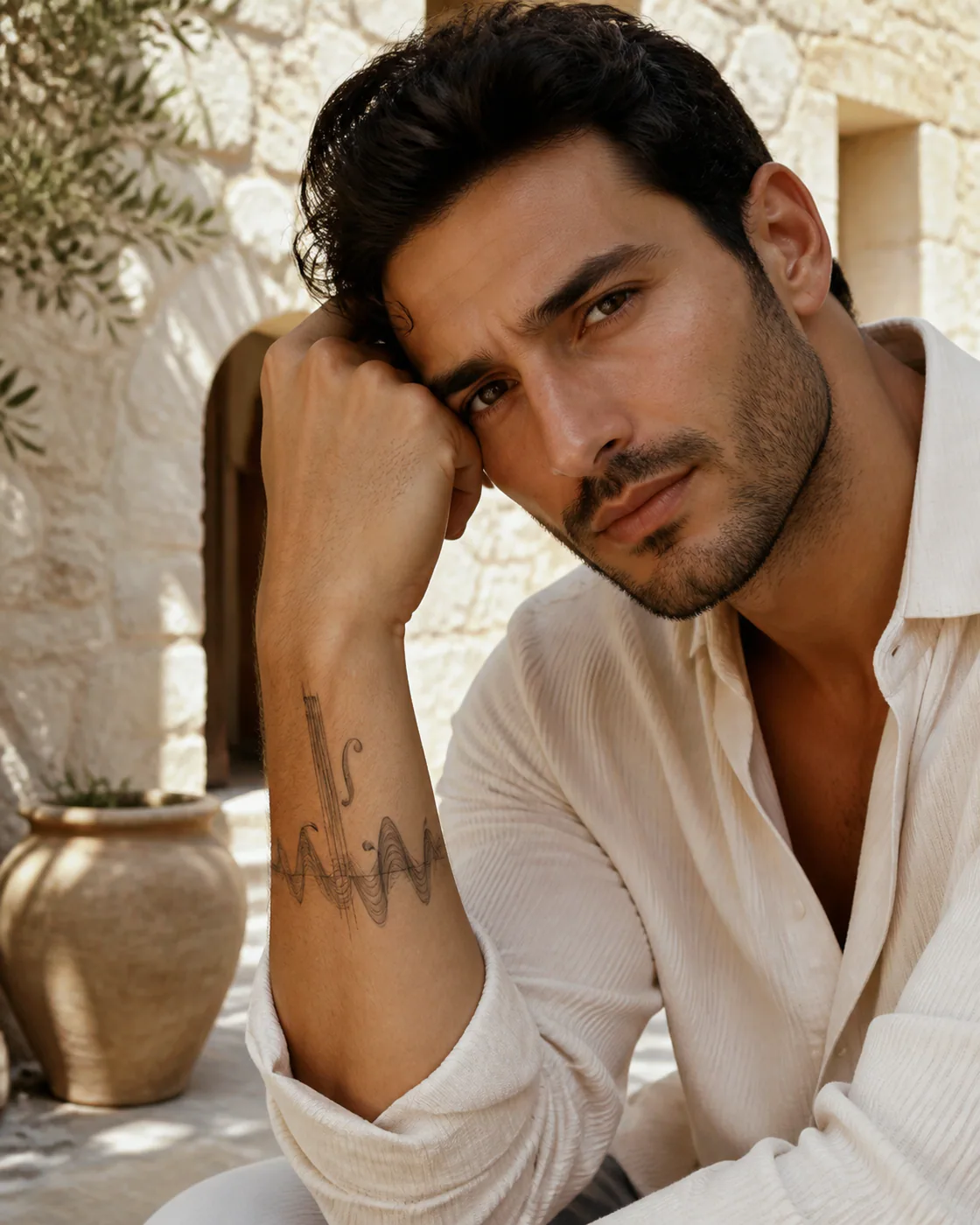
Black And Grey Music Tattoo for the Wrist
An original music concept shaped as a healed black and grey tattoo for the wrist.
- Black & Gray
- Music
- Wrist
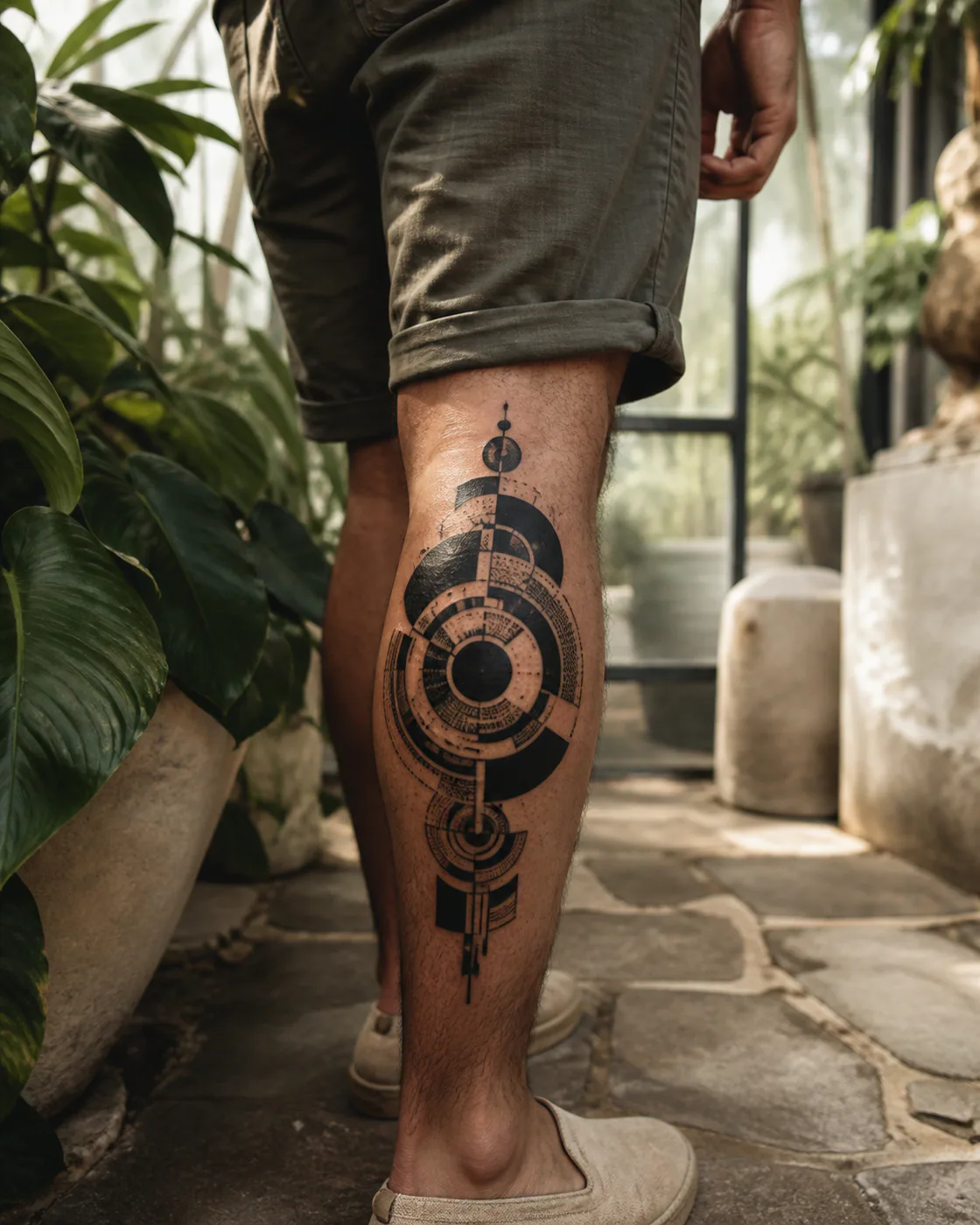
Blackwork Music Tattoo for the Calf
An original music concept shaped as a healed blackwork tattoo for the calf.
- Blackwork
- Music
- Calf
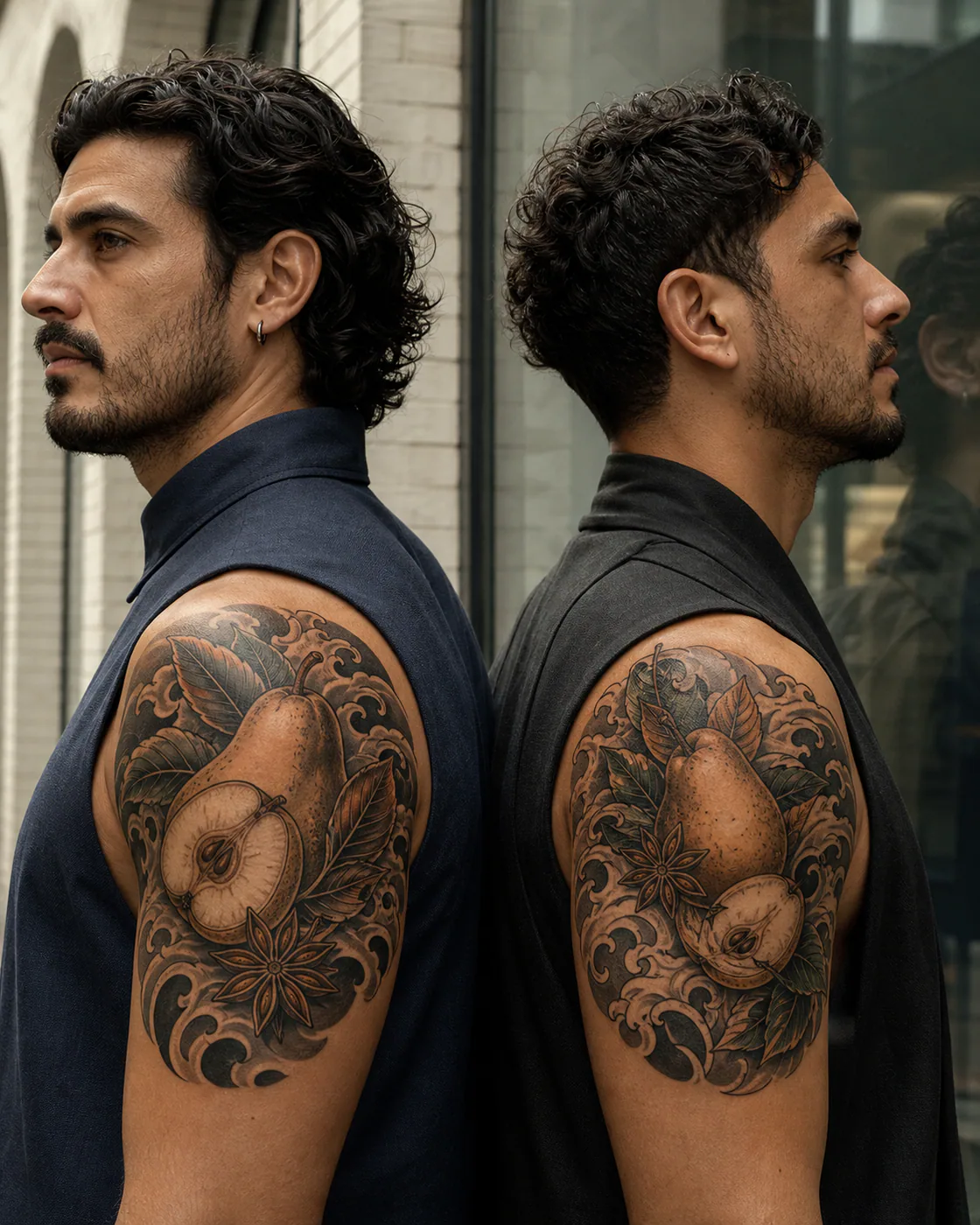
Japanese Couple Food Tattoo for the Shoulder
An original food concept shaped as a healed japanese tattoo for the shoulder.
- Japanese
- Food
- Shoulder
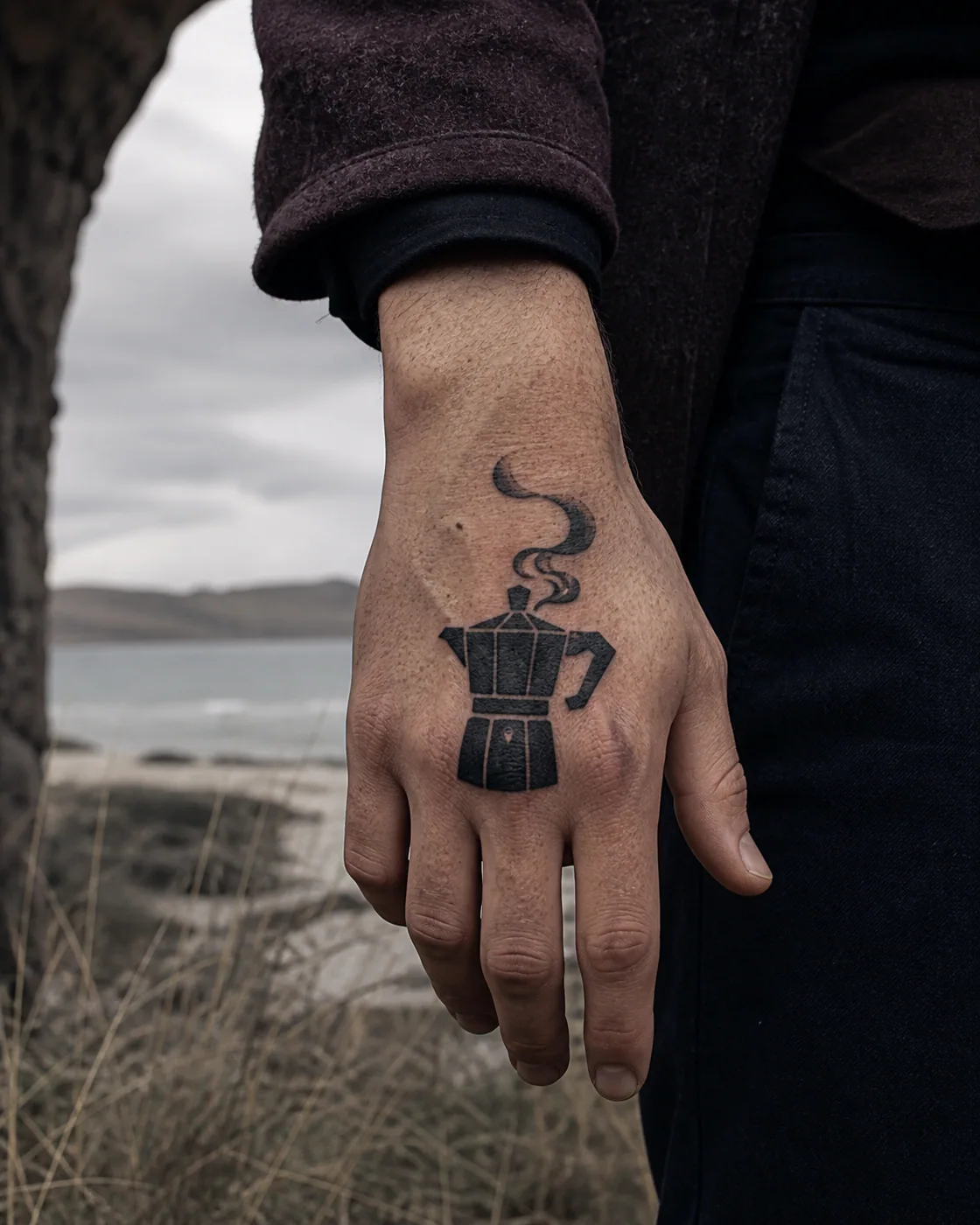
Blackwork Food Tattoo for the Hand
An original food concept shaped as a healed blackwork tattoo for the hand.
- Blackwork
- Food
- Hand
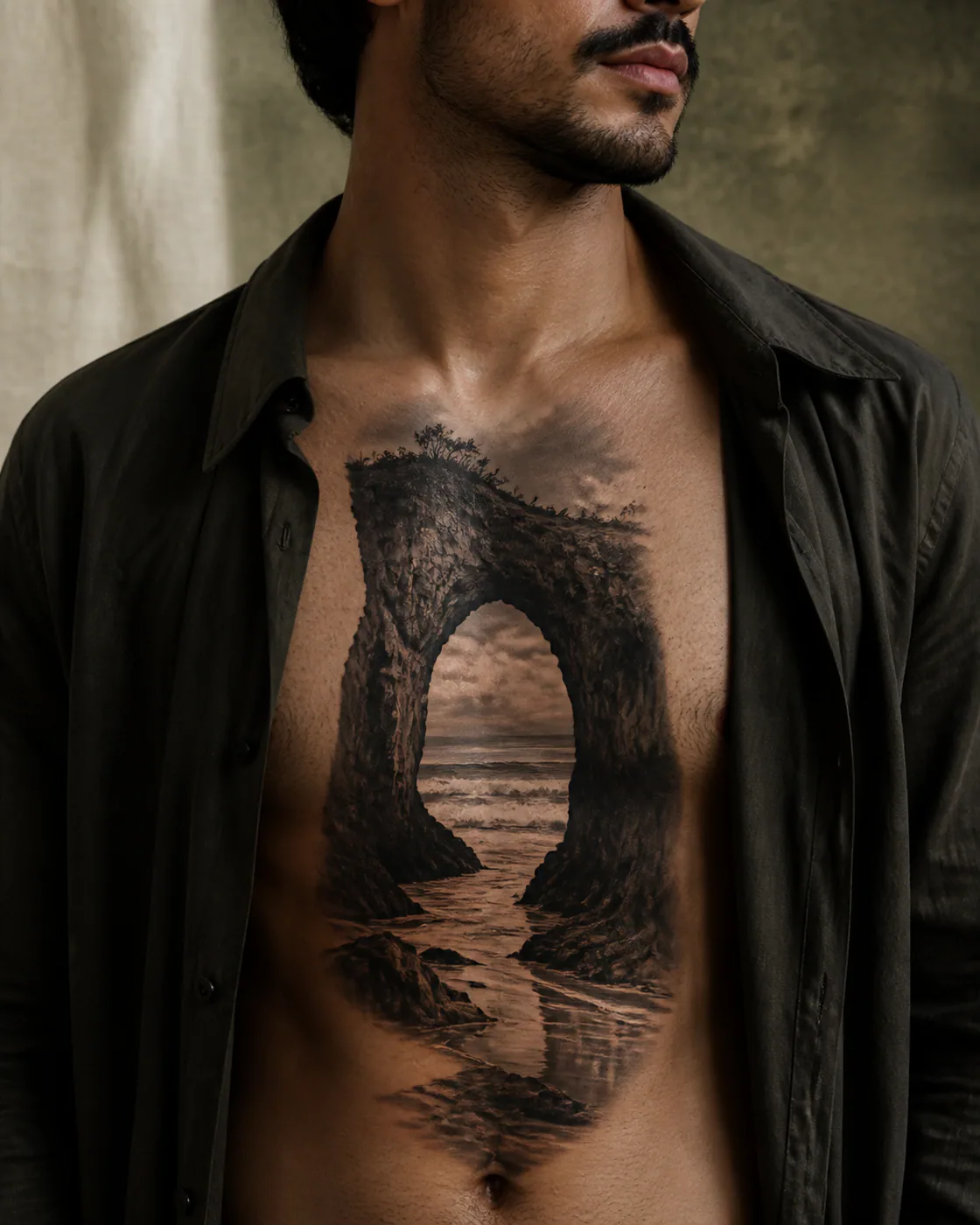
Black And Grey Nature Tattoo for the Sternum
An original nature concept shaped as a healed black and grey tattoo for the sternum.
- Black & Gray
- Nature
- Sternum
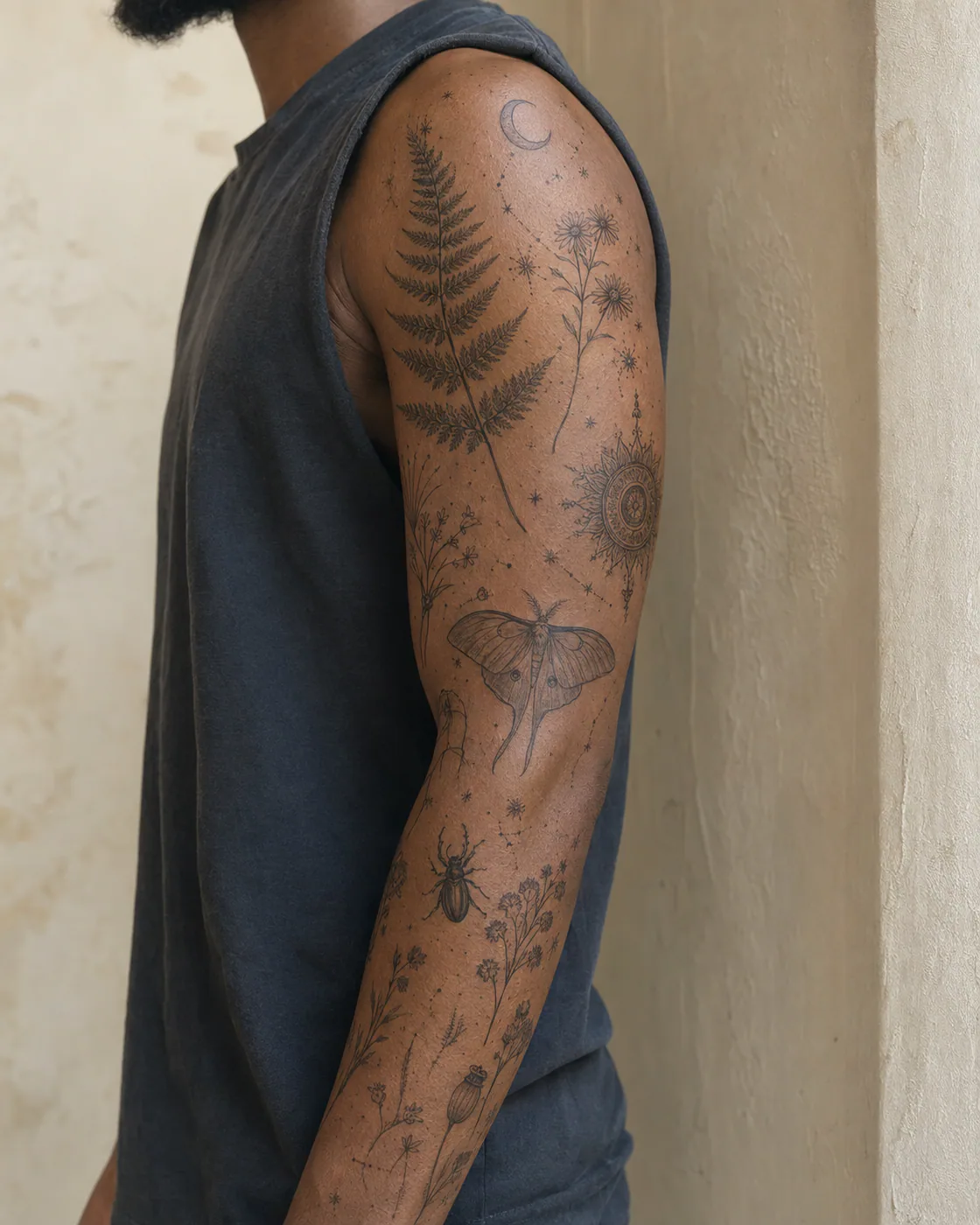
Fern, moth, and crescent fine-line sleeve
Long fern silhouettes guide the eye down the arm while the moth provides a centered, readable anchor.
- Fine Line
- Flowers & Botanicals
- Full Sleeve
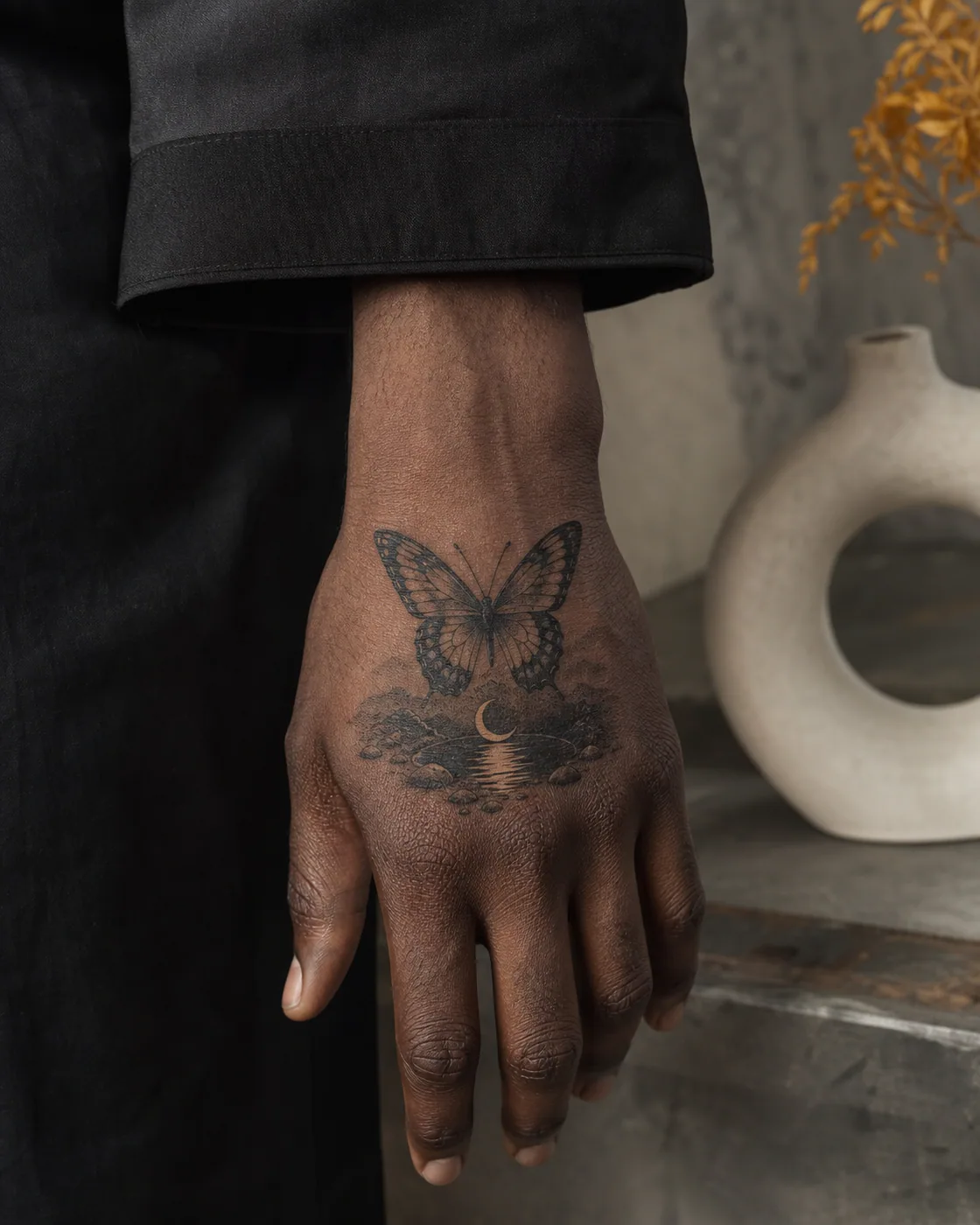
Illustrative Nautical Tattoo for the Hand
An original nautical concept shaped as a healed illustrative tattoo for the hand.
- Illustrative
- Nautical
- Hand
DESIGN DIRECTIONS TO EXPLORE
Men’s tattoo ideas organized by visual intent
Use these directions as starting points rather than fixed designs. Each can be made quieter, bolder, more personal, or better fitted to a specific placement.
Heritage symbols with a modern structure
Rework a family crest, hometown landmark, cultural motif, or inherited object into a cleaner composition that feels personal rather than generic.
Blackwork animals with strong silhouettes
Wolves, ravens, snakes, and big cats read best when the outer shape stays clear and the dark areas leave enough skin breaks to age well.
Fine line memory pieces
A handwriting sample, coordinates, botanical detail, or small landscape can hold a private story without needing a large or visually loud tattoo.
Architectural and geometric studies
Use symmetry, repeated geometry, maps, or structural linework when order and precision are part of the meaning—not merely decoration.
Mythology with one clear focal subject
Choose one figure, creature, or scene and build supporting texture around it. A controlled hierarchy keeps detailed mythology readable.
Nature compositions that follow anatomy
Mountain ridges, waves, trees, storms, and celestial elements can wrap or travel with the body instead of sitting like a rectangular picture.
CHOOSE A VISUAL LANGUAGE, NOT A STEREOTYPE
Compare tattoo directions for men by impact and intent
A useful men's tattoo reference should clarify visual weight, body fit, and long-term plans instead of prescribing a narrow idea of masculinity. Compare how each direction reads before choosing a subject.
Direction: High-contrast blackwork
- Often works well for
- Graphic animals, abstract forms, ornamental panels, and subjects that should read clearly at a distance.
- Scale cue
- Medium to large when solid black areas and skin breaks carry the composition.
- What to check
- Check that negative space follows the anatomy and keeps dense areas from merging visually.
Direction: Japanese narrative composition
- Often works well for
- Koi, dragons, waves, flowers, and other subjects developed as one body-led scene.
- Scale cue
- Large placements such as sleeves, back pieces, or connected torso work.
- What to check
- Choose an artist fluent in the tradition; background, direction, and motif relationships matter.
Direction: Traditional standalone collection
- Often works well for
- Readable symbols, color or black-and-gray flash, and collections that may grow over time.
- Scale cue
- Compact to medium pieces with enough room for bold outlines and clear shapes.
- What to check
- Plan future spacing before placing a small design in the center of a valuable large area.
Direction: Restrained illustrative linework
- Often works well for
- Nature studies, personal symbols, coordinates, diagrams, and quieter visible tattoos.
- Scale cue
- Small to medium, simplified until the main silhouette remains easy to recognize.
- What to check
- Review healed examples and avoid relying on tightly packed hairline detail for meaning.
CHOOSE WITH INTENTION
How to choose a tattoo that still feels like you
Ignore lists of supposedly masculine symbols. A lasting design starts with your own references and gets stronger when every visual choice supports them.
Meaning before style
Write one sentence about what the tattoo should remember, represent, or change. That sentence is a more useful filter than choosing blackwork or realism first.
Scale before detail
Small designs need fewer internal marks. Portraits, layered scenes, and textured animals usually need more room than they appear to need on a screen.
Placement before composition
Forearms favor directional designs, shoulders support radial movement, and the chest or back can hold broader relationships between subjects.
Longevity before novelty
Ask which lines create the identity of the design and which are temporary visual noise. Strong spacing and hierarchy usually outlast trend-driven detail.
ARTIST HANDOFF
Bring a clear story, not a locked composition
A tattoo artist can do better work when they understand why the image matters, where it will live, and which details are flexible.
Include in your brief
- The subject and the one idea it must communicate.
- One preferred placement plus an approximate size in centimeters or inches.
- Two focused references with notes about exactly what you like.
- Your preference for black, black and gray, or color.
- Any dates, words, cultural symbols, or anatomical details that require verification.
KEEP EXPLORING
Related tattoo idea collections
Use another placement, size, audience, or subject to make your direction more specific.

Forearm Tattoo Ideas
Compare inner, outer, wraparound, and vertical forearm compositions designed for movement and everyday visibility.
Explore the collection
Tattoo Sleeve Ideas
Plan a cohesive full, half, or patchwork sleeve through hierarchy, body flow, transitions, and a realistic session roadmap.
Explore the collection
Small Tattoo Ideas
Find compact concepts designed around clear silhouettes, selective detail, and enough space to remain readable.
Explore the collectionCOMMON QUESTIONS
What to know before choosing this direction
What are the most popular tattoo ideas for men?
Animals, family symbols, geometric work, nature scenes, lettering, blackwork, and heritage-inspired designs remain popular. Popularity is only a starting point; the strongest result connects the subject to a specific memory or value.
Where should a man get his first tattoo?
The outer upper arm, forearm, thigh, and calf are common starting points because they offer useful space and can be shown or covered. Pain, work requirements, anatomy, and the final design should guide the decision.
How do I make a men’s tattoo idea meaningful?
Start with a personal source such as a place, object, phrase, relationship, or turning point. Then translate it into a symbol and visual style instead of copying a trending image literally.
Can a small tattoo for men include detail?
It can include selective detail, but compact work needs clear spacing and fewer fine internal marks. Your artist should simplify the concept to match the exact physical size.
Which tattoo styles work well for men?
Tattoo styles are not gender-specific. Blackwork, traditional, fine line, realism, geometric, illustrative, and color work can all fit; choose according to the subject, placement, contrast, and visual weight you want.
How can I use references without copying another tattoo?
Collect references for separate qualities such as composition, line weight, mood, and placement rather than asking to reproduce one finished tattoo. Add personal source material, then let your artist create a new drawing for your body.
TURN INSPIRATION INTO AN ORIGINAL CONCEPT
Keep designing with your own story
Take the subject, placement, and style into the AI generator, then use virtual try-on to judge approximate scale. A tattoo artist should still redraw the final design for your body.